Case 12164
Create a highly polished historical figure poster
Prompt
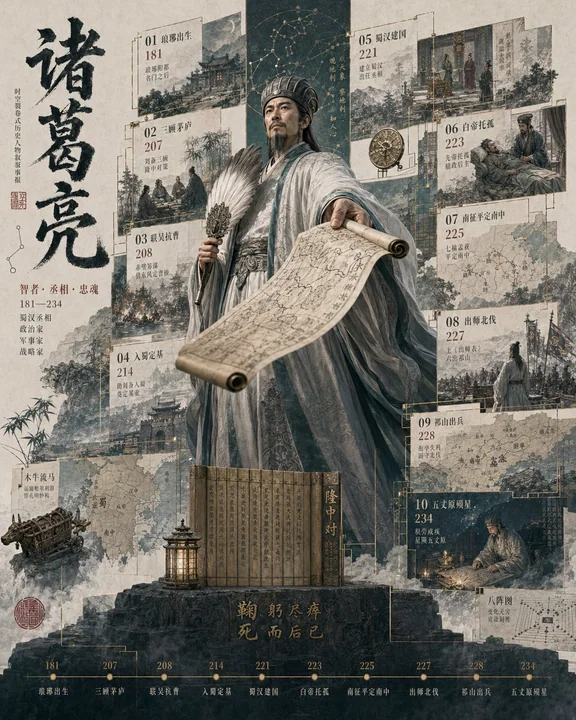
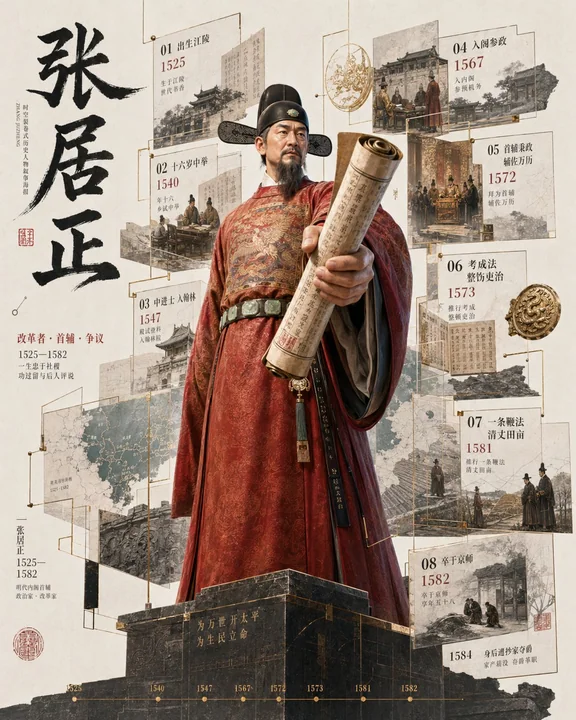
Please create a highly finished “Historical Figure Breakout Portrait Archive / 3D Historical Breakout Biography Poster.”

[User Input]
Subject figure: [Figure Name]
Figure identity/role: [Emperor / Famous General / Eminent Minister / Thinker / Writer / Reformer / Strategist, etc.]
Historical background: [Dynasty / Historical period]
Core keywords: [Unification / Reform / Loyalty and righteousness / Unity of knowledge and action / Northern Expedition / Institutions / School of Mind / Golden age, etc.]
Preferred main color palette: [Deep black, gold, and red / Cyan, blue, gray, and gold / Dark red, ink black, and gold / Iron armor dark blue, etc.]
Aspect ratio: [3:4 vertical]

This is not an ordinary historical poster, but a highly finished biographical poster centered on the structure of “a central full-body 3D historical figure + a breakout forward-thrusting pose + lightweight floating clusters of historical events around the figure + a light timeline at the bottom.”

At the center of the composition, there must be a complete full-body, standing 3D historical figure. The figure is the most important visual focus of the entire image, with strong volume, sculptural presence, monumentality, and historical aura. Clothing, headwear, armor, patterns, belt, footwear, and accessories must all match the figure’s era and status. The overall style should be realistic, weighty, and cinematically impactful. Beneath the figure, there should be a light yet stable monument-like pedestal to support the figure, but it must not be so heavy that it overwhelms the composition.

The figure must not simply stand normally; there must be a clearly visible “forward breakout motion.” The hands, arms, or a key prop held by the figure—such as an imperial seal, edict, scroll, spear, sword, military tally, court tablet, map, or book scroll—must extend toward the viewer, creating a strong 3D impact with exaggerated near-large/far-small perspective, front-back depth, perspective compression, and the sensation of breaking out of the frame. Pay special attention: the key prop thrust forward must be fully visible and clearly recognizable, and must not be cropped so that only a small portion remains visible.

Arrange 6 to 10 key historical milestones around the figure. Do not present them as heavy, regular, neatly tiled little cards. Instead, make them into “lightweight, floating, multi-angled, semi-transparent” clusters of historical events. Each node may consist of 2 to 4 sub-fragments, including a number, year, event title, brief explanation, a small historical scene image, and fine gold lines, open frames, node dots, annotation lines, and similar details. The overall feeling should be like historical archives deconstructed into airy slices of time floating around the figure, rather than ordinary information-card layout.

These event clusters should have different orientations and spatial perspective relationships: some tilted left, some tilted right, some turned inward, some flipped outward, some higher, some lower, with front-back layering. They may also be slightly occluded by the figure’s arms, hems, or weapons to create spatial depth. They should have a glass-like or acrylic-like feel, subtly glowing edges, incomplete borders, and mild offset layering. The information can be detailed, but visually they must remain light and must not overpower the central figure.

On the left side of the composition, place the large title [Figure Name], using a calligraphic, stele-like, or ink-brush style font with an Eastern historical character. Beside it, you may add birth and death years, an identity label, a summary of keywords, and a highly condensed subtitle. The title area should feel stable, simple, and restrained—do not overcrowd it.

At the bottom, there must be a light, simple, and refined horizontal timeline connecting the major years of the figure’s life and corresponding to the historical event clusters around the composition. The timeline should feel more like a curatorial guide line, a museum time scale, or a historical index line. It may use thin gold lines, small dots, concise years, small text annotations, and a few decorative nodes. Do not turn it into a heavy black horizontal bar or a huge block of information at the bottom.

The background should be based on off-white rice paper, antique paper, old archival paper, or a light-colored museum wall. The overall look should be low-saturation, clean, and restrained. You may add faint map textures, silhouettes of ancient architecture, fragments of documents, seals, gold connecting lines, annotation lines, nodes, territorial outlines, and similar elements to create a light, rational sense of a historical archive exhibition.

The entire image must establish a clear contrast:
The central figure is heavy, real, three-dimensional, strongly lit, and volumetric;
The surrounding historical nodes are light, transparent, floating, subtly glowing, and refinedly rational;
The figure’s action thrusts forward, breaking the frame, with explosive spatial force;
The bottom timeline is light and restrained, serving only to gather and organize information.

If different requirements conflict, prioritize the following:
1. The central figure must be a complete full-body figure
2. The forward-thrusting prop must be fully visible and have a strong 3D impact
3. The surrounding event clusters must be light and floating, not heavy cards
4. The central figure must feel “heavy,” while the information system must feel “light”
5. The bottom timeline must be lightweight, clear, and not overpower the composition

If the model has difficulty precisely controlling a large amount of small text, prioritize making the figure’s name, years, numbering, and event titles clear. Short explanatory passages may be simplified appropriately or left with space reserved for later layout.
More prompts
Case 27260
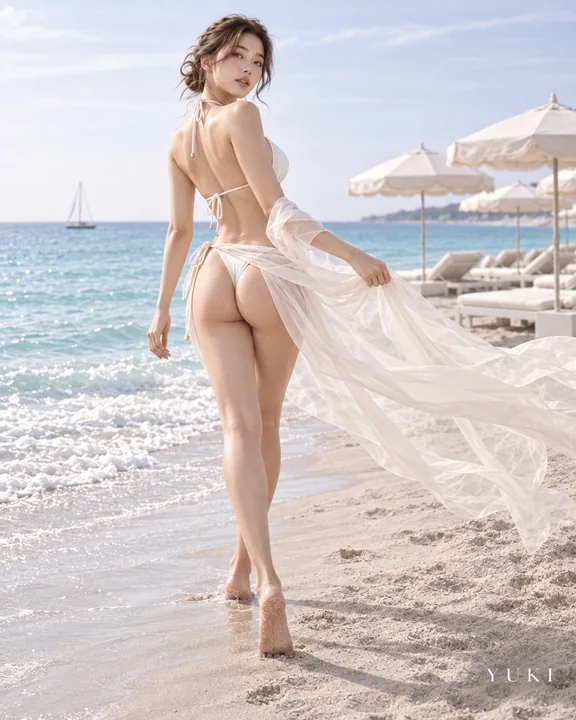
象牙色夏日海滨极简度假风大片
IVORY SUMMER — A summer told by light, blue sea and white. ☀️🤍 In the midst of the clear sea space, white umbrellas, minimalist lounge chairs and light chiffon flying with the wind create a resort world that is both relaxing and luxurious.
Case 27246
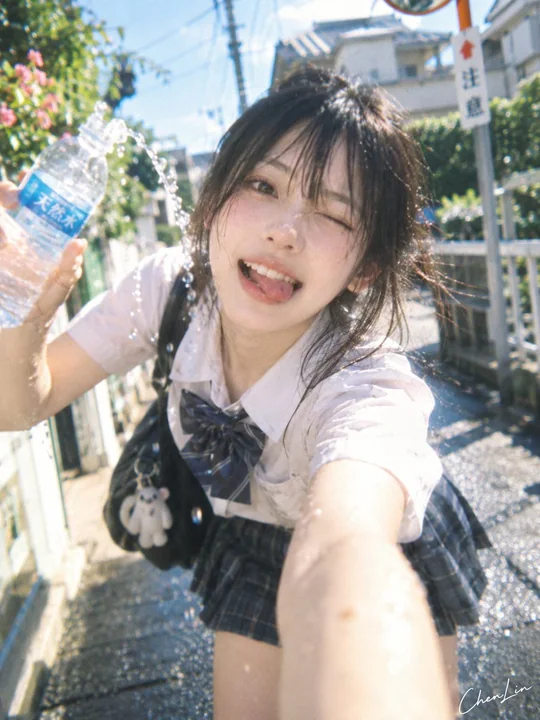
日本高中生夏天夸张表现力生命力
Japanese high school students, exaggerated expressiveness, summer, vitality 日本高中生,夸张表现力,夏天,生命力
Case 27238
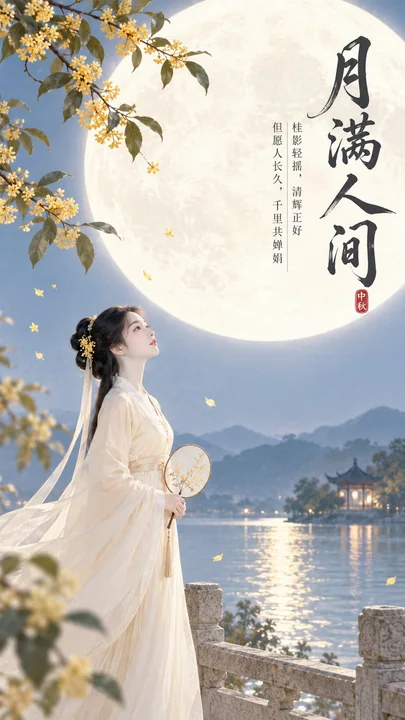
东方禅意极简中秋古风女子海报
Theme direction: Oriental Zen minimalist Mid-Autumn Festival cover poster Style branch: Mid-Autumn female aesthetic viral style Main content: An ancient-style woman standing under an osmanthus tree, looking up at a giant full moon Emotional