Case 26654
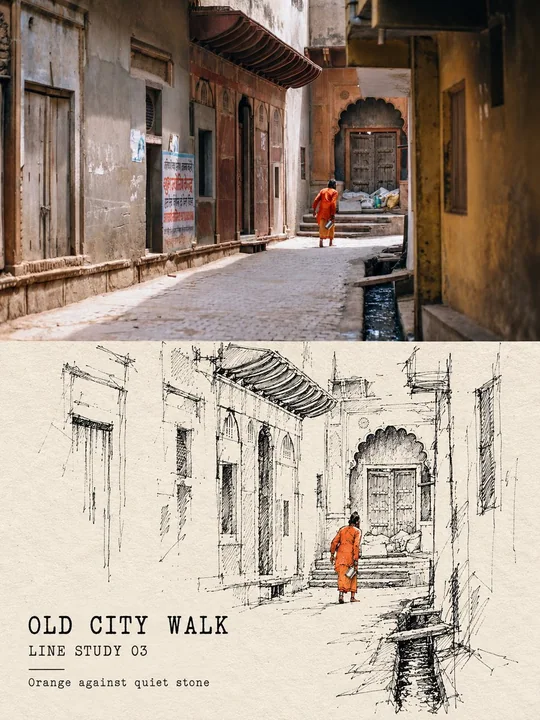
真实摄影与高级线描对比旅行海报
Prompt
Please turn each travel photo I upload into an independent, high-end line drawing travel poster, outputting each photo separately without multi-image collages.

The overall composition uses a 3:4 vertical layout, forming a clear "top real photo + bottom line drawing background character re-rendering" upper-and-lower contrast. Use clear, horizontal, and restrained boundaries for the upper and lower areas; do not use feathering, tearing, gradient blending, and do not let photos, lines, or text cross the boundary.

The upper half must retain the uploaded photo itself. Accurately maintain the identity, number, posture, direction of action, main clothing color, building and street relationship, observation angle, perspective, real materials, natural light and shadow, and original color atmosphere of the character or subject. Only perform slight high-end photography color grading and extremely thin film grain to give it the texture of a travel magazine or art publication. To adapt to the frame, the sky, ground, or surrounding environment can be naturally extended, but do not stretch, distort, mirror, move, replace, or redraw the subject.

The lower half, on warm rice white, old paper white, or light oatmeal colored paper, reorganizes the same character and the same scene from the photo above into a "line drawing background character observation study." The character remains the visual center, maintaining the original number of people, body center of gravity, direction of action, distance from each other, hairstyle outline, main clothing color, backpack, and other key identification features; the streets, buildings, sea surface, or environment behind the character retain only a few clues that can explain the location and spatial direction. Do not trace the entire background completely, and do not add characters or landmarks that do not exist in the original photo.

The line drawing must use unstable black pens, dip pens, or dry-leaning ink lines to repeatedly find the form: breaks, pauses, folds, misplaced double lines, partial re-drawing, variations in thickness, slight erasures, and unfinished line ends must be clearly visible. The lines look like the artist is constantly correcting on site, rather than clean vector outlines, manga ink lines, or fashion sketches. Where necessary, a very small amount of solid black blocks or dense hatching can be used to press down on backpacks, hair, door frames, or shadows, but do not establish full pencil shading or large areas of color filling.

The composition uses reduction and refinement, offset display, or vertical reorganization. The linear subject occupies about 38%—68% of the width of the lower area and can be biased to one side; keep at least 42% continuous old paper negative space around it. Only keep one or two ground lines, perspective lines, wall boundaries, or structural lines to support the space; do not draw it as an engineering drawing grid. The tension between the lines and the paper white is more important than background completeness.

The colors are mainly warm old paper and single black ink. At most, extract one tiny area of light color from the photo for clothing, location markers, short lines, or numbering; the colored area should be less than 8% of the lower area, and do not use multi-color watercolor fills. The paper should have visible fibers, subtle grain, and the matte touch of an old travel album.

In the main negative space, add a small amount of accurate, readable editorial text: a short English title related to the location or subject; a line of "LINE STUDY 01" or location/object fields; a very short observation note. The text uses a small typewriter font, ink-deficient lead type, or a handwriting style similar to the lines, as if written directly on the paper; do not overpower the character. Do not add the author's name, brand, logo, URL, fake dates, signatures, watermarks, garbled code, or extra slogans.

Overall temperament: fragmented black linework, repeated searching contours, sparse travel observation, warm archival paper, controlled negative space, one restrained accent color, handmade editorial study, quiet and intelligent travel memory.

Avoid: applying an overall general line art filter, continuous smooth outlines, vector outlines, exquisite fashion sketches, detailed facial features, human anatomical corrections, complete background tracing, dense architectural details, complete shadow sketching, heavy watercolor, oil painting, 3D, anime, irrelevant characters, intimate posture restrictions, author names, logos, URLs, signatures, watermarks, and garbled code.

Most important rule: The upper half is a real photo for direct comparison; the lower half uses only broken, folded, overlapping black lines that constantly search for form to re-refine the same character and scene relationship. The style comes from the tension of the lines and negative space, rather than a fixed character relationship.

请将我上传的每一张旅行照片分别制作成一张独立的高级线描旅行海报,每张照片单独输出,不进行多图拼贴。

整体采用 3:4 竖版构图,形成清晰的“上方真实照片+下方线描背景人物转绘”上下对照。上下区域使用明确、水平、克制的边界;不要羽化、撕裂、渐变融合,也不要让照片、线条或文字跨越边界。

上半部分必须保留上传照片本身。准确保持人物或主体的身份、数量、姿态、动作方向、衣着主色、建筑与街道关系、观察角度、透视、真实材质、自然光影和原有色彩氛围。只做轻微的高级摄影调色和极薄胶片颗粒,使其具有旅行杂志与艺术出版物的质感。为适配画幅,可以自然延展天空、地面或周边环境,但不得拉伸、扭曲、镜像、移动、替换或重新绘制主体。

下半部分在温暖的米白、旧纸白或浅燕麦色纸张上,将上方照片中的同一人物和同一现场重新组织为一幅“线描背景人物观察习作”。人物仍然是视觉中心,保持原始人数、身体重心、动作方向、彼此距离、发型轮廓、服装主色和背包等关键识别特征;人物身后的街道、建筑、海面或环境只保留能够说明地点和空间方向的少量线索。不要把整个背景完整描一遍,也不要添加原照片中不存在的人物或地标。

线描必须使用不稳定的黑色钢笔、蘸水笔或偏干墨线反复寻找形体:断裂、停顿、回折、错位复线、局部重描、粗细变化、轻微擦除和未完成的线端都要清楚可见。线条像画者在现场不断修正,而不是干净的矢量描边、漫画墨线或时装速写。必要处可用极少量实黑块或密集排线压住背包、头发、门框或阴影,但不要建立完整素描明暗,也不要大面积填色。

构图采用缩小提炼、偏置陈列或纵向重组。线性主体约占下半区域宽度的 38%—68%,可以偏向一侧;周围至少保留 42% 连续的旧纸留白。只保留一两条地面线、透视线、墙面边界或结构线来支撑空间,不要画成工程制图网格。线条和纸白之间的张力比背景完整性更重要。

色彩以暖旧纸和单一黑墨为主。最多从照片中提取一种极小面积的淡色,用于人物衣着、地点标记、短线或编号,彩色面积低于下半区域的 8%,不要使用多色水彩填充。纸张要有可见纤维、细微颗粒和旧旅行画册的哑光触感。

在主要留白处加入少量、准确、可读的编辑文字:一个与地点或主体有关的简短英文标题;一行 “LINE STUDY 01” 或地点/对象字段;一行极短的观察注释。文字使用小号打字机体、缺墨铅字或与线条相近的手写体,像直接写在纸面上,不要抢过人物。不要加入作者姓名、品牌、Logo、网址、虚假日期、签名、水印、乱码或额外口号。

整体气质:fragmented black linework, repeated searching contours, sparse travel observation, warm archival paper, controlled negative space, one restrained accent color, handmade editorial study, quiet and intelligent travel memory.

避免:把全图套成普通线稿滤镜、连续光滑轮廓、矢量描边、精致时装速写、详细五官、人体解剖修正、完整背景描摹、密集建筑细节、完整阴影素描、厚重水彩、油画、3D、动漫、无关人物、亲密姿态限制、作者名、Logo、网址、签名、水印和乱码。

最重要的规则:上半部分是可直接对照的真实照片;下半部分只用断裂、回折、重叠并不断寻找形体的黑色线迹,重新提炼同一人物与现场关系。风格来自线迹和留白的张力,而不是来自某一种固定人物关系。
More prompts
Case 14519
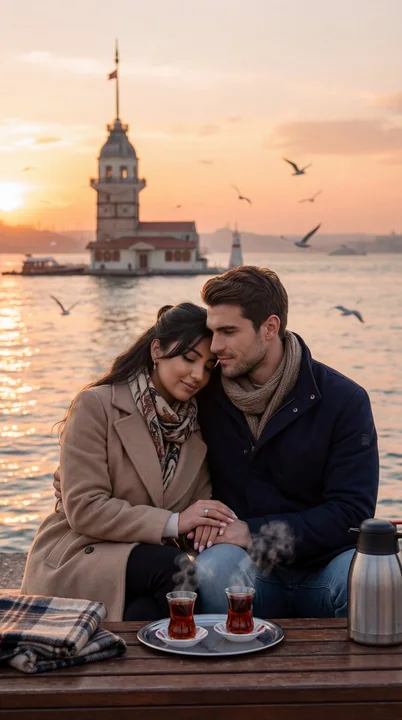
An affectionate gaze and black tea by the seaside at dusk in Istanbul
{ "generation_request": { "meta_data": { "tool": "NanoBanana Pro", "task_type": "photoreal_modern_romance", "version": "v1.0_2026_USKUDAR_SUNSET_TEA_FINAL_EN", "priority": "highest", "language": "en" }, "references": { "reference_image_fema
电影感写实情侣浪漫夕阳
Case 7
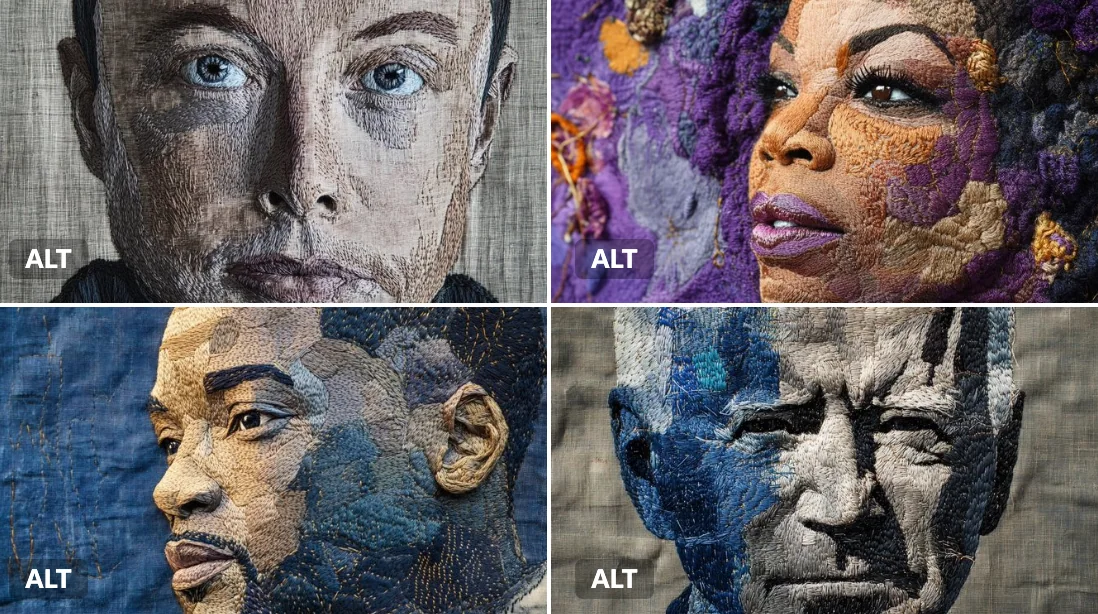
Embroidered portrait
An embroidered portrait of [subject], [colors] thread on deep linen fabric. Visible needlework, layered textures, and handmade patterns give it an earthy, sacred feel. An embroidered portrait of Elon Musk, stitched with rich steel grey and
portrait