Case 22831
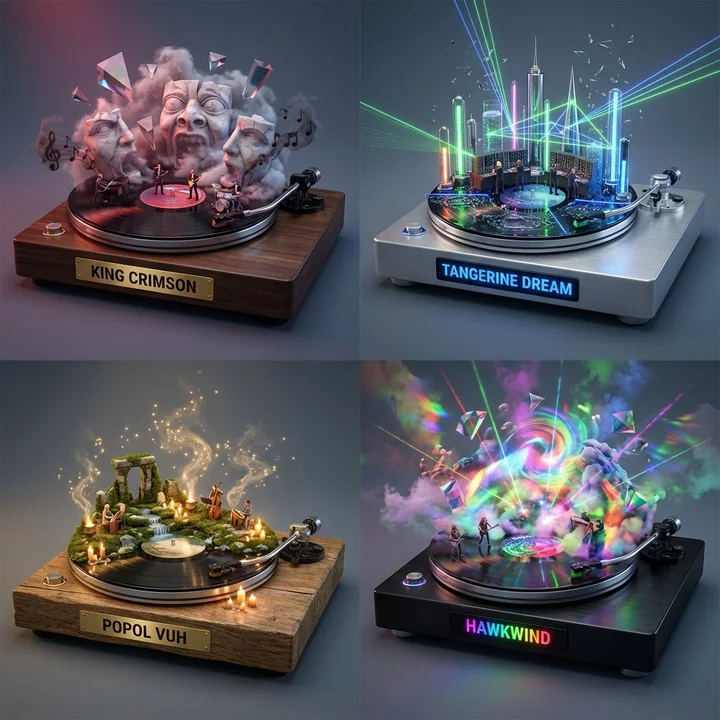
沉浸式黑胶微观世界与超现实音乐舞台
超写实微景观舞台光黑胶盘音乐感
Prompt
Do this for Pink Floyd: Input Variable: [INSERT BAND/ALBUM] (e.g., Pink Floyd, Daft Punk, Nirvana) System Instruction: Act as a Music Historian and Set Designer. Create a 2x2 Grid of "Audio-Visual Dioramas." 1. The Curation Logic (The Deep Cuts): Analyze Input: Identify the genre and sonic signature of the Input Band. Select 4 Hidden Gems: Identify 4 lesser-known albums from other bands that share this sonic DNA but offer a different visual flavor. The Translation: For each album, define the "Sonic Materiality": If Heavy Metal: Rusty Iron, Fire, Spikes. If Synth-Pop: Neon Glass, Chrome, Laser Grids. If Folk/Acoustic: Mossy Wood, Stone, Candlelight. If Prog Rock: Surreal Marble, Floating Prisms, Clouds. 2. The "Immutable" Container (The Vinyl Stage): The Base: Each diorama is built on top of a Spinning Vinyl Record acting as the circular stage floor. The Plinth: The record sits on a high-end, thick Audiophile Turntable Base (Wood or Brushed Aluminum). The Nameplate (CRITICAL TEXT FIX): On the vertical front face of the Plinth, there is a Polished Brass or Digital Display Plate. Text Rule: It must clearly display the [ARTIST NAME] in bold, legible, capital letters. 3. The Composition (The Sound Made Solid): CRITICAL: Do not just recreate the album cover. Build a world that feels like the music. The Structure: Architecture rises from the grooves of the vinyl record. Example: A wall of amplifiers, a surreal floating prism, a crumbling brick wall, or a forest of microphone stands. The Atmosphere: Use particle effects to visualize the sound waves. Visuals: Floating musical notes made of smoke, vibrating liquid surfaces, or shattered glass suspended in mid-air. The Figures: Tiny 1:87 scale band members performing inside this surreal landscape. 4. Visual Syntax (Per Panel): Panel A: Album 1 (Focus on Surrealism/Scale). Panel B: Album 2 (Focus on Technology/Machinery). Panel C: Album 3 (Focus on Nature/Organic Textures). Panel D: Album 4 (Focus on Light/Color). 5. Lighting & Atmosphere: Concert Lighting: Each box is lit like a stage show. Spotlights, laser beams, and stage haze. Depth: Shallow depth of field (Tilt-Shift) to make the vinyl record look massive. Background: Seamless Slate Grey to keep the focus on the colors. Output: 2x2 Grid, Hyper-Realistic Miniature Set Design, 8k Resolution, "Audiophile" Aesthetic.

请为 Pink Floyd 执行此操作:输入变量:[插入乐队/专辑](例如:Pink Floyd、Daft Punk、Nirvana) 系统指令: 扮演一位音乐历史学家和舞台设计师。创建一个 2x2 的“视听立体模型”网格。 1. 策展逻辑(深层剪辑): 分析输入:识别输入乐队的流派和声音特征。 选择 4 个隐藏瑰宝:选择 4 张来自其他乐队的鲜为人知的专辑,它们拥有相似的声音 DNA,但提供不同的视觉风格。 翻译:对于每张专辑,定义“声音物质性”: 如果是重金属:生锈的铁、火焰、尖刺。 如果是合成流行乐:霓虹玻璃、铬、激光网格。 如果是民谣/原声:长满苔藓的木头、石头、烛光。 如果是前卫摇滚:超现实大理石、漂浮棱镜、云朵。 2. “不变的”容器(黑胶唱片舞台): 底座:每个立体模型都搭建在一个旋转的黑胶唱片上,作为圆形舞台地板。 基座:唱片放置在一个高端、厚实的音响发烧友唱机基座上(木质或拉丝铝)。 铭牌(关键文本修正):在基座的垂直正面,有一个抛光黄铜或数字显示牌。 文本规则:它必须清晰地以粗体、清晰、大写字母显示 [艺术家姓名]。 3. 构图(凝固的声音): 关键:不要仅仅重现专辑封面。构建一个感觉像音乐的世界。 结构:建筑从黑胶唱片的凹槽中升起。 示例:一堵放大器墙、一个超现实的漂浮棱镜、一堵摇摇欲坠的砖墙,或一片麦克风支架森林。 氛围:使用粒子效果来可视化声波。 视觉效果:由烟雾制成的漂浮音符、振动的液体表面,或悬浮在半空中的碎玻璃。 人物:微小的 1:87 比例乐队成员在这个超现实的景观中表演。 4. 视觉语法(每块面板): 面板 A:专辑 1(侧重于超现实主义/比例)。 面板 B:专辑 2(侧重于技术/机械)。 面板 C:专辑 3(侧重于自然/有机纹理)。 面板 D:专辑 4(侧重于光线/色彩)。 5. 灯光与氛围: 演唱会灯光:每个盒子都像舞台表演一样被照亮。聚光灯、激光束和舞台烟雾。 景深:浅景深(移轴)使黑胶唱片看起来巨大。 背景:无缝的板岩灰色,以保持对色彩的关注。 输出:2x2 网格,超逼真微缩场景设计,8k 分辨率,“发烧友”美学。
他のプロンプト

Case 3
ハチの科学城
3D Q版ミニスタイルの画像を生成してください。甘い研究基地としての巣箱構造で、建築は六角形の透明な蜜蝋の部屋が積み重なってできています。上部には蜂蜜を滴らせる太陽花のシャワーヘッドが浮かんでおり、外壁には発光する花粉のつたが這っています。側面には蜜蝋製のスライドとタンポポのパラシュートが延びており、入口は向日葵の回転ドアです。巣箱の窓から中を見ると、試験管の作業台、蜂蜜の吊灯、白衣を着たハチの博士が見えます。ガーデンには花粉モーターサイクルを運転するカブトムシの配達員や、拡
naturearchitecture
Case 28080
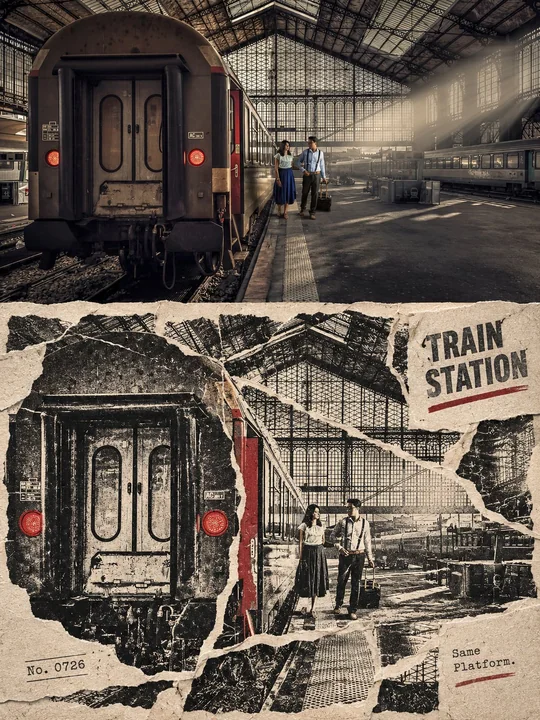
竖版上下对比撕纸轨道版画拼贴海报
Create a vertical 3:4 top-and-bottom comparison editing poster from the input photo. The upper half should completely preserve the real photographic texture, subject identity, and original composition of the input photo, without turning the