Case 28424
日式编辑风格咖啡系列海报
Prompt
Please create 4 independent "Japanese editorial coffee posters". The four images belong to the same series, but each must have a different subject representation, composition path, and visual event; do not simply change colors or brand names.

The four images collectively adopt the visual language of modern Japanese museum publications, independent design exhibition posters, and restrained editorial design. The aspect ratio is unified at 9:16 vertical, with each image output independently, no collages. The background is unified as warm ivory paper with very subtle real paper fibers and low-intensity printing grain. Uniformly use warm ivory, ink black, coffee brown, and a small amount of dark vermilion; neon, high-saturation gradients, and commercial gloss are prohibited.

All posters use a small amount of circular visual anchors, fine measurement lines, arcs, anchor points, and structural markers. Lines must serve the subject and the reading path and must not become random decorations. Text only uses short, readable English labels; do not generate long pseudo-text, random logos, QR codes, or watermarks.

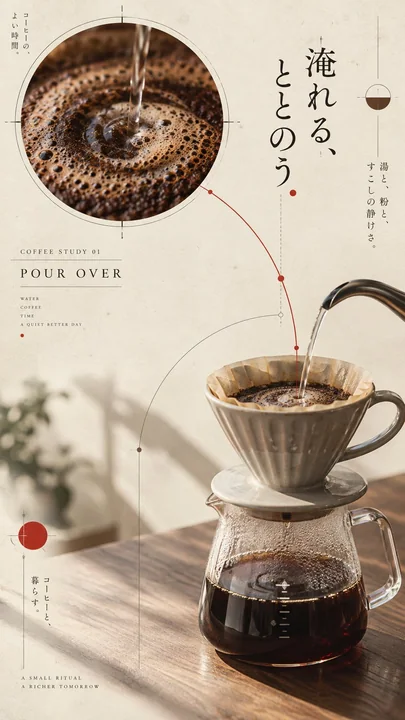
Image 1: Pour over coffee. The ceramic dripper and glass server adopt a calm three-quarter tabletop perspective; a large circular partial slice showing coffee blooming and concentric ripples is placed at the top left, with real equipment at the bottom right; the water flow is translated into a measurement arc. Add the short label "COFFEE STUDY 01 / POUR OVER".

Image 2: Iced drip coffee. A transparent tall cup of iced coffee is located on the left; a vertical slice is added to the image showing the layers of coffee, ice cubes, and reflections; dense vertical lines are used to establish a calm rhythm. Add the short label "COFFEE STUDY 02 / COLD BREW".

Image 3: Latte. A handmade ceramic cup is located at the bottom right; an offset disk cropped by the edge of the frame is placed behind it, the disk echoing the milk foam swirls; add two small material detail circles. Add the short label "COFFEE STUDY 03 / MILK FORM".

Image 4: Coffee beans and equipment. Roasted coffee beans, a manual coffee grinder, a metal measuring spoon, and a folded paper bag form a group of diagonal object maps, arranged in an isometric three-quarter perspective; fine outlines and route nodes connect the objects, retaining large areas of white space. Add the short label "COFFEE STUDY 04 / ORIGIN / TOOL / ROAST".

All four images must maintain real coffee, glass, ceramic, metal, paper, and wood textures; the subject must be clear, lighting natural, and editorial layout mature. Prohibit ordinary coffee shop menus, messy collages, fixed four-grid layouts, average distribution, cheap plastic 3D, complex UI, gibberish, excessive props, and watermarks.

Final output 4 independent 9:16 posters, maintaining series unity while making the four images significantly different in subject, composition, visual focus, and interaction mechanisms.

请创作 4 张相互独立的「日式编辑咖啡海报」,四张图属于同一个系列,但每张必须拥有不同的主体表现、构图路径和视觉事件,不得只更换颜色或品牌名。

四张图共同采用现代日本博物馆出版物、独立设计展览海报与克制编辑设计的视觉语言。画幅统一为 9:16 竖版,每张独立输出,不拼图。背景统一为暖象牙色纸张,带有非常细微的真实纸纤维和低强度印刷颗粒。统一使用暖象牙、墨黑、咖啡棕和少量暗朱红,禁止霓虹、高饱和渐变和商业化光泽。

所有海报都使用少量圆形视觉锚点、细测量线、弧线、定位点与结构标记。线条必须服务于主体和阅读路径,不得变成随机装饰。文字只使用短小、可读的英文标签,不生成长篇伪文字、随机 Logo、二维码或水印。

图 1:手冲咖啡。陶瓷滤杯与玻璃分享壶采用平静的三分之四桌面视角,左上放置一个展示咖啡绽放和同心涟漪的大圆形局部切片,右下为真实器具;水流被转译为一条测量弧线。加入短标签 “COFFEE STUDY 01 / POUR OVER”。

图 2:冰滴咖啡。透明高杯冰咖啡位于左侧,画面加入一条纵向切片,展示咖啡、冰块和反光的层次;使用细密的垂直线建立冷静节奏。加入短标签 “COFFEE STUDY 02 / COLD BREW”。

图 3:拿铁。手工陶瓷杯位于右下,背后放置被画面边缘裁切的偏置圆盘,圆盘呼应奶泡旋纹;加入两个小型材质细节圆。加入短标签 “COFFEE STUDY 03 / MILK FORM”。

图 4:咖啡豆与器具。烘焙咖啡豆、手摇磨豆机、金属量勺和折叠纸袋组成一组斜向物件地图,以等距三分之四视角排列;细轮廓线与路线节点连接对象,保留大面积留白。加入短标签 “COFFEE STUDY 04 / ORIGIN / TOOL / ROAST”。

四张图都必须保持真实咖啡、玻璃、陶瓷、金属、纸张和木质纹理;主体清晰、光线自然、编辑排版成熟。禁止普通咖啡店菜单、杂乱拼贴、固定四宫格、平均排布、廉价塑料 3D、复杂 UI、乱码、过多道具和水印。

最终输出 4 张独立的 9:16 海报,保持系列统一性,同时让四张图在主体、构图、视觉焦点和互动机制上明显不同。
مطالب أخرى
Case 18138
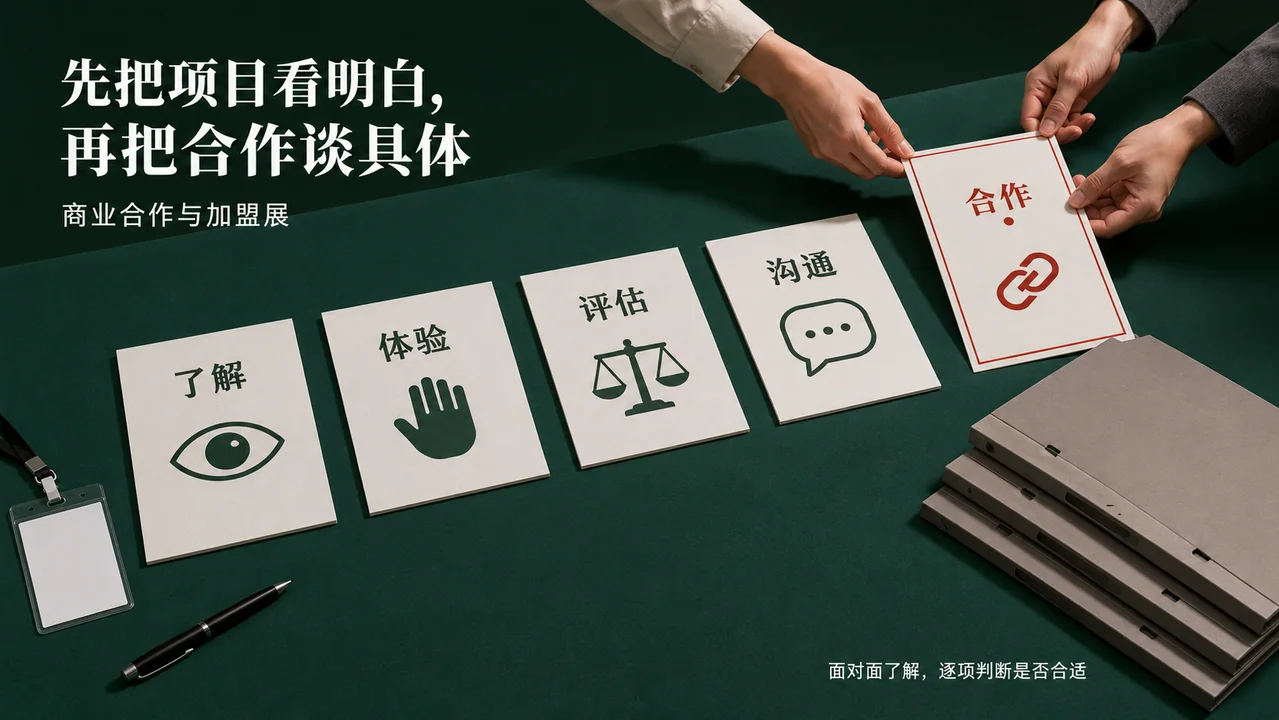
بوستر معلومات بصرية عن إجراءات معرض الامتياز التجاري
海报极简商务纪实展会
Case 13644
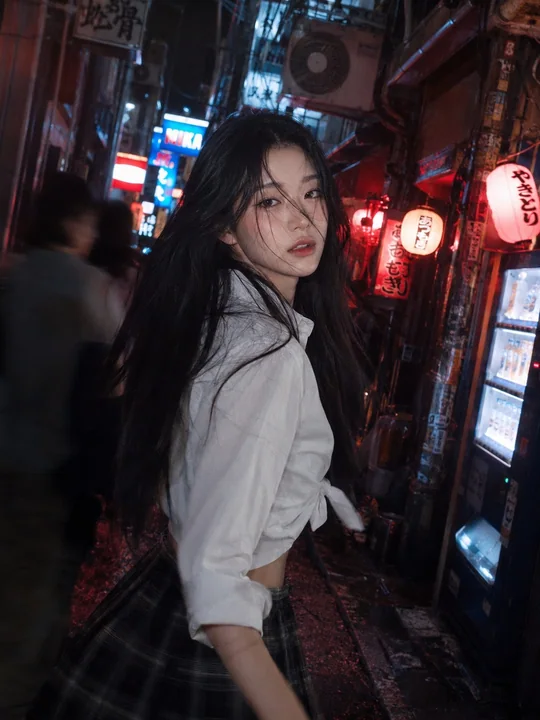
تصوير فتاة وسط أزقة طوكيو الضيقة بأضواء النيون وبإحساس حبيبي عالٍ
لقطة فوتوغرافية عالية التحبب ومشحونة بالعاطفة، التُقطت في زقاق خلفي ضيق في طوكيو، يعجّ بأنابيب المكيفات المتساقطة منها القطرات، وتوهج آلات البيع، وانعكاسات فوانيس الإيزاكايا. الهواء حارّ، رطب، ومكهرب. شابة ترتدي قميصًا أبيض مربوطًا وتنورة ك