Case 15137
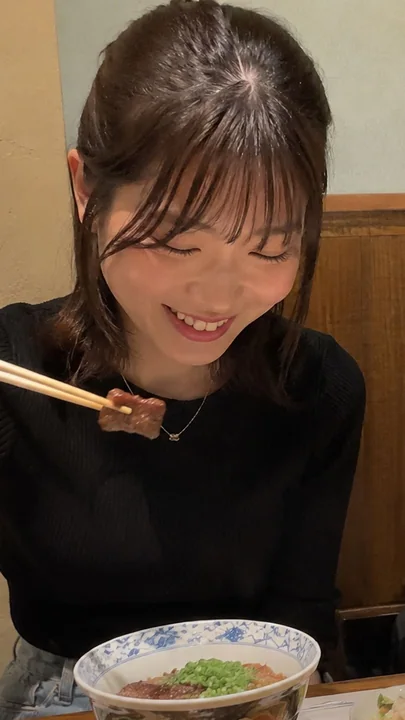
日式餐厅吃烤肉盖饭的黑衣女性人像
Prompt
Subject:
The final image is fixed as a single 9:16 vertical photo. The center of the face is placed at horizontal 51%, vertical 30%, closed eyes at vertical 25%, the meat at the tip of the chopsticks at horizontal 32%, vertical 49%, and the center of the rice bowl near horizontal 51%, vertical 78%. The bounding area of the person is horizontal 11–92%, vertical 2–81%, with about 2% white space at the top of the head, and the rice bowl cut off at the bottom. These ratios, the bounding area, the positions of the face/eyes/hands/small items, and the top/left/right/bottom margins are fixed as anchors; do not re-center or adjust, and do not equalize background margins during each generation. Parts extending outside the frame remain cut off and are not completed through canvas expansion. Do not change the same woman, same face shape, same hairstyle, same clothing, same pose and contact, same background layout, same lighting, color, material, and surface treatment. Do not perform horizontal flip, vertical flip, change of angle of view, change of camera distance, zooming in only on the face, or shrinking only the person. Fix the overlapping order of the person and the background, the position where the outline reaches the edge of the screen, and the size relationship between the foreground and background of the hand. The tolerance for each anchor point observed in normalized coordinates is strictly controlled within ±2% in principle, and correction that shifts the hand or small items only to align the center of the face is prohibited. During final confirmation, use both overall display and enlarged display to check if the same information is located in the same position as the original image.

The protagonist is a single, cute and natural fictional adult Japanese woman sitting in a seat at a quiet Japanese-style restaurant, about to bring a piece of grilled meat picked up with chopsticks to her mouth. Included in the frame from the top of the head to the upper edge of the rice bowl, wearing a black long-sleeved ribbed top. The number of people is fixed at one, represented as a fictional adult over 20 years old, not a real person. Only reproduce the age impression, body type, visible parts, clothing, and movements visible in the frame; do not assign attributes that cannot be visually determined such as nationality, occupation, or family relationships. Do not replace the person with another face shape, another body type, or another age group, even if other people are visible in the background, do not promote them to the protagonist. Maintain a natural boundary between the protagonist's silhouette and the background.

Face/Makeup:
The face and elements within the face in the frame are a small oval shape, thin bangs partially covering the eyebrows, closed eyes, a natural bridge of the nose, and a large smile with teeth slightly visible. Raise the cheeks to convey the pleasure just before eating, but do not unnaturally open the mouth wide. The base makeup is not thickly applied, preserving small fluctuations in skin tone, the three-dimensionality of the cheeks, nose, and mouth area, and natural pores. The left and right eyes, eyebrows, nostrils, corners of the mouth, and visible teeth are naturally aligned as a human body; do not unify the irises or catchlights as if they were copied. Makeup is limited to light colors identifiable in the image; do not add heavy eye shadow, thick eyeliner, artificial fake eyelashes, strong contouring, excessive whitening, or plastic-like skin.

Hair:
The hair is dark brown semi-long hair, close to black, tied back, preserving thin bangs and long bangs on the sides of the cheeks. Natural parting on the top of the head and small highlights from indoor light. Do not unify every strand of hair into lines; mix thick bundles, medium bundles, and thin bangs, with continuous flow from root to tip. Do not break the overlap of the hairline, parting, ear area, neck, or shoulders. Only reflect wind, moisture, gravity, and contact visible in the frame; do not change to other hairstyles, excessive curls, or a helmet-like appearance with uniform gloss.

Expression/Gaze:
The expression and gaze consist of closed eyes, the face slightly downward, and a wide open smile. The gaze is not visible, naturally conveying joy in anticipation of the dish. Do not show food already in the mouth, exaggerated chewing, or the tongue exposed. Keep the direction of the left and right pupils and the focal distance consistent to avoid squinting, different focal points for each eye, or unnatural showing of the whites of the eyes. Link the movement of the cheeks, outer corners of the eyes, nostrils, and corners of the mouth to the same emotion; do not use a sticker-like smile only on the mouth. There are no tears, intense surprise, anger, sleepiness, provocation, or romantic assertions in the image; do not add such elements.

Pose/Fingers/Contact:
The pose, fingers, and contact involve the upper body leaning slightly forward toward the table. A single hand entering from the left side of the frame holds wooden chopsticks, with the tips holding a small piece of meat near the horizontal. The opposite hand is outside the frame. Ensure correct contact and gravity for the chopsticks, fingers, and meat. The parts of the shoulders, collarbones, neck, upper arms, elbows, forearms, and wrists connected within the frame are presented at natural skeletal angles. When the hand is visible, do not confuse left and right; one hand has five fingers, and the number of joints, nail direction, and finger length are natural, with the object holding contact points consistent with pressure and gravity. Do not have invisible fingers or body parts grow out of the background, and avoid arm fusion, shoulder doubling, neck lengthening, or joint hyperextension. Fix the twist and transformation of the body direction and face direction within the range of the original image.

Clothing/Accessories:
Clothing and accessories consist of a solid black long-sleeved ribbed knit. A crew neck, fine vertical ribs fitting the body, and natural folds at the shoulders and sleeves. A thin silver chain with a small round pendant. No other decorations or logos. Do not change the color, neckline, cuffs, shoulder straps, knots, stitching, hardware, or the presence of decorations. The fabric is not attached like paint; small wrinkles are generated according to stretch, drape, thickness, gravity, and contact. Visible small items maintain the same shape, position, holding method, and material; do not add brand text or fictional logos. Do not infer and complete the overall clothing or unconfirmed accessories outside the frame.

Place/Time/Background:
The place and background are a warm-lit Japanese-style restaurant. The background consists of a light beige painted wall and waist-high wooden panels, with a black chair or partition in the lower right corner. The foreground is a large blue and white bowl with a white base, topped with green chopped onions and meat dishes. The time period is fixed to the brightness readable from the light in the frame; do not replace it with other times or places like night scenes, sunsets, or studio backgrounds. Safeguard the order and overlap of the foreground, middle ground, and background, and naturalize the orientation of visible structures such as the horizon, walls, windows, floors, furniture, and plants. The entire tabletop, the opposite hand, below the waist, everything inside the rice bowl, and other guests in the store are all outside the frame. Do not create unknown dish names, store names, menus, extra tableware, steam, or logos. The background is not simplified to a blank space, nor is it filled with information not present in the original image.

Composition/Camera:
The composition and camera are a vertical snapshot from a position slightly higher than the dining companion's line of sight. 35-50mm equivalent, with the face, chopstick tips, and rice bowl in a triangular arrangement. Focus on the face and the meat; the rice bowl is sufficiently readable but the distant wall is softly blurred. Fix the vertical cropping, shooting distance, camera height, pitch angle, and the direct/oblique orientation to the subject. Maintain the natural resolution of a smartphone, avoiding wide-angle barrel distortion, face center swelling, or elongation of only legs or arms. The focal plane matches the protagonist's face or the image theme, and the background blur amount and outline correspond to the original image. Do not create unnatural uniform blurring like an outline cutout, double outlines, or generated blur vortices.

Light Source:
The light source is mainly warm diffused lighting from the ceiling, with soft amber light on the front of the face and hair. A weak fill light from the front left of the frame shines on the chopsticks, meat, and fingers to make them readable, without blackening or flattening shadows. Keep the main light source, auxiliary reflections, and shadow directions consistent, applying the same lighting conditions to the face, hair, clothing, small items, and background. Catchlights or material reflections correspond to the light source position; do not add multiple contradictory suns, irrelevant spotlights, or artificial luminescence around the entire outline. Highlights retain fine gradations, and do not simultaneously blow out skin, white cloth, sky, clouds, or windows. Shadows also retain color information and reflected light.

Color/Tone:
The colors and tones integrate the black clothing, dark brown hair, beige wall, wood color, white/blue bowl, green onions, and reddish-brown meat into a warm color system. Suppress indoor yellow cast; skin maintains natural warm tones. The white balance matches the scene light, suppressing mutual contamination of skin, white, black, and background colors. Smoothly connect from highlights to midtones to shadows, avoiding HDR-style local contrast, fluorescent colors, excessive blue-orange separation, crushed blacks, or halos around outlines. Saturation maintains the relationship between main and accent colors within the image; do not change the hue of clothing or background colors to others.

Texture/Fine Detail:
The textures and fine details depict the weave of the black knit, hair bundles, the smooth surface of the wooden chopsticks, the surface of the grilled meat, chopped onions, the glaze and blue-and-white patterns of the ceramic bowl, the wooden wall, and the natural texture of skin pores and teeth. Skin is not a uniform noise surface; pore size, fine vellus hair, blood color, differences in dryness and moisture, and differences in gloss are naturalized according to the part. Hair, cloth, wood, ceramics, sand, water, metal, plastic, etc., are not given a uniform gloss; surface roughness, transparency, reflection range, and edge thickness are depicted individually. High definition does not create pseudo-text, regular repeating patterns, over-sharpening, or grid-like noise. When enlarged, not only outlines but also tiny shadows at contact surfaces, semi-transparent edges, surface irregularities, and fiber or grain directions can be confirmed for density. On the other hand, do not exaggerate invisible pores or fibers into a coarse texture, safeguarding the amount of information appropriate for the shooting distance.

Image Processing/Finish:
The image processing is completed as a realistic smartphone photo or a natural portrait photo. Exposure, color temperature, contrast, clarity, saturation, and noise reduction are moderate, maintaining the brightness and atmosphere of the original image. Do not smooth the skin separately as if it were another layer, and avoid over-emphasizing only the pupils, teeth, or lips. Retain slight sensor grain and natural gradations, not leaning toward illustrations, 3DCG, wax figures, or over-composited photos for advertising. During local outline correction, do not dissolve fine hair lines, eyelashes, fingertips, clothing edges, or accessory edges into the background, and conversely, do not create white borders. After noise reduction, do not unify the graininess of skin, cloth, hair, and background; each retains its depth and material difference. The tone curve does not excessively compress highlights, with the face and clothing in the midtones as the protagonists, without over-boosting shadow information to the point of flattening. Do not add chromatic aberration, excessive vignetting, artificial light leaks, or lens flare. The final output does not insert text, subtitles, borders, watermarks, signatures, UI, or mockups; only output a single 9:16 photo.

Corruption Avoidance/Prohibitions:
The highest priority condition for corruption avoidance: prohibit resemblance to real people, de-aging, replacement with others, multi-person conversion, asymmetrical face collapse, inconsistent pupil shapes, fused teeth, overlapping nostrils, deformed ears, and poor neck-shoulder connections. When hands are present, prohibit extra fingers, missing fingers, fused fingers, flipped palms, abnormally long nails, or fingers penetrating objects. Clothing prohibits disappearing shoulder straps or sleeves, fusion with the body, interrupted patterns, or added transparency. Background prohibits curved horizons or wall lines, dissolving furniture or utensils, giant background figures, or text that looks readable but is not. Regarding invisible elements, the entire tabletop, opposite hand, below the waist, everything inside the bowl, and other guests in the store are all outside the frame. Do not create unknown dish names, store names, menus, extra tableware, steam, or logos; safeguard this boundary and do not generate content outside the frame or unknown content. Do not add beauty filters, excessive face-slimming, enlarged eyeballs, extreme chest/waist emphasis, explicit sexual hints, low angles that only incite body parts, other clothing, other backgrounds, other light sources, other seasons, logos, brands, or watermarks.

被摄主体:
完成图像固定为纵9:16的单张照片。脸部中心置于横51%、纵30%,闭合双目置于纵25%,筷子尖端的肉置于横32%、纵49%,盖饭中心置于横51%、纵78%附近。人物外接区域为横11~92%、纵2~81%,头顶余白约2%,盖饭在下端截断。以此比率、人物外接区域、脸・眼・手・小物的位置、头顶・左右・下方余白作为固定锚点,每次生成时不重新居中调整,也不均等化背景余白。画面外延续的部位保持截断状态,不通过画布扩展补全。不改变同一女性、同一脸型、同一发型、同一服装、同一姿势与接触、同一背景布局、同一光线、颜色、材质、表面处理。不进行左右翻转、上下翻转、画角变更、相机距离变更、仅脸部放大、仅人物缩小。固定人物与背景的重叠顺序、轮廓到达画面边缘的位置、手前景与远景的大小关系。以规范化坐标观察各锚点的容差原则上控制在±2%以内,禁止仅对脸部中心对齐而偏移手或小物的校正。最终确认时,同时通过整体显示和放大显示,核对是否与原图相同信息位于相同位置。
主角是在宁静的和风餐饮店座位上,用筷子夹起一片烤肉即将送入口边的、可爱自然的虚构成年日本女性一人。从头顶至盖饭上缘纳入画面,穿着黑色长袖罗纹上衣。人数固定为一人,以20岁以上的虚构成人表现,而非现实人物。只再现画面中确认可见的年龄印象、体型、可见部位、服装、动作,不赋予国籍、职业、家庭关系等视觉无法确定的属性。不将人物替换为其他脸型、其他体型、其他年龄层,即使背景可见其他人物也不将其提升为主角。保持主角轮廓与背景的自然边界。
脸・妆容:
脸部及画面内脸部元素为小卵形、薄刘海部分遮盖眉毛、闭合双眼、自然鼻梁、牙齿略微可见的大笑容。抬起脸颊,传达即将进食前的愉悦,但不不自然张大嘴巴。基础妆容不厚涂,保留肌肤色的小波动、脸颊・鼻・嘴周的立体感、自然毛孔。左右眼睛、眉毛、鼻孔、嘴角、可见牙齿的排列作为人体自然对齐,不将虹膜或捕捉光复制般统一化。妆容仅限于图像可辨识的淡色,不添加浓重眼影、粗眼线、人工假睫毛、强烈轮廓修饰、过度美白、塑料感肌肤。
头发:
头发为接近黑色的深棕色半长发,后方扎起,保留薄刘海及脸颊侧的长刘海。头顶自然分缝及室内光的小光泽。不将每根头发统一为线条,混合粗束、中等束、细刘海,从发根至发梢连续流动。不破坏发际线、分缝、耳周、颈部或肩部的重叠。仅反映画面可见的风、湿气、重力、接触,不改为其他发型、过度卷发、统一光泽的头盔状表现。
表情・视线:
表情与视线为闭合双眼、脸部略微向下、开口大笑。视线不可见,传达对料理的期待自然喜悦。不显示已含入口中食物状态、夸张咀嚼、露出舌头。将左右瞳孔方向与焦点距离一致,避免斜视、单眼焦点不同、不自然白眼。将脸颊、眼尾、鼻翼、嘴角的动作联动至同一情感,不将仅嘴部贴附式笑容。图像中无泪水、强烈惊讶、愤怒、睡意、挑逗、恋爱断定,不添加此类元素。
姿势・手指・接触:
姿势、手指、接触为上身略微前倾向桌面。画面左侧进入的单手持木筷,尖端水平附近夹住一小片肉。相反的手在画面外。正确保箸、指、肉的接触与重力。肩部、锁骨、颈部、上臂、肘、前臂、手腕在画面内连接的部分以骨骼自然角度呈现。可见手时,不混淆左右,一手五指、关节数、指甲方向、指长自然,物体持握接触点与压力、重力一致。不从背景生出不可见手指或身体部位,避免手臂融合、肩部双重化、颈部伸长、关节反曲。将身体方向与脸部方向的扭转变换固定在原图范围内。
服装・小物:
服装与小物为纯色黑色长袖罗纹针织。圆领、贴合身体的细纵纹、肩部与袖子的自然皱褶。细银链与小圆吊坠。无其他装饰、标志。不改变颜色、领口、袖口、肩带、结扣、缝合、五金件、装饰的有无。布料不贴附如涂装,依伸缩、垂感、厚度、重力、接触产生小皱褶。可见小物保持相同形状、位置、持握方式、材质,不添加品牌文字或虚构标志。不推测补全画面外服装整体或未确认配饰。
场所・时间・背景:
场所与背景为温暖照明和风餐饮店。背景为浅米色涂墙与齐腰木板,右下角黑色椅子或隔板。近景为白底青花大盖饭,上方绿刻葱与肉料理部分。时间帯固定为画面内光线可读的亮度,不替换为夜景、日落、摄影棚背景等其他时间・场所。守护前景、中景、远景顺序与重叠,水平线、墙、窗、地板、家具、植物等可见结构的朝向自然化。桌面整体、相反的手、腰部以下、盖饭内全部、店内客人均在画面外。不创作不明料理名、店名、菜单、额外餐具、蒸汽、标志。背景不简化为空白,同时不以原图无信息填充。
构图・相机:
构图与相机为从同席者视线略高位置的纵向抓拍。35~50mm等效,脸、筷尖、盖饭呈三角配置。对脸与肉合焦,盖饭足够可读但远方墙柔和虚化。固定纵向裁剪、拍摄距离、相机高度、俯仰角、与被摄主体的正对・斜向。保持智能手机般的自然分辨率,避免广角桶形扭曲、脸中央膨胀、仅腿或臂伸长。焦平面匹配主角脸或图像主题,背景虚化量与轮廓相当于原图。不制造轮廓抠图般的非自然均匀虚化、二重轮廓、生成虚化的涡流。
光源:
光源以天花板温暖漫射照明为主光源,脸正面与头发柔和琥珀色光。从画面左前方弱辅助光照入筷子与肉、指,使其可读,不将阴影黑化压扁。主光源、辅助反射、阴影方向保持一致,对脸、头发、服装、小物、背景施加相同照明条件。捕捉光或材质反射与光源位置对应,不添加多个矛盾太阳、无关聚光灯、轮廓全周人工发光。高光保留细微阶调,不同时白飞肌肤、白布、空、云、窗。阴影也保留色信息与反射光。
颜色・阶调:
颜色与阶调将黑色服装、浓茶发、米色墙、木色、白青盖饭、绿葱、赤褐肉以暖色系统合。抑制室内黄色被覆,肌肤保持自然暖色。白平衡匹配场景光线,抑制肌肤、白、黑、背景色的相互污染。从明部至中间调、暗部平滑连接,避免HDR风局部对比、荧光色、过度青橙分离、黑压扁、轮廓周边光晕。饱和度维持图像内主色与点缀色的关系,不将服装或背景色相改为其他色。
材质・细微质感:
材质与细微质感描绘黑色针织的纹路、头发束、木筷光滑面、烤肉表面、刻葱、陶器盖饭釉药与青花图案、木墙、肌肤毛孔与牙齿自然质感。肌肤非均匀噪点面,根据部位变化毛孔大小、薄绒毛、血色、干湿差、光泽差自然化。头发、布、木、陶器、沙、水、金属、塑料等不统一光泽,个别描绘表面粗糙度、透明度、反射范围、边缘厚度。高精细化不制造伪文字、规则重复图案、过度锐化、格子状噪点。放大显示时,不仅轮廓,连接触面的微小阴影、半透明边缘、表面凹凸、纤维或颗粒方向均可确认密度。一方面,不夸张肉眼不可见毛孔或纤维转为粗糙质感,守护与拍摄距离相称的信息量。
图像处理・完成:
图像处理作为实拍智能手机照片或自然肖像照片完成。曝光、色温、对比、清晰度、饱和度、噪点降低适度,维持原图亮度与空气感。不将肌肤单独如其他图层般平滑化,避免仅瞳孔、牙齿、嘴唇过度强调。保留轻微传感器颗粒感与自然阶调,不偏向插图、3DCG、蜡像、广告用过度合成照片。轮廓局部校正时,不将头发细线、睫毛、指尖、服装边缘、小物边缘溶入背景,反之也不制造白色镶边。噪点降低后,不统一肌肤、布、头发、背景的颗粒感,各自保留深度与材质差。色调曲线不过度压缩明部,以中间调的脸与服装为主角,不过度提升暗部信息致平板化。不后附色差、过度周边减光、人工光泄漏、镜头眩光。最终输出不插入文字、字幕、边框、浮水印、签名、UI、样机,仅输出9:16单张照片。
崩坏回避・禁止:
崩坏回避的最优先条件,禁止与现实人物相似、未成年化、替换他人、多个人物化、脸左右非对称崩坏、瞳孔形状不一致、牙齿融合、鼻孔重叠、耳朵变形、颈肩连接不良。手存在时禁止多余手指、缺失手指、融合手指、翻转手掌、异常长指甲、贯穿物体的手指。服装禁止肩带或袖子消失、与身体融合、图案中断、添加透视。背景禁止水平线或墙线弯曲、家具或器物溶解、远景人物巨大化、看似可读却不可读的文字。不可见元素方面,桌面整体、相反的手、腰部以下、盖饭内全部、店内客人均在画面外。不创作不明料理名、店名、菜单、额外餐具、蒸汽、标志,守护此边界,不生成画面外・不明内容。美肌滤镜、过度小脸化、眼球放大、极端胸腰强调、露骨性暗示、仅煽动身体部位的低角度、其他服装、其他背景、其他光源、其他季节、标志、品牌、浮水印不添加。
More prompts
Case 13030
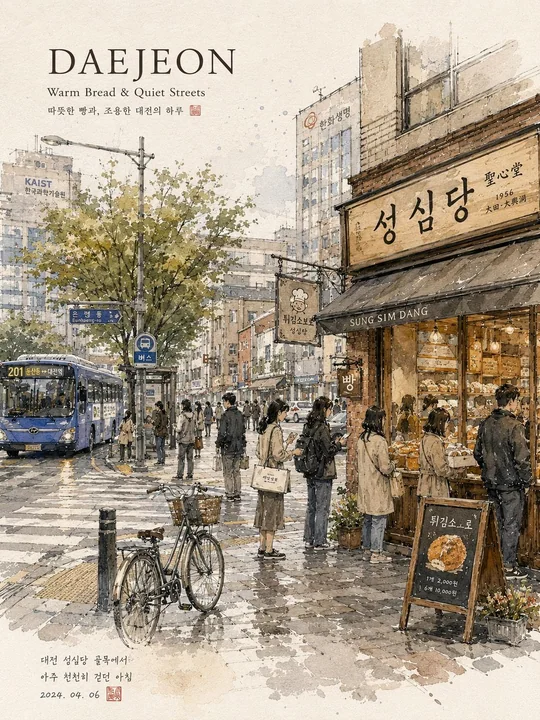
Healing Korean street-scene watercolor travel journal illustration
Dreamy watercolor travel illustration of a peaceful Korean city street, hand-painted urban sketchbook style, delicate ink linework mixed with soft watercolor washes, cozy café storefronts, warm bakery lights glowing through windows, quiet m
Case 28068
极简主义一笔画城市彩铅蜡笔艺术插画
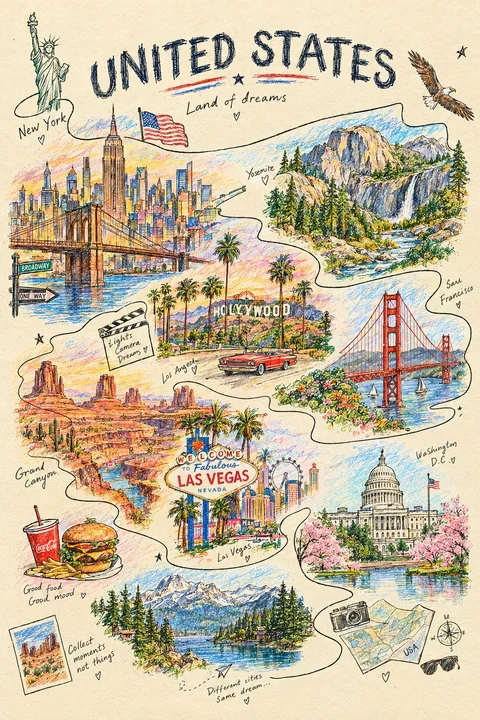
Create a visually stunning minimalist colored-pencil and wax-crayon artwork of [CITY], where the entire city is constructed from one single continuous hand-drawn line. The line begins as a tiny cultural symbol, travels through famous archit
Case 11