Case 26577
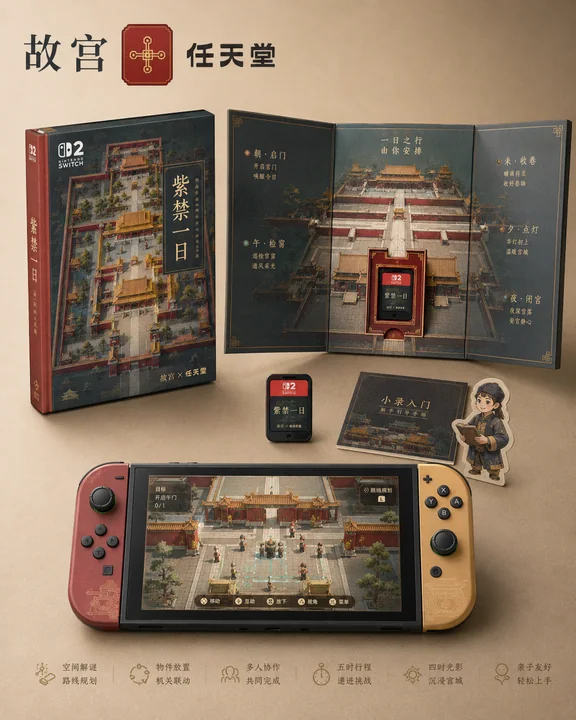
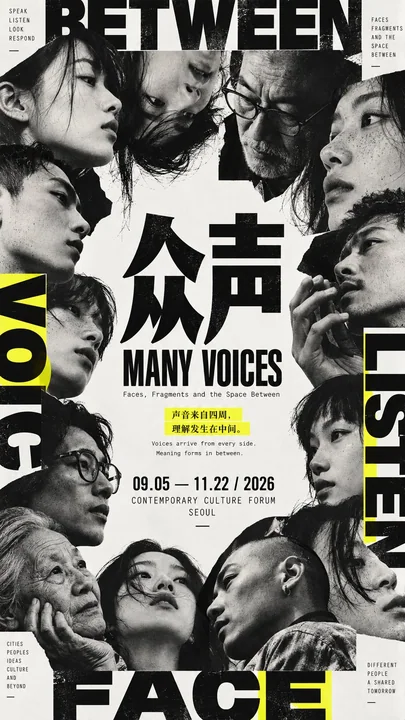
现代东亚展览海报包围式构图设计
Prompt
[Theme]
[Main Visual Subject]
[Core Chinese Character]
[Chinese Title]
[English Title]
[Enclosure Method] Character Surround / Three-Sided Huge Text / Physical Border / Nested Frame / Other
[Accent Color]
[Aspect Ratio] 9:16

Generate a modern exhibition poster with the temperament of East Asian Modernist Exhibition Poster, Japanese Contemporary Graphic Design, and Editorial Design. The core adopts an "Enclosure Composition": do not simply add a border around the subject, but let characters, huge text, real object edges, geometric frames, or photographic crops apply visual pressure from the periphery toward the center, naturally enclosing a clear visual focal point or negative space in the middle. The enclosure relationship should have direction and weight, avoiding four sides being completely equal in width, quantity, or symmetry; unbalanced structures like "heavy on the left, light on the right; dense on the top, sparse on the bottom" or "enclosed on three sides, open on one" can be adopted to maintain tension in the image.

First, select the most suitable enclosure mechanism according to the [Theme]. For character themes, multiple cropped portraits can gather toward the center from all sides; for a single sculpture or product, oversized edge Typography and white space can form a three-sided enclosure; for real-space themes, physical structures such as curtains, door frames, or architectural edges can be used to enclose the central area; for graphic themes, center-ward contraction can be achieved through multi-layered staggered geometric frames, repeating text, or nested boundaries. Do not cram all these methods into one image; choose only one that best fits the current theme as the main framework, then add a slight "break-frame," such as a character's shoulder entering the center, the subject pressing over the text, an object passing through the boundary, or a frame line being interrupted by a real object.

Typography must become part of the composition, not just a regular title. Use a striking [Core Chinese Character], which can be close to the edge of the frame, partially cropped, rotated, cross-regional, or create front-to-back occlusion with the subject; for the English title, use modern Grotesk, Condensed Sans, or restrained Serif, allowing ultra-wide tracking, 90° rotation, Outline fonts, and edge cropping. Use a maximum of 2–3 font personalities overall, forming a clear hierarchy where "large characters handle structure, medium characters handle the theme, and small characters handle information." Information density is generated through font size, direction, cropping, and spatial relationships, not by relying on a large number of explanatory modules to create a "sense of design."

Keep the image modern, sharp, and restrained as much as possible. For the background, prioritize neutral colors such as cool white, light gray, and charcoal black, adding only one [Accent Color] as a visual node; the total area of the accent color should be controlled at about 5%–10%, which can be used for small color blocks, short lines, dates, or local graphics. The central area should be noticeably quieter than the periphery, retaining about 25%–40% of effective negative space, making "outer density × inner sparsity" the most core visual rhythm. The subject itself should remain single, clear, and with a strong silhouette, without simultaneously adding landscapes, seals, traditional patterns, complex industrial diagrams, material cards, and large amounts of decoration.

The final reading order should be: first sight catches the strong outer shapes and central focus, second sight understands how the periphery encloses the center, third sight discovers the cropping, interleaving, or frame-breaking relationships, and finally, reading the title, date, and small amount of information. The entire work should look like a real contemporary exhibition poster, an international graphic design yearbook entry, or the visual of an independent culture magazine, rather than a traditional culture promotion page, PPT layout, or museum archive information board.

Avoid: equal four-sided borders, mechanical symmetry, full-page explanatory text, traditional national style decorations, landscape backgrounds, stacked red seals, templated small text, tech HUDs, meaningless English, Design Study, Vol., serial numbers, Logos, QR codes, and copyright marks.

【主题】
【主视觉主体】
【中文核心字】
【中文标题】
【英文标题】
【包围方式】人物环绕 / 三边巨字 / 实体边界 / 嵌套框 / 其他
【强调色】
【画面比例】9:16

生成一张具有 **East Asian Modernist Exhibition Poster、Japanese Contemporary Graphic Design、Editorial Design** 气质的现代展览海报。核心采用“包围式构图”:不要简单在主体四周加边框,而是让人物、巨大文字、真实物体边缘、几何框架或摄影裁切从画面外围向中心施加视觉压力,在中央自然围出一个明确的视觉焦点或负空间。包围关系应当有方向、有轻重,避免四边完全等宽、等量、对称;可以采用“左重右轻、上密下疏”“三边收拢、一边开放”等非均衡结构,让画面保持张力。

先根据【主题】选择一种最适合的包围机制。人物题材可以让多个裁切肖像从四周朝中心聚拢;单一雕塑或产品可以用超大边缘 Typography 与留白形成三边包围;真实空间可以利用幕布、门框、建筑边缘等实体结构围出中央区域;平面题材可以通过多层错位几何框、重复文字或嵌套边界逐层向中心收缩。不要把这些方法全部塞进一张图,只选择最适合当前主题的一种作为主骨架,再加入一处轻微“破框”,例如人物肩部进入中心、主体压住文字、物件穿过边界或某一框线被真实对象打断。

Typography 必须成为构图的一部分,而不是普通标题。使用一个醒目的【中文核心字】,可以贴近画幅边缘、局部裁切、旋转、跨区或与主体产生前后遮挡;英文标题使用现代 Grotesk、Condensed Sans 或克制 Serif,允许超宽字距、90° 旋转、Outline 字体和边缘裁切。整体最多使用 2–3 种字体性格,形成“大字负责结构、中字负责主题、小字负责信息”的清楚层级。信息密度主要通过字号、方向、裁切和空间关系产生,不要依靠大量说明模块堆出“设计感”。

画面尽量保持现代、锋利、克制。背景优先使用冷白、浅灰、炭黑等中性色,只加入一个【强调色】作为视觉节点;强调色总面积控制在约 5%–10%,可以用于小色块、短线、日期或局部图形。中心区域应当明显比外围更安静,保留约 25%–40% 的有效负空间,让“外密 × 内疏”成为最核心的视觉节奏。主体本身保持单一、清楚、有强轮廓,不要同时加入山水、印章、传统纹样、复杂工艺图、材料卡和大量装饰。

最终阅读顺序应为:第一眼先看到外围强大形与中央焦点,第二眼理解外围如何围出中心,第三眼发现裁切、穿插或破框关系,最后才阅读标题、日期和少量信息。整张作品要像真实的当代展览海报、国际平面设计年鉴作品或独立文化杂志视觉,而不是传统文化宣传页、PPT 排版或博物馆档案说明板。

避免:平均四边框、机械对称、满版说明文字、传统国风装饰、山水背景、朱印堆叠、模板化小字、科技 HUD、无意义英文、Design Study、Vol.、编号、Logo、二维码和版权标识。
More prompts
Case 25940
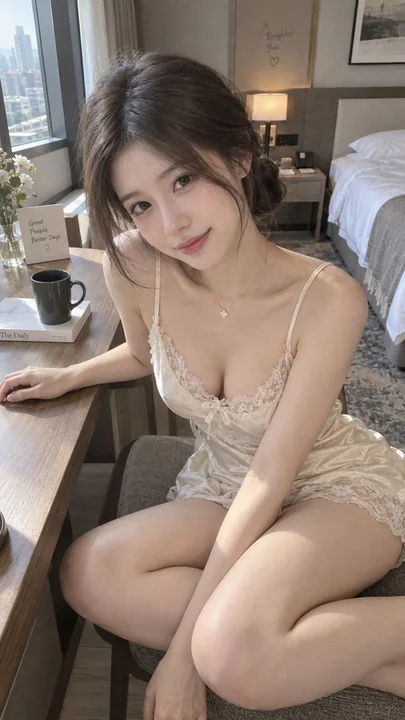
奶油色蕾丝裙中国网红酒店随拍
9:16, iPhone life snapshot, 20-something Chinese influencer, slender, deep brown short hair low bun, cream lace silk slip dress, warm gray hotel bedroom wooden table mermaid side sit, legs folded occupying the foreground, one hand on the ta
Case 25917
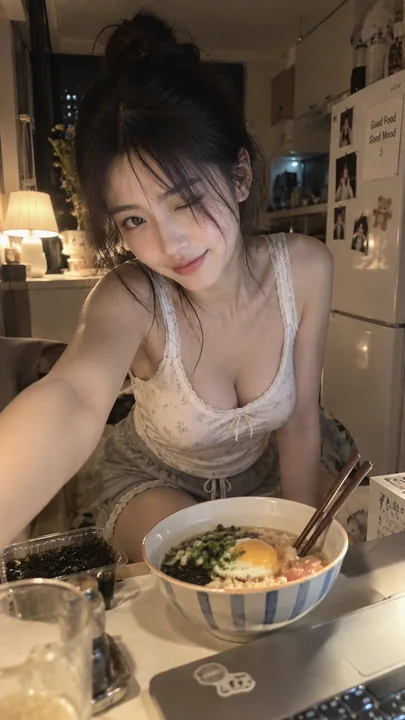
东亚女性夜晚厨房生活感自拍
9:16 photorealistic candid selfie of an adult East Asian woman in a cozy apartment kitchen at night, leaning forward very close to the camera over a dining counter, one arm extended toward the lens, direct eye contact, soft playful smile. L
Case 746