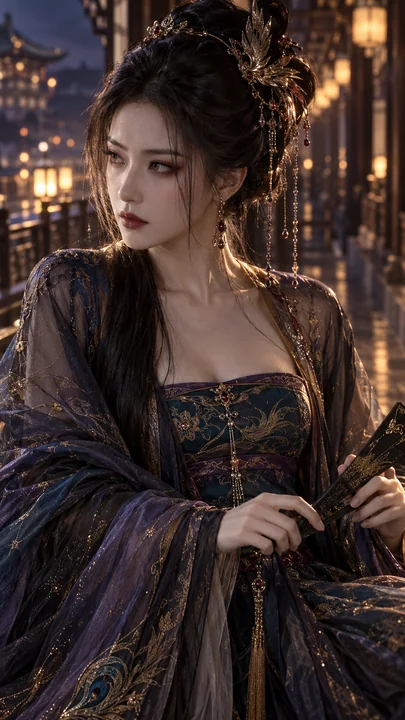
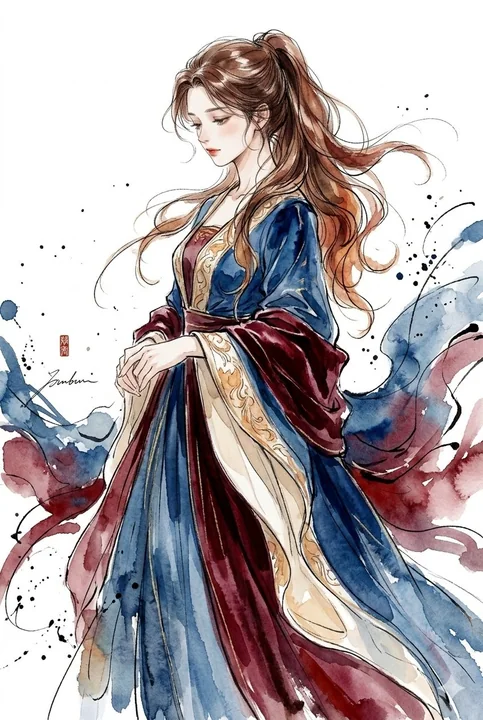
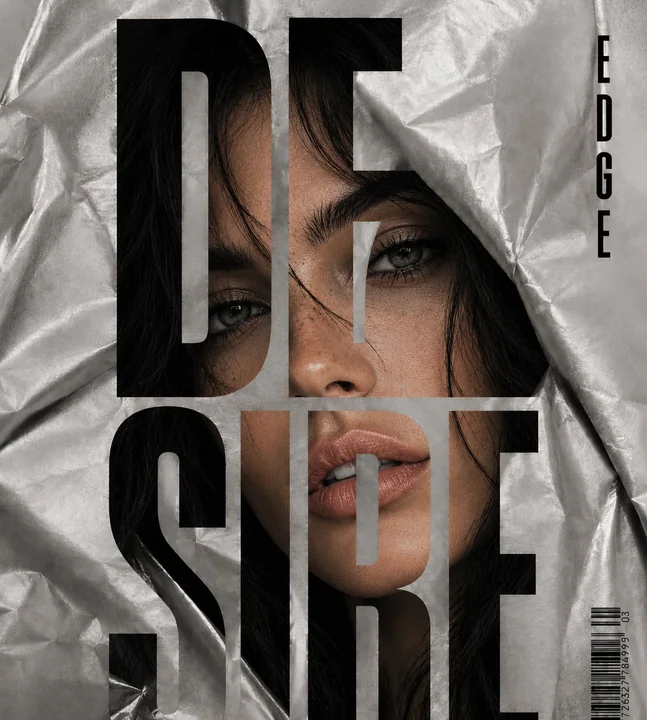
Case 28333
新中式古诗词细线设色艺术海报
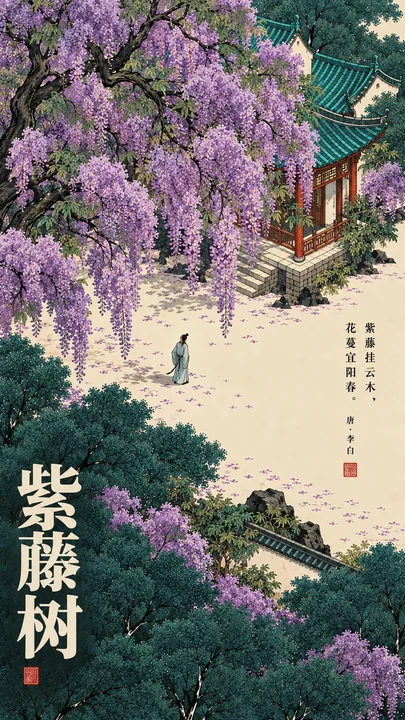
Prompt
【Ancient Poetry】{Fill in poem title, author, and original text}
【Poster Main Title】{Extract 2–4 representative Chinese characters}
【Core Imagery】{Such as hanging wisteria, blue-green flying eaves, crabapple after rain, round fan and fireflies}
【Visual Scene】{Such as Jiangnan courtyard, lakeside village, classical garden}
【Visual Relationship】{Such as flower vines hanging down, red and green contrasting, flowers and trees surrounding buildings}
【Main Color Tone】{Choose 2–3 harmonious traditional Oriental colors}
【Aspect Ratio】9:16

Create a New Chinese-style fine-line colored art poster based on ancient poetry with textbook-level illustration texture, transforming the flowers, trees, architecture, figures, and emotions in the poem into a complete, exquisite Oriental poetic scene.

【Painting Style and Texture】
Adopt a painting language that combines modern Oriental decorative illustration with traditional Gongbi line drawing. Tree canopies are complete color blocks in soft, fluffy cloud shapes, with edges featuring a delicate powder-stippled texture, and interior interspersed with slender, continuous, naturally bifurcating ink-black branches.

Flowers and trees are artistically generalized based on real growth forms; wisteria maintains natural hanging, crabapple flower clusters are orderly in density, and branch and leaf lines are elegant and smooth. Use complete color planes to express the overall form of plants, without depicting dense petals and leaves one by one.

Traditional architecture uses fine and regular blue-green tiles, elegant flying eaves, warm white walls, and a small amount of cinnabar red wooden structures. The overall style is flattened, with full and even coloring, possessing a clean, matte, delicate paper decorative texture.

【Composition and Space】
Adopt a high-angle bird's-eye view, Oriental scattered perspective, and modern flat composition.

Organize the screen through flower and tree enclosures, branch interspersing, architectural blocking, natural curves, and large areas of warm rice-white negative space to form a clear visual focus and spatial layers.

Flexibly adjust the composition based on the poem, highlighting the most representative scenery and action relationships. Detailed architecture, generalized plants, concise figures, and negative space background.

Avoid repeated use of fixed courtyard layouts, and do not forcibly add irrelevant pavilions, figures, or decorations. Ground and water surfaces remain simple, using only a small amount of fine lines and irregular ink shadows to express space.

【Oriental Color Palette】
Adopt traditional Oriental color systems such as azurite blue, mineral green, dark cyan, cinnabar red, wisteria purple, pink ochre, and warm ivory white.

以一种主色形成视觉重量,通过另一种对比色突出花木、建筑或人物主体,搭配墨色细线与暖白留白。
Use one main color to form visual weight, and highlight the main body of flowers, trees, architecture, or figures through another contrasting color, paired with ink-black fine lines and warm white negative space.

Emphasize complete large color planes, harmonious warm and cold relationships, and clear brightness levels. Colors are rich yet restrained, even, matte, and non-fading, avoiding messy colors, complex gradients, heavy textures, and excessive aging.

【Chinese Art Poster Layout】
Integrate large warm ivory white Chinese titles in the dark tree canopy area at the bottom or side of the image, using heavy, upright, and elegant Oriental art fonts, naturally overlapping with flower and tree color blocks.

Add exquisite small vertical original poem lines, accurate author signatures, and one or two cinnabar red seals in appropriate negative spaces.

The text is clear with distinct hierarchies, naturally merging with the landscape, without adding fictional exhibition information, serial numbers, or meaningless decorations.

【Final Quality】
Maintain complete large color block compositions, soft cloud-like tree canopies, slender continuous ink lines, exquisite blue-green architecture, and beautiful negative space. The subject and auxiliary scenery have clear detail hierarchies, and the poetic imagery conforms to natural laws.

Avoid realistic photography, 3D, anime, oil painting impasto, heavy ink wash, dense independent flowers and leaves, complex buildings, complicated ground, excessive grain, and artificial aging.

Finally present a New Chinese-style ancient poetry art poster with a unified painting style, high-end color palette, distinct poetic flavor, and mature Oriental decorative aesthetics.

【古诗词】{填写诗词标题、作者及原文}
【海报主标题】{提取2–4个代表性汉字}
【核心意象】{如紫藤垂花、青绿飞檐、雨后海棠、罗扇流萤}
【画面场景】{如江南庭院、临水村落、古典园林}
【视觉关系】{如花蔓垂落、红绿映衬、花木包围建筑}
【主色调】{选择2–3种协调的东方传统色}
【画幅比例】9:16

根据古诗词创作一张具有教科书级插画质感的新中式细线设色艺术海报,将诗中的花木、建筑、人物与情绪转化为完整、精致的东方诗意场景。

【画风与质感】

采用现代东方装饰插画与传统工笔线描结合的绘画语言。树冠呈柔软蓬松的云团状完整色块,边缘具有细腻的粉末点染质感,内部穿插纤细、连续、自然分叉的墨黑枝条。

花木根据真实生长形态进行艺术化概括,紫藤保持自然垂挂,海棠花簇疏密有序,枝叶线条优雅流畅。以完整色面表现植物整体形态,不逐片描绘密集花瓣与树叶。

传统建筑采用精细规整的青绿色瓦片、优雅飞檐、暖白墙面与少量朱红木结构。整体平面化、设色饱满均匀,具有干净、哑光、细腻的纸本装饰质感。

【构图与空间】

采用高位俯瞰、东方散点透视与现代平面构成。

通过花木包围、枝条穿插、建筑遮挡、自然曲线与大面积暖米白留白组织画面,形成清晰的视觉重心和空间层次。

根据诗词灵活调整构图,突出最有代表性的景物与动作关系。建筑精描、植物概括、人物简练、背景留白。

避免反复使用固定的庭院布局,不强行添加无关的亭台、人物或装饰。地面和水面保持简洁,只用少量细线及不规则墨色阴影表现空间。

【东方配色】

采用石青、石绿、黛青、朱砂红、藤紫、粉赭、暖象牙白等东方传统色系。

以一种主色形成视觉重量,通过另一种对比色突出花木、建筑或人物主体,搭配墨色细线与暖白留白。

强调完整的大色面、协调的冷暖关系与清晰的明度层次。色彩浓郁而克制,均匀、哑光、不褪色,避免颜色杂乱、复杂渐变、厚重纹理与过度做旧。

【中文艺术海报排版】

在画面下方或侧边的深色树冠区域,融入大幅暖象牙白中文标题,采用厚重、端正、优雅的东方艺术字体,与花木色块形成自然叠压。

在适当留白处加入精致的小型纵排原诗句、准确的作者署名,以及一至两枚朱红印章。

文字清晰,层级分明,与景观自然融合,不添加虚构展览信息、编号或无意义装饰。

【最终质量】

保持完整的大色块构成、柔软云团树冠、纤细连续墨线、精致青绿建筑与优美留白。主体与辅助景物具有明确的细节层级,诗词意象符合自然规律。

避免写实摄影、3D、动漫、油画厚涂、浓重水墨、密集独立花叶、繁杂建筑、复杂地面、过度颗粒与人工做旧。

最终呈现一张画风统一、配色高级、诗意鲜明、具有成熟东方装饰美学的新中式古诗词艺术海报。مطالب أخرى

Case 14249
نسخة تشيبي لطيفة لفيرات كوهلي وهو يلوّح بالمضرب في الملعب مع إضاءة وظلال ديناميكية
"فيرات كوهلي بأسلوب نانو (صغير، لطيف، ومُصمَّم بأسلوب فني) يضرب قرنه الرابع والخمسين ضد نيوزيلندا في ملعب إندور، مرتديًا قميص فريق الهند، وممسكًا بمضرب كريكيت في منتصف التأرجح، مع ضبابية حركة ديناميكية، وأضواء الملعب متوهجة، وجمهور يهتف بتر
运动卡通Q版人物萌系板球
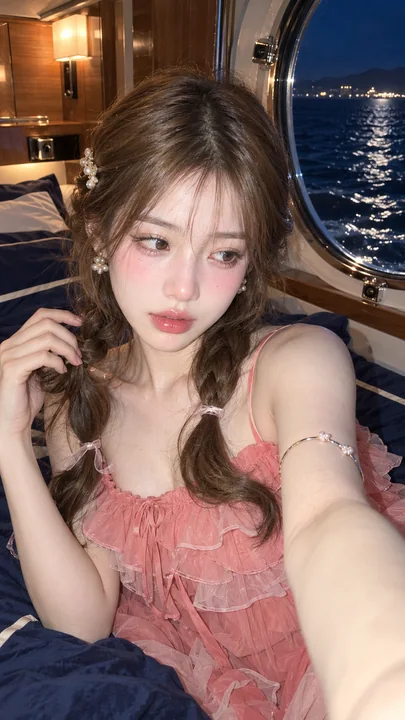
Case 28396
豪华游艇卧室内的粉色甜美自拍
自拍氛围感韩系游艇