Case 27374
东方武侠浮世绘金庸人物志
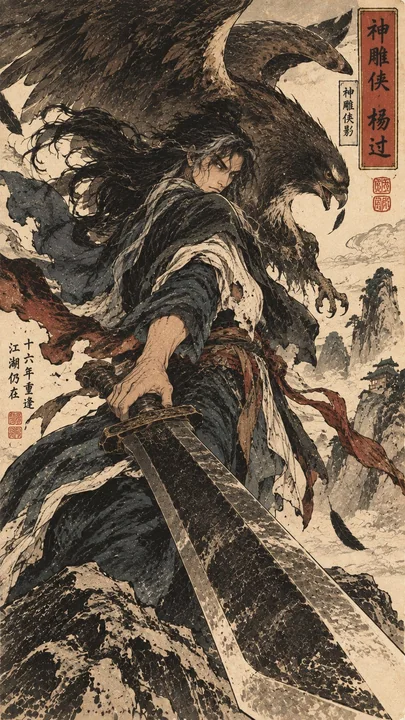
Prompt
[Character] Fill in a Jin Yong character
[Core Move] Fill in a representative martial arts move or action
[Visual Anchor] Fill in weapons, divine beasts, palm gestures, long hair, giant waves, etc.
[Environment] Fill in cliffs, bamboo forests, waves, wilderness, etc.
[Main Color Palette] Fill in 3–5 main colors
[Inscribed Label] Fill in character name and move name

Create a 9:16 vertical Oriental martial arts Ukiyo-e character painting. Redesign the scene around [Character] and [Core Move], without referring to any film/television actor's face or specific film/television styles.

The character must be in a moment of intense action, letting the [Core Move] directly participate in the composition. Use [Visual Anchor], body twists, weapons, palm gestures, robes, hair, or environmental dynamics to form clear large diagonals, C-shaped or S-shaped curves, and strong perspective relationships. The character occupies the main area of the frame, allowing parts to naturally extend out of the frame, ensuring the character and move are quickly identifiable even in a thumbnail.

The overall style adopts the strong language of traditional Ukiyo-e Mushae and multi-color woodblock printing: powerful black carved outlines, exaggerated human perspective, large flat color planes, compact character composition, and a distinct handmade woodcut feel. Maintain a rough style with a sense of paper and ink, and a sense of printing; do not process it into overly smooth modern digital illustrations.

Use [Main Color Palette] for colors; large color planes should remain complete and full, but allow for slight natural uneven inking and a handmade feel in the color registration. Textures must follow material changes: skin is expressed with complete skin-tone color planes and a small amount of structural lines; robes are expressed with large color blocks and long folds; hair, feathers, wave patterns, and clouds use directional continuous line bundles; rocks can retain more obvious rough woodcut textures. Avoid covering skin, clothes, weapons, and the background entirely with the same uniform dotted, flocculent, or short-stroke textures.

The background uses [Environment], maintaining a lower information density than the character, with large areas of warm ivory paper preserved, making the character, moves, and visual anchors the subject. The paper retains only slight natural fibers and ancient printing textures, without using heavy yellow spots, damage, or global aging filters.

Add traditional vertical labels, small annotations, and 1–2 vermilion seals at the edges of the frame. Labels use [Inscribed Label], naturally integrating into the borders of the ancient painting; do not use modern large titles, numbering, or UI decorations.

The final effect should be like a Mushae from the same set of "Jin Yong's World Character Collection": clear character identity, moves becoming the core of the composition, strong dynamics, strong shapes, and high recognizability, while retaining the unique woodcut lines, color blocks, and paper-ink texture of traditional Ukiyo-e.

Avoid: film/television actor faces, specific film/television costumes, idol-style beautiful faces, xianxia mobile game illustrations, anime feel, 3D rendering, photographic texture, neon light effects, magic circles, excessive CG special effects, standard standing poses, modern typography, uniform dot noise, full-screen short-stroke patterns, global grain coverage, random cracks, overly smooth digital flat painting, watermarks, numbering.

【人物】填写金庸人物
【核心招式】填写代表性武功或动作
【视觉锚点】填写武器、神兽、掌势、长发、巨浪等
【环境】填写山崖、竹林、海浪、荒原等
【主色调】填写 3–5 个主色
【题签】填写人物名与招式名

创作一幅 9:16 竖幅东方武侠浮世绘人物画。围绕【人物】与【核心招式】重新设计画面,不参考任何影视演员脸或具体影视造型。

人物必须处于强烈动作瞬间,让【核心招式】直接参与构图。利用【视觉锚点】、身体扭转、兵器、掌势、衣袍、头发或环境动态形成清楚的大斜线、C 型或 S 型曲线和强透视关系。人物占据画面主要面积,局部允许自然出框,缩略图下仍能快速识别人物和招式。

整体采用强烈的传统浮世绘武者绘与多色木版套色语言:有力量的黑色雕版轮廓、夸张人体透视、大块平面设色、紧凑人物构图和明显手工木刻气息。保持画风粗粝、有纸墨感、有印刷感,不要处理成过于光滑的现代数字插画。

色彩使用【主色调】,大色面保持完整、饱满,但允许轻微天然上墨不均和套色手工感。纹理必须跟随材质变化:皮肤以完整肤色色面和少量结构线表现;衣袍以大色块和长衣褶表现;头发、羽毛、浪纹、云气使用有方向的连续线束;山石可保留更明显的粗粝木刻纹理。避免让皮肤、衣服、武器和背景全部覆盖相同的均匀点状、絮状或短划纹理。

背景使用【环境】,保持低于人物的信息密度,大面积保留暖象牙色纸面,使人物、招式和视觉锚点成为主体。纸张只保留轻微天然纤维与古版印刷质感,不使用严重黄斑、破损和全局做旧滤镜。

画面边缘加入传统纵向题签、小题识和 1–2 枚朱印,题签使用【题签】,自然融入古画边栏,不使用现代大标题、编号或 UI 装饰。

最终效果要像同一套《金庸江湖人物志》中的武者绘:人物身份清楚,招式成为画面的构图核心,强动态、强大形、强辨识度,同时保留传统浮世绘特有的木刻线条、套色色块与纸墨质感。

避免:影视演员脸、具体影视剧造型、古偶美男美女脸、仙侠手游立绘、动漫感、3D 渲染、摄影质感、霓虹光效、魔法阵、过度 CG 特效、标准站姿、现代 Typography、均匀点状噪声、满屏短划纹、全局颗粒覆盖、随机裂纹、过度光滑数字平涂、水印、编号。
More prompts
Case 13
Creative advertisement
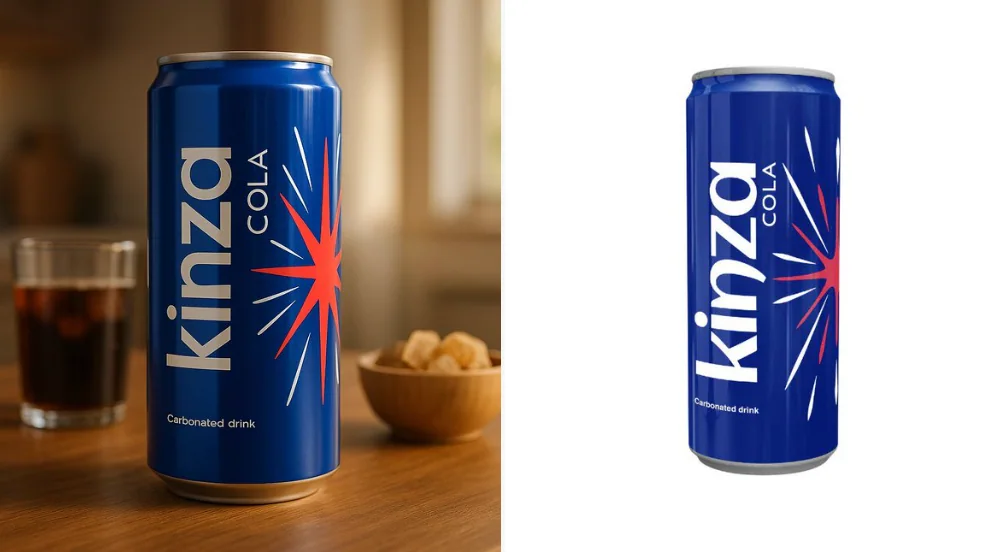
Use the uploaded product image exactly as it is — do not alter, redraw, or reinterpret any part of it. Follow the guidelines below to create a high-quality, cinematic product presentation: • Keep the product fully intact — all text, labels
minimalistphotographyproductvehicleinteriorfood
Case 26432
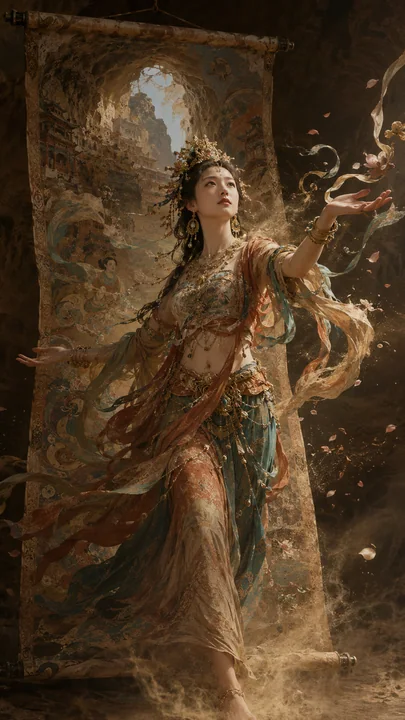
敦煌花神:从千年画卷走入现实的东方史诗
电影感东方美氛围感敦煌风