Case 13614
Восточная модная фотосессия в резных красных стенах и золотых персиках
电影感时尚国风秋日红墙
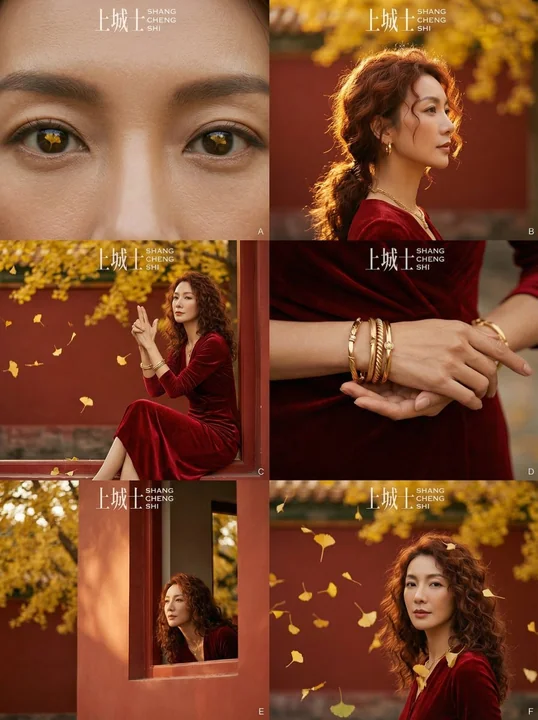
Prompt
**Translation:**

---

**Light and Shadow: The Autumn Flow and the Poetry of Time**

---

**Lens A – Close-up of the Eyes (Integration of the Extreme Foreground Hand Stack Pose):**

A tight crop: delicate fingers lightly touch the cheek, vintage gold jewelry stacked on the wrist. But the focus is locked on the extreme foreground hand stack detail: both arms fully extended forward toward the camera (straight forearms, rigid extension), creating a strong sense of depth.
**Foreground Hand #1 (Lower Support Tray):** The lower hand is pushed to the nearest point to the lens and held horizontally like a small table. The back of the hand faces the camera, while the palm lines face upward toward the ceiling (true upward orientation). Fingers are fully extended and stretched open to the maximum span, with visible tension at the joints and tendons; the palm is flat like a platform; the root of the palm appears huge due to its proximity.
**Physical Contact Constraint:** Foreground Hand #2 must be supported and pressed onto Foreground Hand #1 — a clear “placed on the tray” relationship, with visible contact shadows and slight compression/indentation in the contact area (no floating separation).
**Foreground Hand #2 (Centered Aiming Finger Gun):** A rigid straight aiming finger gun sits on the tray palm, placed at the dead center of the frame and aligned with the camera axis like a pointing gun. The wrist and forearm are fully extended; the index finger directly points toward the lens (or slightly upward), the thumb extended, and the other fingers tightly curled. This aiming hand covers approximately half of the face (covering one eye/cheek area); only one eye remains clearly visible and sharply focused, maintaining a strong eye contact through/around the hand.
**Head & Gaze:** Slight head tilt (aiming posture), eyes locked on the lens.
Meanwhile, the integration of the chin-resting element adds a sense of relaxed elegance: the crimson long skirt with its drape folds appears as soft velvet texture under the light; gold jewelry on the wrist forms delicate light spots; falling ginkgo leaves in the foreground create natural occlusion (increasing depth layers); within the red wall frame, the golden ginkgo tree is softly blurred, creating an “image within an image” of oriental aesthetics.

---

**Lens B – Hand Detail Close-up (Integration of the Extreme Foreground Hand Stack Pose):**

A tight crop: slender fingers touch the cheek, vintage gold jewelry stacked on the wrist. But the focus is locked on the extreme foreground hand stack detail: both arms fully extended forward toward the camera (straight forearms, rigid extension), creating a strong sense of depth.
**Foreground Hand #1 (Lower Support Tray):** The lower hand is pushed to the nearest point to the lens and held horizontally like a small table. The back of the hand faces the camera, while the palm lines face upward toward the ceiling (true upward orientation). Fingers are fully extended and stretched open to the maximum span, with visible tension at the joints and tendons; the palm is flat like a platform; the root of the palm appears huge due to its proximity.
**Physical Contact Constraint:** Foreground Hand #2 must be supported and pressed onto Foreground Hand #1 — a clear “placed on the tray” relationship, with visible contact shadows and slight compression/indentation in the contact area (no floating separation).
**Foreground Hand #2 (Centered Aiming Finger Gun):** A rigid straight aiming finger gun sits on the tray palm, placed at the dead center of the frame and aligned with the camera axis like a pointing gun. The wrist and forearm are fully extended; the index finger directly points toward the lens (or slightly upward), the thumb extended, and the other fingers tightly curled. This aiming hand covers approximately half of the face (covering one eye/cheek area); only one eye remains clearly visible and sharply focused, maintaining a strong eye contact through/around the hand.
**Head & Gaze:** Slight head tilt (aiming posture), eyes locked on the lens.
Emphasizing the contrast between the fine texture of the metal chain and the warm, smooth texture of the skin; the warp and weft details of the crimson sleeve fabric; the natural luster of the fingernails; the background is blurred into abstract color blocks of crimson and golden.

---

**Lens C – Mid-shot within the Red Wall Frame (Integration of the Extreme Foreground Hand Stack Pose):**

Using the red wall window frame as a natural picture frame, the subject is centered within the frame. The composition follows the Eastern philosophy of “framing into a painting,” but the lighting treatment incorporates the chiaroscuro of European cinema, and integrates the hand pose:
**Pose must precisely replicate the extreme foreground hand stack, with strict geometric and physical support:** both arms fully extended forward toward the camera (straight forearms, rigid extension), creating a strong sense of depth.
**Foreground Hand #1 (Lower Support Tray):** The lower hand is pushed to the nearest point to the lens and held horizontally like a small table. The back of the hand faces the camera, while the palm lines face upward toward the ceiling (true upward orientation). Fingers are fully extended and stretched open to the maximum span, with visible tension at the joints and tendons; the palm is flat like a platform; the root of the palm appears huge due to its proximity.
**Physical Contact Constraint:** Foreground Hand #2 must be supported and pressed onto Foreground Hand #1 — a clear “placed on the tray” relationship, with visible contact shadows and slight compression/indentation in the contact area (no floating separation).
**Foreground Hand #2 (Centered Aiming Finger Gun):** A rigid straight aiming finger gun sits on the tray palm, placed at the dead center of the frame and aligned with the camera axis like a pointing gun. The wrist and forearm are fully extended; the index finger directly points toward the lens (or slightly upward), the thumb extended, and the other fingers tightly curled. This aiming hand covers approximately half of the face (covering one eye/cheek area); only one eye remains clearly visible and sharply focused, maintaining a strong eye contact through/around the hand.
**Head & Gaze:** Slight head tilt (aiming posture), eyes locked on the lens.
The illuminated side of the red wall shows a rough grain texture; the edge of the window frame creates a sharp light-shadow boundary; the subject is illuminated by soft diffused light (from ginkgo reflections); the background ginkgo ancient buildings, out of focus, form an abstract atmosphere in golden tones.

---

**Lens D – Ginkgo Leaf Falling Motion (Integration of the Extreme Foreground Hand Stack Pose):**

Capturing the instant of ginkgo leaves falling in the air, the foreground leaves are clear, the mid-ground half-body portrait is sharply focused, and the background red wall and ginkgo trees are completely blurred. Conveying the “flow of autumn” and the “poetry of time.”
**Integration of Hand Pose:** The pose must precisely replicate the extreme foreground hand stack, with strict geometric and physical support: both arms fully extended forward toward the camera (straight forearms, rigid extension), creating a strong sense of depth.
**Foreground Hand #1 (Lower Support Tray):** The lower hand is pushed to the nearest point to the lens and held horizontally like a small table. The back of the hand faces the camera, while the palm lines face upward toward the ceiling (true upward orientation). Fingers are fully extended and stretched open to the maximum span, with visible tension at the joints and tendons; the palm is flat like a platform; the root of the palm appears huge due to its proximity.
**Physical Contact Constraint:** Foreground Hand #2 must be supported and pressed onto Foreground Hand #1 — a clear “placed on the tray” relationship, with visible contact shadows and slight compression/indentation in the contact area (no floating separation).
**Foreground Hand #2 (Centered Aiming Finger Gun):** A rigid straight aiming finger gun sits on the tray palm, placed at the dead center of the frame and aligned with the camera axis like a pointing gun. The wrist and forearm are fully extended; the index finger directly points toward the lens (or slightly upward), the thumb extended, and the other fingers tightly curled. This aiming hand covers approximately half of the face (covering one eye/cheek area); only one eye remains clearly visible and sharply focused, maintaining a strong eye contact through/around the hand.
**Head & Gaze:** Slight head tilt (aiming posture), eyes locked on the lens.
Capturing the instant of ginkgo leaves falling in the air, the foreground leaves are clear, the mid-ground half-body portrait is sharply focused, and the background red wall and ginkgo trees are completely blurred. Conveying the “flow of autumn” and the “poetry of time.”

---

**Conclusion:**

This photographic series, inspired by the aesthetics of world-renowned photographers such as Steven Meisel, Peter Lindbergh, and Mario Testino, captures the essence of **"light and shadow," "the autumn flow," and "the poetry of time."** It blends the elegance of classical portraiture with the modern sensibility of fashion and fine art, creating a timeless visual narrative that resonates with the spirit of **"the East meets the West," "the past meets the present," and "the real meets the imagined."**
Другие промпты
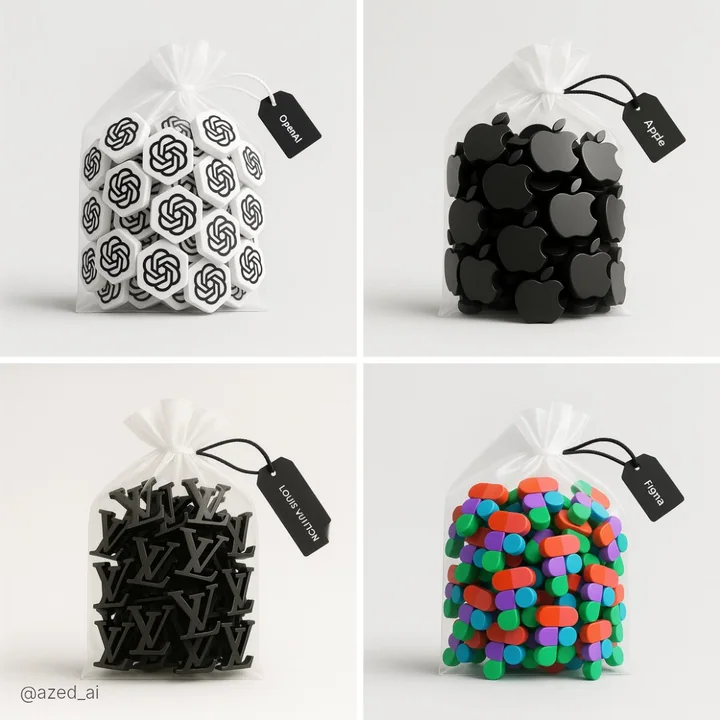
Case 20
Прозрачный пластиковый пакет с предметами
Высокоразрешенное изображение прозрачного пластикового мешка с резинкой, помещенного на светло-серый фон. Внутри мешка аккуратно размещены несколько миниатюрных 3D-фигур [предмет]. Мешок завязан мягким белым шелковым бантиком и имеет черет
photography
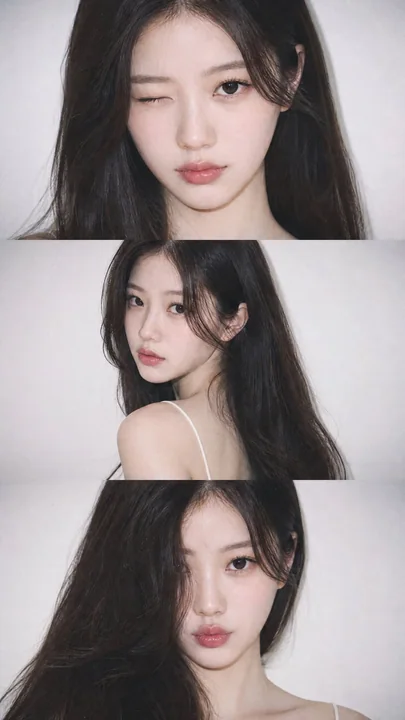
Case 21734
YZK风格少女垂直拼贴三宫格人像
A vertical collage of three YZK photos. Using the uploaded selfie as the ONLY and exclusive face reference, keep the facial features, and facial structure exactly the same as the reference image. The character poses against a neutral light