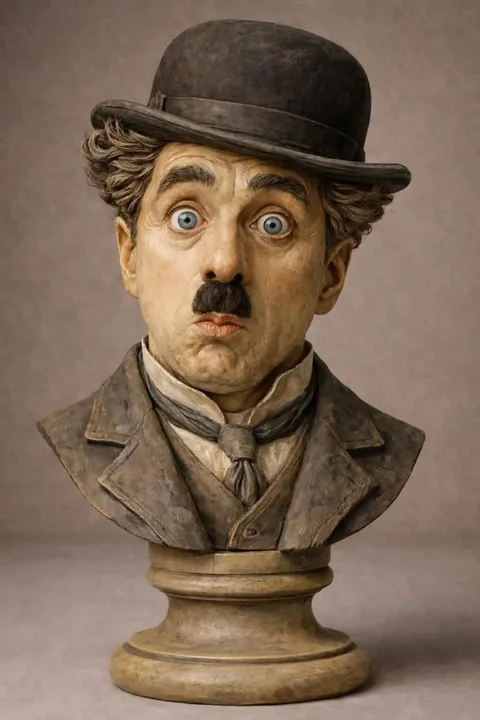
Case 27476
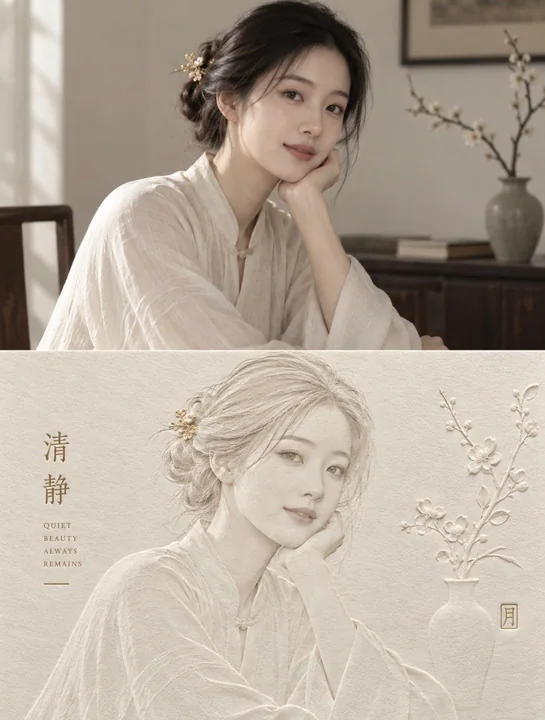
真实影像与东方极简纸雕压印双拼海报
Prompt
Create a vertical split-frame visual work. The upper part displays the real person, pet, animal, or subject photo uploaded by the user; the lower part takes the same subject as the core and reconstructs it into an Oriental minimalist art image with the texture of Chinese embossed relief / paper carving. The upper and lower parts form a very restrained and high-end "real image × Oriental paper sculpture" contrast. Upper Part | User Uploaded Original Image: Keep the original photographic photo completely intact at the top. Prioritize maintaining the subject of people, pets, animals, multi-person interaction, or human-pet interaction. People need to retain their face shape, facial features, hairstyle, skin tone, clothing, accessories, posture, and interaction relationships. Pets or animals need to retain breed characteristics, face shape, ears, fur color, patterns, body proportions, tails, postures, and movements. Do not turn the upper photo into a white relief or illustration. Reasonable cropping is allowed to adapt to the vertical composition, but the identity of the subject must not be changed. Buildings and environments only exist as photo backgrounds; unless their contours have a clear relationship with the character's actions, they are not used as the main reconstruction content for the lower part. Lower Part | Oriental Golden Embossed Relief Translation: Extract the most recognizable subject, outline, posture, and narrative relationship from the upper photo, and reconstruct it into a minimalist art poster with the texture of Chinese embossed relief / paper carving. The whole appears as if embossed on heavy milky white paper, re-summarizing the subject with low relief, delicate shadows, minimalist line carving, and restrained layers. Do not mechanically replicate all details of the photo, but instead retain the most core structural features and spatial relationships, so that people can recognize at a glance that the bottom is the same person, animal, or group of subjects as the original image at the top. The human face does not need to be made into a realistic statue, but the face shape, hairstyle outline, clothing structure, body posture, and movements must correspond with the top. Pets need to focus on retaining identification information such as ears, facial proportions, the structure formed by fur color divisions, body posture, and tails, and re-express them through relief levels and line carvings. Depending on the type of subject, it can be transformed into a low-relief composition of front view, slight high-angle view, partial top-down view, or axial extension. Moderately retain a small amount of environmental outlines or props truly related to the subject, such as a chair, a book, a bouquet of flowers, pet toys, etc., giving the image clear primary and secondary order, depth, and a museum-exhibition-like sense of tranquility. Do not mechanically carve the complete architectural background from the top into the bottom. The overall base is a large area of milky white, warm white, or light paper color white space. The subject and related elements are presented uniformly in low relief of the same color system, establishing layers through embossed height differences, edge shadows, and subtle light and dark. The relief must present a real heavy paper embossed texture: delicate paper fibers, clean edges, shallow indentations, soft natural shadows; do not make it look like a plaster sculpture, ceramic, or computer 3D model. A small amount of matte gold details and soft warm white light can be added only at the most critical local structures or visual focus points of the subject to strengthen the core identification points. The use of gold must be very restrained. For example, a hair accessory of a person, clothing lines, props in hand, pet collars, tiny structures in the direction of the gaze, outline nodes, or movement relationships can use matte gold embossing. Do not paint the entire subject gold. Avoid messy colors, excessive decoration, and piling up scenes. Text needs to be transformed into a part of the image structure, rather than a common title description. Extract short text from the subject's identity, thematic temperament, action state, emotion, or symbolic meaning of the photo. Titles + keywords + a small amount of numbering, tiny notes, or philosophical short sentences can be used. If there is no clear location, do not force the inclusion of fictional locations. The text uses restrained gold or dark grey serif / high-end editorial fonts, which can be placed on the central axis, below the subject, on the edge of the white space, or aligned with the relief structure, making it form a sense of order and exhibition poster temperament together with the embossed subject, rather than an information layer pasted on later. The overall style pursues high-end, quiet, minimalist, restrained, Oriental aesthetics, museum poster feel, and paper sculpture feel. The lower part should have a very obvious collection-grade paper art work temperament. After combining the top and bottom, viewers can first see the real person or animal, and then see its most core outline, posture, and emotion refined into a quiet Oriental embossed relief below. Avoid garbled text, low resolution, deformed subjects, messy colors, crowded composition, cheap 3D feel, and template feel. Prohibition of making characters into completely strange statue faces. Prohibition of changing the key outlines and movements of pets. Prohibition of complex buildings snatching the lower subject.

创作一张竖版上下双拼视觉作品。

上半部分呈现用户上传的真实人物、宠物、动物或主体照片;下半部分以同一个主体为核心,重构成中国印压浮雕 / 纸雕凹凸质感的东方极简艺术画面。

上下两部分形成非常克制而高级的“真实影像 × 东方纸张雕塑”对照。

上半部分|用户上传原图

上方完整保留原始摄影照片。

优先保持人物、宠物、动物、多人互动或人与宠物互动主体。

人物需要保留脸型、五官、发型、肤色、服饰、饰品、姿态与互动关系。

宠物或动物需要保留品种特征、脸型、耳朵、毛色、花纹、身体比例、尾巴、姿势与动作。

不将上方照片变成白色浮雕或插画。

允许适应竖版构图进行合理裁切,但不得改变主体身份。

建筑与环境仅作为照片背景存在,除非其轮廓与人物动作存在明确关系,否则不作为下半部分主要重构内容。

下半部分|东方金色压印浮雕转译

从上半部分照片中提取最具识别性的主体、轮廓、姿态与叙事关系,重构为中国印压浮雕 / 纸雕凹凸质感的极简艺术海报。

整体像压印在厚重乳白色纸张上,以浅浮雕、细腻阴影、极简线刻和克制层次重新概括主体。

不机械复刻照片全部细节,而是保留最核心的结构特征与空间关系,使人一眼能够识别下方与上方原图为同一个人物、同一只动物或同一组主体。

人物脸部不需要做成写实雕像,但脸型、发型轮廓、服装结构、身体姿势与动作必须能够和上方建立对应。

宠物需要重点保留耳朵、脸部比例、毛色分区所形成的结构、身体姿态和尾巴等识别信息,并通过浮雕层级和线刻重新表现。

根据主体类型,可将其转化为正视、微俯视、局部俯瞰或轴线延展的浅浮雕构图。

适度保留与主体真正相关的少量环境轮廓或道具,例如椅子、一本书、一束花、宠物玩具等,使画面具有清晰主次、纵深秩序与博物馆展陈般的宁静感。

不要把上方完整建筑背景机械雕刻进下方。

整体以大面积乳白、暖白或浅纸色留白为基底。

主体及相关元素统一以同色系浅浮雕呈现,通过压印高低差、边缘投影和细微明暗建立层次。

浮雕必须呈现真实厚纸压印质感:纸张纤维细腻、边缘干净、浅浅压痕、柔和自然阴影,不要做成石膏雕塑、陶瓷或电脑3D模型。

可仅在主体最关键的局部结构或视觉焦点处加入少量哑金色细节与柔和暖白光感,用来强化核心识别点。

金色使用必须非常克制。

例如人物的一处发饰、衣服线条、手中道具、宠物项圈、眼神方向中的极小结构、轮廓节点或动作关系可以采用哑金压印。

不要把整个主体都涂成金色。

避免颜色杂乱、过度装饰和堆砌场景。

文字需转化为画面结构的一部分,而不是普通标题说明。

从照片的主体身份、主题气质、动作状态、情绪或象征意义中提炼简短文字。

可使用标题 + 关键词 + 少量编号、微型注释或哲理短句。

如果没有明确地点,不强行加入虚构地点。

文字采用克制的金色或深灰色衬线 / 高级编辑字体,可置于中央轴线、主体下方、留白边缘或与浮雕结构对齐,使其与压印主体共同形成秩序感与展览海报气质,而非后期贴上的信息层。

整体风格追求高级、宁静、极简、克制、东方美学、博物馆海报感与纸张雕塑感。

下半部分应具有非常明显的收藏级纸张艺术作品气质。

上下组合后,观看者能够先看到真实人物或动物,再在下方看到其最核心的轮廓、姿态和情绪被提炼成安静的东方压印浮雕。

避免文字乱码、低清晰度、主体畸形、颜色杂乱、构图拥挤、廉价三维感和模板感。

禁止将人物做成完全陌生的雕像脸。

禁止改变宠物的关键轮廓和动作。

禁止复杂建筑抢夺下方主体。
Autres prompts
Case 10649
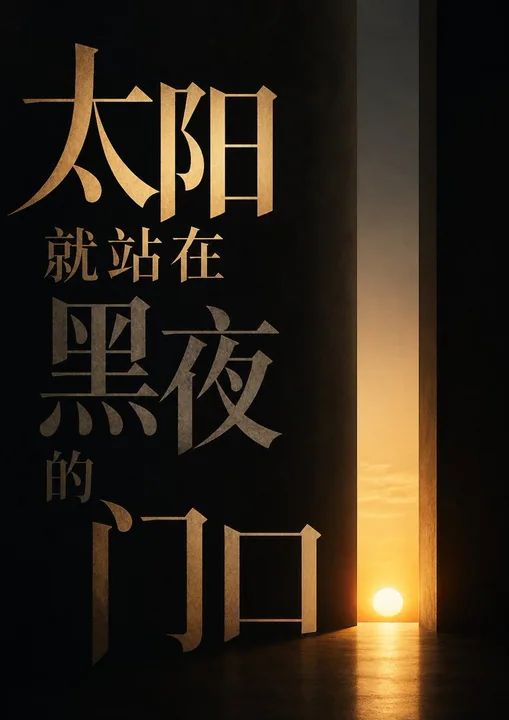
Affiche minimaliste de Takahashi en noir et blanc avec des ombres et des lumières
Ceci est une tâche de génération d'image : mentalité du designer Apple, mentalité d'un maître de l'affiche, utiliser l'approche Takahashi pour présenter la conception de l'affiche afin de représenter le texte suivant, le rendre captivant et
极简风苹果风排版术高桥流文案感
Case 2
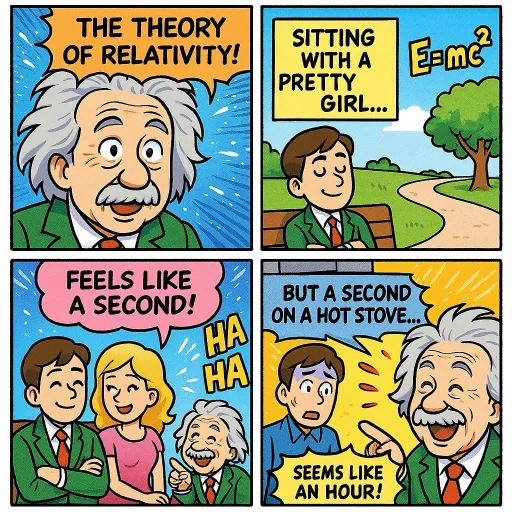
Bandes dessinées (Relativité)
Créez une page colorée de manga décrivant la théorie de la relativité. Ajoutez un peu d'humour.
creative