Case 25041
تأثير نافذة طوابع بريد أنمي على صورة حقيقية
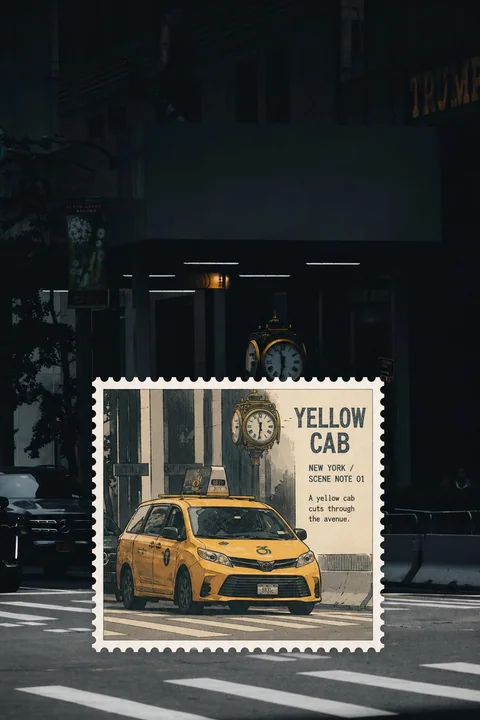
Prompt
Please turn each travel photo I upload into an independent "real-scene anime stamp window" work, with each photo output separately and no multi-image stitching.

The complete original photo covers the entire screen, preserving the subject's identity, number, posture, real scale, spatial position, observation angle, natural light and shadow, environmental relationship, and photographic texture. Do not create top-bottom comparisons, left-right diptychs, or full-image anime conversions.

At the original position of the core subject in the photo, directly draw a flat stamp window with complete perforated edges. The stamp window must cover the main occupancy of the original subject; inside the window, the same subject and its corresponding small amount of local environment are converted into vintage anime editorial illustrations, while outside the window remains a clear and complete real photo.

Inside and outside the frame must belong to the same moment:

- The subject maintains the same number, center position, scale, posture, orientation, and perspective.
- The character's feet, vehicle wheels, hull waterline, roads, tracks, steps, railings, or horizon must naturally continue at the edge of the stamp.
- Do not move the subject or enlarge it into another close-up subject.
- Do not show a complete photographic subject and a complete illustration copy at the same time.
- The stamp window should directly cover the original subject, rather than being moved to a position convenient for layout.

Choose a stable stamp ratio according to the direction of the subject:

- Standing figures, front-facing vehicles, towers, and longitudinal alleys use a vertical 3:4 ratio.
- Horizontal vehicles, ships, stalls, and coastal scenes use a horizontal 4:3 ratio.
- Only obviously long and narrow subjects can use a horizontal 5:3 ratio.
- Prohibit any square, ultra-narrow vertical frames, or excessively flat and long ratios.

The four sides of the stamp must have continuous, clear, equidistant, and uniformly sized complete perforations. The inner core is evenly indented, and the width of the paper borders on all four sides is consistent. The stamp window fits perfectly onto the photo surface, being just a flat area where the visual language changes; do not show thickness, shadows, curled edges, floating, tilting, or physical card effects.

Inside the frame, use loose ink lines, vintage anime cel shading, slight old printing grain, and restrained paper texture. Colors are extracted from the original photo and simplified into 3–5 types, preserving the subject's most recognizable colors. Delete complex photographic details, leaving only the subject's outline, movement, core structure, and necessary environmental cues.

Retain about 35%–60% of quiet color planes or visual negative space inside the frame; do not draw a complete and crowded background.

Generate a small amount of real English text based on the location, subject, and scene of the photo:

- A readable main title of 1–3 English words.
- A line for location and number, such as "LOCATION / SCENE NOTE 01".
- A short, natural observation text.

Text can only be located in low-information areas inside the stamp window; the font should be consistent with the illustration material, such as vintage anime opening titles, slightly ink-deficient serif fonts, or loose hand-drawn fonts. The title should not be too small and should be clearly readable even in chat thumbnails. Do not block character faces, action joints, vehicles, tracks, or core objects.

Avoid: Top-bottom photo and illustration comparisons, left-right diptychs, full-image anime conversion, moving stamp positions, repeated subjects, changes in subject scale, misalignment of tracks or ground lines, ordinary white frames, missing perforations, dashed borders, rounded corner UI cards, physical postcards, floating stickers, paper thickness, drop shadows, detailed Japanese anime characters, irrelevant backgrounds, author names, signatures, logos, URLs, QR codes, watermarks, and unreadable fake text.

Most important rule: The illustration in the stamp window must replace the subject and scene at the same position and scale in the original photo. It is like a small piece of the real scene suddenly switching to animation, rather than an extra drawing pasted onto the photo.
مطالب أخرى
Case 28727
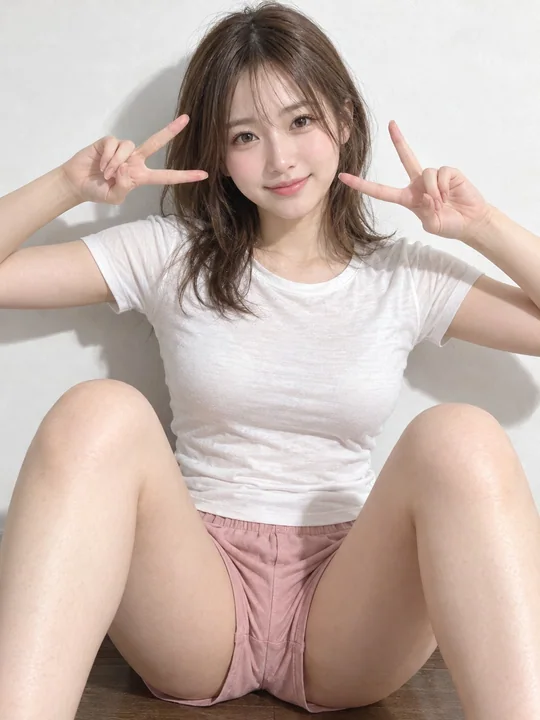
صور فوتوغرافية لملابس منزلية أنيقة بأسلوب الأйдول الكوري
▼ الشخص أنثى لطيفة في أوائل العشرينات من عمرها تُدعى «ميو»، بوجه على طراز الأيقونات الكورية. وجه بيضاوي صغير وناعم، وجه طفولي مع خدود مستديرة قليلاً، حيث يُشدد الذقن فقط بشكل حاد. عيون كبيرة بلون بني فاتح مع إحساس عالٍ بالشفافية، جفون مزدوج
Case 28712
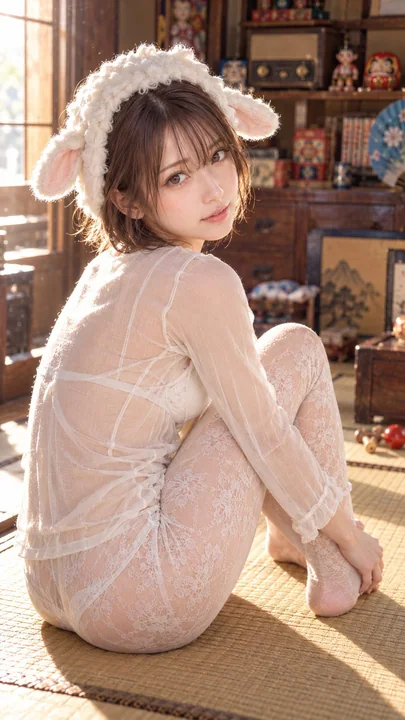
بورتريه لامرأة يابانية ترتدي قبعة بأذني خروف وزي أبيض في غرفة يابانية تقليدية
تصوير فوتوغرافي خالٍ من العيوب بجودة قصوى، بدقة 8K، وواقعية تصويرية سريالية. [الموضوع والوضعية] امرأة يابانية شابة جميلة للغاية ترتدي قطعة رأس بيضاء فراء مستوحاة من أذن الخروف (أو قبعة). ترتدي قميصًا أبيض شفافًا بأكمام طويلة، وسراويل ضيقة