Case 27494
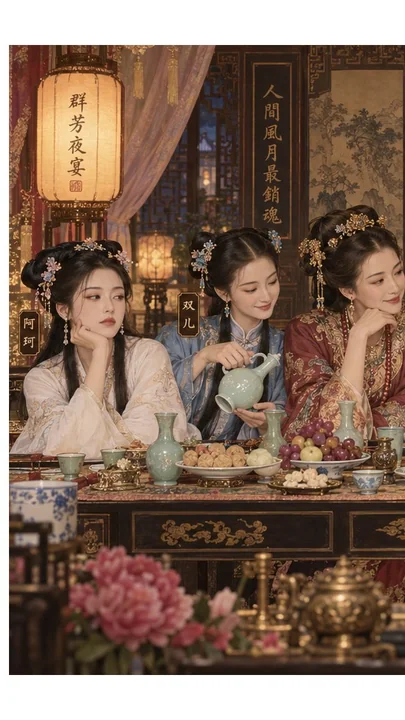
鹿鼎记群芳夜宴清代工笔人物群像
Prompt
"The Deer and the Cauldron: Banquet of Beauties" × "The Last Supper" 8-person classic group composition × Only borrowing the horizontal group structure × Approximately 1.9:1 wide aspect ratio × 3 people on the left of the screen: Su Quan, Shuang'er, A Ke × Center: Wei Xiaobao × 4 people on the right of the screen: Princess Jianning, Fang Yi, Mu Jianping, Zeng Rou × Horizontal long table banquet × Qing Dynasty imperial court Gongbi figure painting

Explanation:
"The Last Supper" classic group composition only borrows the composition relationship of the central figure, left and right grouping, horizontal long table, and figures unfolding around the table.
The screen strictly maintains 3 people on the left + 1 person in the center + 4 people on the right, total 8 people.
Wei Xiaobao is located in the exact center of the screen, serving as the visual and narrative core of the entire painting.
The left side in order: Su Quan, Shuang'er, A Ke; the right side in order: Princess Jianning, Fang Yi, Mu Jianping, Zeng Rou.
All 8 people are clearly visible, with no addition or reduction of figures, no disruption of left-right order, and no scattering of figures to other areas.
All figures form a complete, continuous horizontal group portrait along the sides of the long table, with natural interaction and expression exchange between each other, presenting a lively yet subtle character relationship.
Only the horizontal group structure of "The Last Supper" is borrowed; no Western religious figures, religious symbols, or religious scene elements appear.
The story, characters, clothing, utensils, space, and painting language all adopt the Chinese classical context of "The Deer and the Cauldron".
The overall scene is set as a magnificent Qing Dynasty night banquet: Chinese wine vessels, porcelain plates, snacks, fruits, and banquet dishes are placed on the long table. The background can be a prince's mansion inner hall or a gorgeous classical hall, accompanied by elements such as screens, palace lanterns, brocade curtains, and carved wood structures.
Character costumes are in the style of Qing Dynasty nobles and ladies, taking into account the different temperaments of the seven wives:
Su Quan: Mature, elegant, calm aura
Shuang'er: Gentle, loyal, delicate and considerate
A Ke: Cold and glamorous, outstanding, stunning appearance
Princess Jianning: Arrogant and willful, lively, vivid expression
Fang Yi: Beautiful, intelligent, slightly reserved
Mu Jianping: Fragile, innocent, a bit shy
Zeng Rou: Quiet, gentle, elegant and subtle
The painting style adopts Qing Dynasty imperial court Gongbi figure painting, with delicate line drawing, elegant and rich coloring, beautiful and clear facial features, exquisite clothing patterns, and an overall sense of order and banquet atmosphere like a Chinese classical group portrait handscroll.

《鹿鼎记·群芳夜宴》 × 《最后的晚餐》8人经典群像构图 × 仅借用横向群像结构 × 约1.9:1宽幅 × 画面左侧3人:苏荃、双儿、阿珂 × 中央:韦小宝 × 画面右侧4人:建宁公主、方怡、沐剑屏、曾柔 × 横向长桌宴席 × 清代宫廷工笔人物画

说明:
“《最后的晚餐》经典群像构图”仅借用其中央人物、左右分组、横向长桌、人物围桌展开的构图关系。
画面严格保持左侧3人+中央1人+右侧4人,共8人。
 韦小宝位于画面正中央,作为全画视觉与叙事核心。
左侧依次为:苏荃、双儿、阿珂;右侧依次为:建宁公主、方怡、沐剑屏、曾柔。
8人全部清晰可见,不增减人物,不打乱左右顺序,不将人物分散到其他区域。
所有人物沿长桌两侧形成完整、连贯的横向群像,彼此之间有自然互动与表情交流,呈现热闹而微妙的人物关系。
仅借用《最后的晚餐》的横向群像结构,不出现任何西方宗教人物、宗教符号或宗教场景元素。
故事、人物、服饰、器物、空间与绘画语言均采用《鹿鼎记》的中国古典语境。
整体场景设定为清代华丽夜宴:长桌上摆放中式酒器、瓷盘、点心、果品与宴席菜肴,背景可为王府内厅或华美古典厅堂,配以屏风、宫灯、锦帐、雕花木构等元素。
人物服饰为清代贵族与闺阁风格,兼顾七位夫人各自不同气质:
苏荃:成熟、端丽、气场沉稳
双儿:温柔、忠顺、清秀体贴
阿珂:冷艳、出众、姿容绝美
建宁公主:娇蛮、灵动、神情鲜活
方怡:秀丽、聪慧、略带矜持

沐剑屏:柔弱、纯真、带些羞怯
曾柔:娴静、温婉、清雅含蓄
画风采用清代宫廷工笔人物画,线描细腻,设色雅致而富丽,人物面容秀美清晰,服饰纹样精致,整体具有中国古典群像长卷般的秩序感与宴饮氛围。
更多提示词
Case 19
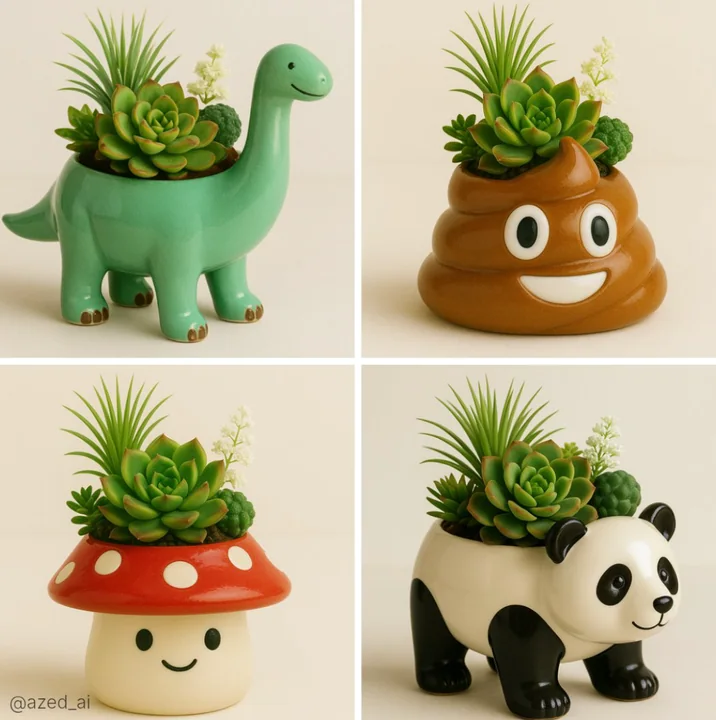
表情符号变成一个花盆
一张高质量的照片,展示一个可爱的陶瓷[物体/动物]造型花盆,表面光亮,内种植了多种鲜艳的多肉植物和绿植,包括带刺的瓦苇、玫瑰形的景天科植物以及精致的白色花朵。花盆上带有友好的笑脸,放置在柔软的中性背景上,在柔和的自然光线下,展现出细腻的纹理和色彩对比,构图简洁而富有层次感。
minimalistnaturephotographyanimalemoji
Case 9
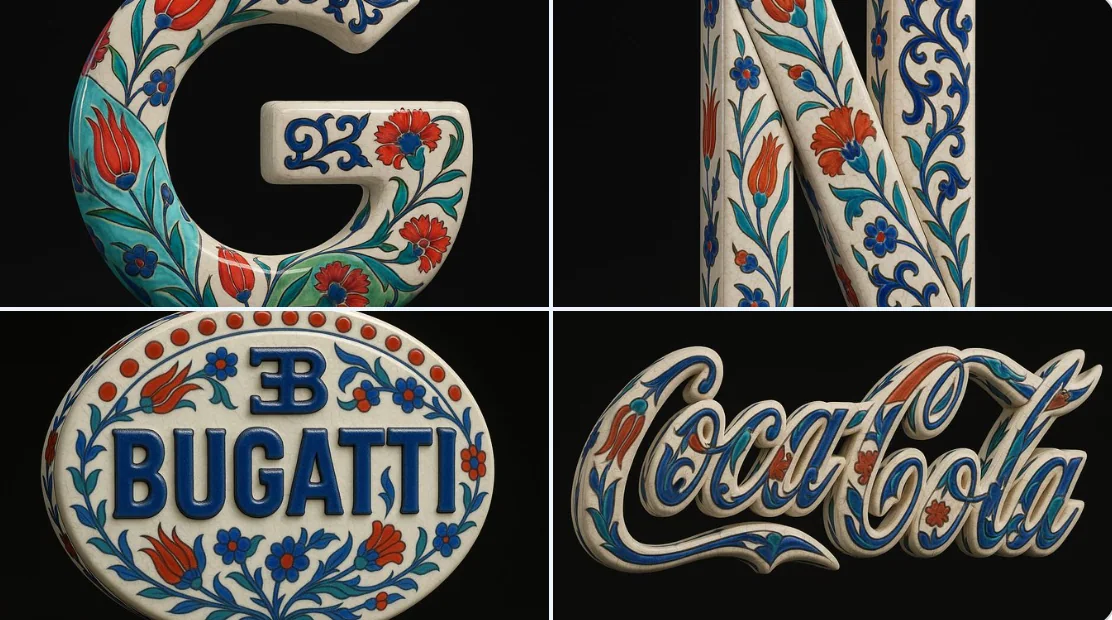
青花瓷风格
以上传的图像作为精确的视觉基础,将其转化为一个超现实主义的3D对象,仅保留原始标志的形状和比例。应用传统的奥斯曼伊兹尼克陶瓷纹理——具有温暖的白色釉面基底,带有细腻的裂纹线条,并叠加鲜艳的钴蓝色、青绿色和大胆的红色花卉图案,如郁金香、康乃馨和阿拉伯藤蔓。整个标志应被处理为一个独立的瓷器雕塑,具有凸起的手绘细节,不带任何背景板或瓷砖结构。确保装饰图案优雅地沿着布加迪标志的轮廓延伸,而不改变其形态。以纯黑色背景呈现该对象,并采用类似Cinema 4D风格的产品照明——突出真实的陶
natureproductvehiclesculpturebranding