Case 25034
旅游照片高级丙烯厚涂海报设计
Prompt
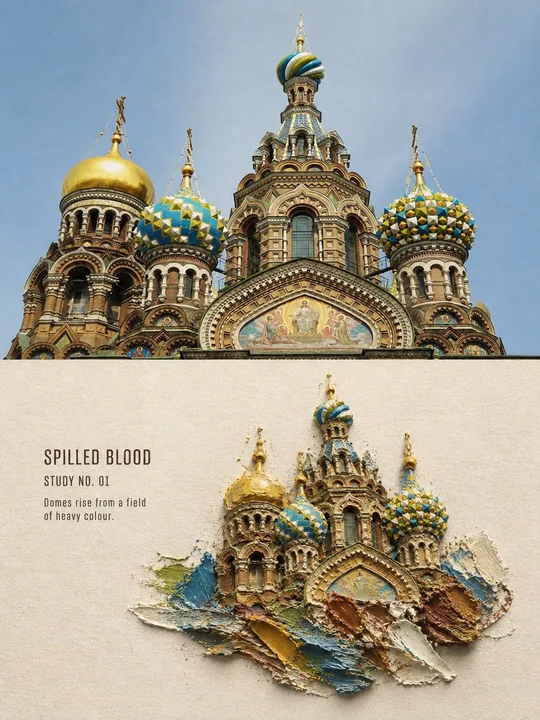
Please turn each travel photo I upload into an individual high-end design poster, no multi-image stitching, each photo output separately.

The overall layout uses a 3:4 vertical composition, consisting of two clearly defined areas: the real photo and a stylized transformation. The real photo occupies about 40%–50% of the entire screen, and the transformation area occupies the other main part; the two use a straight, clear horizontal boundary without feathering or bleeding. The proportions can be appropriately adjusted according to the subject, not necessarily mechanically divided, but the original image contrast must be clearly visible.

The photo area faithfully preserves the original photo's subject identity, quantity, architectural structure, terrain, people or vehicles, observation angle, spatial relationships, real materials, natural light and shadow, and original colors. Only apply restrained art publication or photography exhibition color grading, and add very thin film grain. Do not distort, mirror, move, add/delete, or reshape the subjects.

The transformation area uses a warm ivory natural paper background and retains about 38%–55% continuous paper whitespace. Do not use the full framing of the original photo for proportional redrawing, but instead extract one most recognizable subject, architectural combination, vehicle, or terrain relationship from the photo, and reorganize it into an "impasto memory miniature" placed on the paper surface.

The subject must be embedded in a piece of irregular heavy-body acrylic paint, as if growing out of the paint. The paint has a visual thickness of about 5–15 mm, clearly showing palette knife ridges, blunt bulges, deep grooves, scratches, raised thick edges, paint side walls, accumulation cross-sections, tiny paint debris, and the difference between local wet reflections and dry matte finishes. There are short and clear real contact shadows between the paint and the paper surface.

This is not paper layering, torn paper, papier-mâché, plasterboard, embossed paper, or an ordinary miniature model. The thickness must come from the volume of real acrylic paint, side walls, and palette knife marks.

Actively choose the paint island form according to the photo subject:

- High towers, churches, or building complexes can form vertically stacked paint mountains;
- Lake surfaces, roads, coasts, or vehicles can form low, horizontally extending paint islands;
- Single figures, boats, or small subjects can be shrunk and embedded in a small amount of paint strokes.

Only retain the minimum structure required to maintain the identity and story of the location. The outer edges of the buildings gradually blend into pure palette knife color blocks, paint debris, and bare paper, without forming a rectangular landscape painting. The color palette is completely extracted from the photo, compressed into 1–3 main colors, one dark color, and a small area of emphasis color.

Defaultly add a set of clearly readable editorial text:

- A location or theme title of 1–3 English words;
- An archive field similar to "STUDY NO. 01";
- An original observation sentence of 5–12 English words.

The text content must come from the location, subject, weather, action, or spatial feeling truly visible in the photo. The main title is clearly readable at normal preview size and cannot be reduced to a gray thin line. The title can be pressed into the edge of the paint as if by a palette knife, and the auxiliary text is placed in the bare paper area, using a narrow humanist sans-serif or gentle serif font with slight dry brush gaps.

The overall presentation is quiet, restrained, poetic, with a sense of real handmade weight and art publication collection quality.

Avoid: paper layers, torn paper, papier-mâché, plaster sheets, flat appliqué, flat paint patches, smooth digital brush, ordinary miniature model, plastic CGI, resin, same-crop repainting, full-background painting, rectangular duplicate photo, missing source-photo comparison, tiny unreadable text, floating digital typography, cartoon, logo, watermark, frame or wall mockup.

请将我上传的每一张旅行照片分别制作成一张独立的高级设计海报,不多图拼接,每张照片单独输出。

整体采用3:4竖版构图,由真实照片与风格化转绘构成两个边界清晰的区域。真实照片占整张画面约40%–50%,转绘区域占另一主要部分;两者使用笔直、清楚、没有羽化和渗透的水平边界。比例可以根据主体适当调整,不必机械等分,但原图对比必须清楚可见。

照片区域忠实保留原始照片的主体身份、数量、建筑结构、地形、人物或交通工具、观察角度、空间关系、真实材质、自然光影与原有色彩。仅进行克制的艺术出版物或摄影展调色,并添加极薄胶片颗粒。不得扭曲、镜像、移动、增删或重塑主体。

转绘区域使用温暖的象牙色天然纸张背景,并保留约38%–55%的连续纸面留白。不要沿用原照片的完整取景进行等比例重画,而是从照片中提取一个最具识别度的主体、建筑组合、交通工具或地形关系,重新组织成一件安放在纸面上的“厚涂记忆微缩”。

主体必须嵌入一块不规则的重体丙烯颜料之中,像从颜料内部生长出来。颜料具有约5–15毫米的视觉厚度,清楚表现调色刀峰脊、圆钝隆起、深沟、刮痕、抬起的厚边、颜料侧壁、堆积断面、微小颜料碎屑,以及局部湿润反光与干燥哑光之间的差异。颜料与纸面之间具有短而清楚的真实接触投影。

这不是纸张叠层、撕纸、纸浆、石膏板、浮雕纸片或普通微缩模型。厚度必须来自真实丙烯颜料的体积、侧壁和调色刀痕迹。

根据照片主体主动选择颜料岛形态:

- 高塔、教堂或建筑群可形成垂直堆积的颜料山体;
- 湖面、道路、海岸或车辆可形成低矮、横向延伸的颜料岛;
- 单一人物、船只或小型主体可以缩小并嵌入少量颜料笔触中。

只保留维持地点身份和故事所需的最少结构。建筑外缘逐渐融入纯粹的刮刀色块、颜料碎屑和裸露纸张,不形成矩形风景画。色盘完全从照片中提取,压缩为1–3个主色、一种深色与一个小面积强调色。

默认加入一组清楚可读的编辑文字:

- 一个1–3个英文单词的地点或主题标题;
- 一个类似“STUDY NO. 01”的档案字段;
- 一句5–12个英文单词的原创观察句。

文字内容必须来自照片中真实可见的地点、主体、天气、动作或空间感受。主标题在正常预览尺寸下清楚可读,不能缩成灰色细线。标题可像被刮刀压入颜料边缘,辅助文字放置在裸露纸张区域,使用带轻微干刷缺口的窄体人文无衬线或温和衬线字体。

整体呈现安静、克制、诗意、具有真实手工重量和收藏感的艺术出版物气质。

Avoid: paper layers, torn paper, papier-mâché, plaster sheets, flat appliqué, flat paint patches, smooth digital brush, ordinary miniature model, plastic CGI, resin, same-crop repainting, full-background painting, rectangular duplicate photo, missing source-photo comparison, tiny unreadable text, floating digital typography, cartoon, logo, watermark, frame or wall mockup.
مطالب أخرى
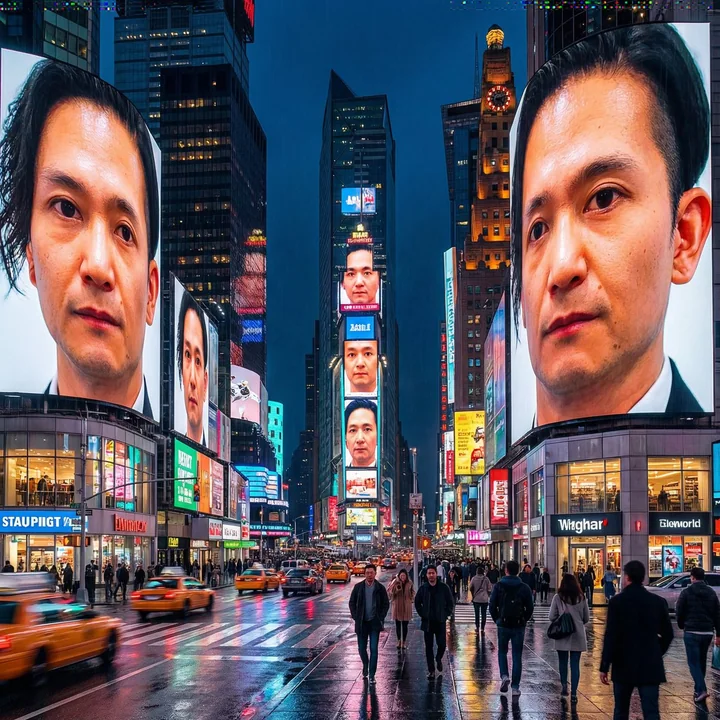
Case 17360
满城巨型广告牌皆是我特写的超现实都市
All the large advertising billboards in the city are "close-ups of my own face" 城里所有的巨型广告牌都是“我自己的特写”。
超现实巨物感自画像广告牌城市景

Case 28186
河边早餐与托腮女性特写写真
Subject: Breakfast by the river and holding cheeks Subject: An adult female in her 20s. Upper body lying on a patterned blanket by the river, head tilted to the left, torso extending to the back right. The face and the hand supporting the