Case 24972
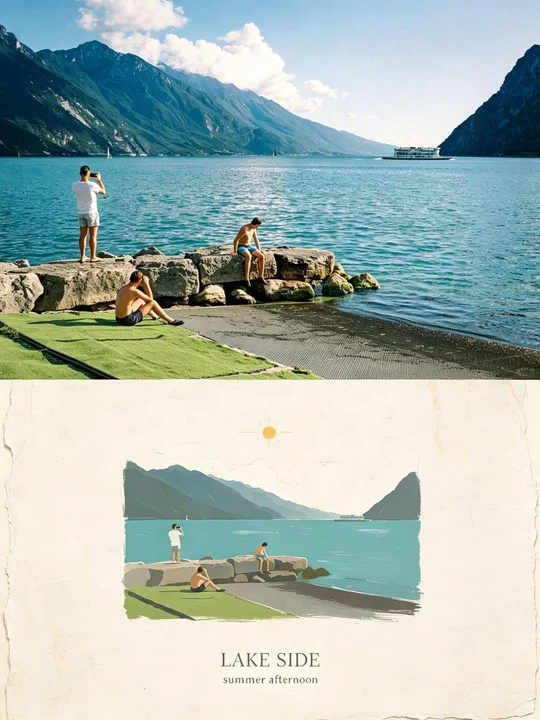
纪实摄影与纸片速写拼贴海报
Prompt
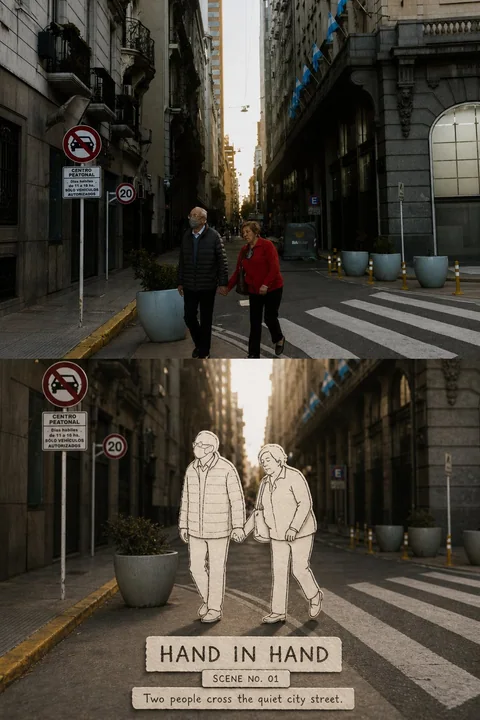
Please turn every travel photo I upload into an independent high-end transformed poster, no multi-photo stitching, output each photo individually.

The overall structure uses a 3:4 vertical top-and-bottom comparison. The top part accounts for about 48%–50% of the screen, completely retaining the original photo; the bottom part accounts for about 50%–52%, reconstructing the same location, the same person, and the same moment. Use a clear, straight horizontal boundary between the top and bottom, without blending, torn paper, multi-layer collage, or middle decorative bands.

The top part faithfully preserves the identity, number, facial features, posture, direction of travel, gestures, clothing, personal belongings, spacing between people, front-to-back occlusion, architectural structure, road perspective, real materials, natural lighting, and location atmosphere of the original photo. Only perform slight travel magazine, art publication, or exhibition photography color grading, and add very thin film grain. Do not change people, replace backgrounds, move buildings, add or delete pedestrians, or turn photos into illustrations.

The bottom part reconstructs the same space, but allows for a more editorial secondary composition based on human relationships. Choose a real photography environment sufficient to prove the location, moderately tighten the cropping, reduce background contrast, or delete irrelevant peripheral figures, making the 1–4 most important figures in the photo a clear narrative center. Keep about 20%–32% of continuous low-information negative space in the sky, walls, streets, water, or ground, allowing the image to breathe and accommodate text.

The architecture, streets, walls, trees, vehicles, sky, water, and lighting in the bottom part continue to maintain real photography textures. Do not draw the entire scene together as a line drawing. Only transform the people who actually exist in the photo and play a major narrative role into "warm white paper + black hesitant line drawing" physical collage sketch characters.

Strictly maintain the real number, position, size, posture, direction of movement, distance from each other, hand contact, front-to-back occlusion, and interactive relationship of the characters. Each character consists of the following parts:

- Opaque warm white or natural white paper fill, completely covering the original photographic content of the character;
- Visible but restrained natural paper grain and slight fibers;
- Clean but slightly manual-error die-cut paper edges;
- Loose, hesitant, black or ink black outlines with slightly varying thickness;
- A very small amount of internal sketch lines for hair, collars, arms, palms, legs, shoes, backpacks, or cameras;
- Very shallow, correctly directed foot contact shadows and paper layer shadows.

The characters must stand in the scene like real thin paper characters, with foot-to-ground contact, occlusion between characters, perspective scaling, and scene light direction all being believable. Do not just overlay white line drawings on transparent photographic people, nor make them into thick foam stickers, cartoon characters, emojis, comic characters, or AR interfaces.

Very small characters in the distance can be actively moved out of the frame according to the cropping of the bottom part; if they remain clearly identifiable, they should be processed as simple white paper silhouettes in their real numbers, and must not be copied, added, or unified into the same pose. Bags, hats, cameras, umbrellas, or bicycles related to the character's movement can be turned into paper along with the character.

By default, add three layers of accurate, readable English text:

1. Extract a title of 1–3 English words based on the character's movement or scene relationship in the photo;
2. An observation number similar to "SCENE NO. 01";
3. A short sentence of 5–10 English words describing the actual walking, waiting, meeting, hugging, or watching happening in the photo.

The main title must be clearly recognizable at normal chat preview sizes, accounting for about 25%–38% of the width of the bottom area. The text uses loose black ink capital letters, manual lead type, or sketchbook-style condensed font, which can be printed on a warm white handmade paper tag or arranged along low-information walls or floors. Ink marks are allowed to have slight breaks and paper teeth, but cannot be shrunk into decorative gray lines, nor look like smooth digital typography overlaid in post-production.

Do not fabricate character relationships, locations, dates, brands, citations, or author information. Text must not cover character faces, hand interactions, or foot contact positions.

The overall effect has the wonderful feeling of real travel photography and paper character sketches existing simultaneously: the environment still belongs to reality, while the characters seem to be cut out from memories, diaries, or sketchbooks and then gently placed back into the journey.

Avoid: full-poster redraw, illustrated buildings, illustrated street, all-white background replacing the scene, transparent line overlay on photographic people, cartoon people, colored comic characters, kawaii stickers, speech bubbles, AR interface, thick foam stickers, altered person count, invented pedestrians, duplicated figures, changed poses, separated hands, floating figures, missing contact shadows, tiny source-photo comparison, fake text, author name, signature, social handle, logo, watermark.

Most important rule: the top must completely retain the real original photo; the bottom remains a real photographic space, only transforming the characters actually existing in the photo into physical collage characters composed of warm white paper and hesitant black ink lines.

请将我上传的每一张旅行照片分别制作成一张独立的高级转绘海报,不多图拼接,每张照片单独输出。

整体采用3:4竖版上下对比结构。上半部分约占画面48%~50%,完整保留原始照片;下半部分约占50%~52%,重建同一地点、同一人物和同一时刻。上下之间使用清楚、平直的水平边界,不做渐融、撕纸、多层拼贴或中间装饰带。

上半部分忠实保留原照片中的人物身份、数量、面部特征、姿态、行进方向、手势、服装、随身物件、人物间距、前后遮挡、建筑结构、道路透视、真实材质、自然光影和地点氛围。仅进行轻微的旅行杂志、艺术出版物或展览摄影调色,并加入极薄胶片颗粒。不得改变人物、替换背景、移动建筑、增删行人或把照片插画化。

下半部分重建同一空间,但允许根据人物关系进行更有编辑感的二次构图。选择一段足以证明地点的真实摄影环境,适度收紧裁切、降低背景对比或删除无关边缘人物,使照片中最重要的1~4个人物成为清楚的叙事中心。天空、墙面、街道、水面或地面中保留约20%~32%的连续低信息空场,让画面可以呼吸并容纳文字。

下半部分的建筑、街道、墙壁、树木、车辆、天空、水面和光影继续保持真实摄影质感。不要把整个场景一起画成线稿。只将照片中实际存在、并承担主要叙事作用的人物转化为“暖白纸片+黑色迟疑线描”的实体剪贴速写角色。

严格保持人物真实数量、位置、大小、姿态、动作方向、彼此距离、手部接触、前后遮挡和互动关系。每个人物由以下部分构成:

- 不透明的暖白或自然白纸片填充,完全遮住原本的人物摄影内容;
- 可见但克制的天然纸张颗粒和轻微纤维;
- 干净却略有手工误差的模切纸边;
- 松动、迟疑、粗细略有变化的炭黑或墨黑轮廓;
- 极少量用于头发、衣领、手臂、手掌、腿部、鞋子、背包或相机的内部速写线;
- 非常浅、方向正确的脚底接触阴影和纸片叠层阴影。

人物必须像真实的薄纸角色站在现场中,脚底与地面、人物间遮挡、透视缩放和现场光向都要可信。不得只在透明摄影人物上叠加白色线稿,也不能做成厚泡棉贴纸、卡通人物、表情包、漫画角色或AR界面。

远处非常小的人物可以根据下半部分裁切主动移出画面;若仍清楚可辨,则应按真实数量以更简洁的白纸剪影处理,不得复制、增加或统一成相同姿势。与人物动作有关的包、帽子、相机、雨伞或自行车可以随人物一起纸片化。

默认加入三层准确、可读的英文文字:

1. 根据照片中的人物动作或场景关系提炼一个1~3个英文单词的标题;
2. 一个类似“SCENE NO. 01”的观察编号;
3. 一行5~10个英文单词的短句,描述照片里真实发生的行走、等待、相遇、拥抱或观看。

主标题必须能在正常聊天预览尺寸下清楚辨认,约占下半区域宽度的25%~38%。文字使用松动黑墨大写、手工铅字或速写本式窄体字,可印在一块暖白色手工纸签上,也可以沿低信息的墙面或地面排列。墨迹允许轻微断裂和纸齿,但不能缩成装饰灰线,不能像后期叠加的光滑数字排版。

不得虚构人物关系、地点、日期、品牌、引用或作者信息。文字不能覆盖人物面部、手部互动和脚底接触位置。

整体具有真实旅行摄影与纸上人物速写同时存在的奇妙感觉:环境仍然属于现实,人物像从记忆、日记或速写本中被剪下,再轻轻放回旅途中。

Avoid: full-poster redraw, illustrated buildings, illustrated street, all-white background replacing the scene, transparent line overlay on photographic people, cartoon people, colored comic characters, kawaii stickers, speech bubbles, AR interface, thick foam stickers, altered person count, invented pedestrians, duplicated figures, changed poses, separated hands, floating figures, missing contact shadows, tiny source-photo comparison, fake text, author name, signature, social handle, logo, watermark.

最重要的规则:上方必须完整保留真实原照片;下方仍然是真实摄影空间,只将照片中真实存在的人物转化为暖白纸片与迟疑黑墨线构成的实体剪贴角色。
Другие промпты
Case 27276
高级社论摄影与弹性文字海报设计
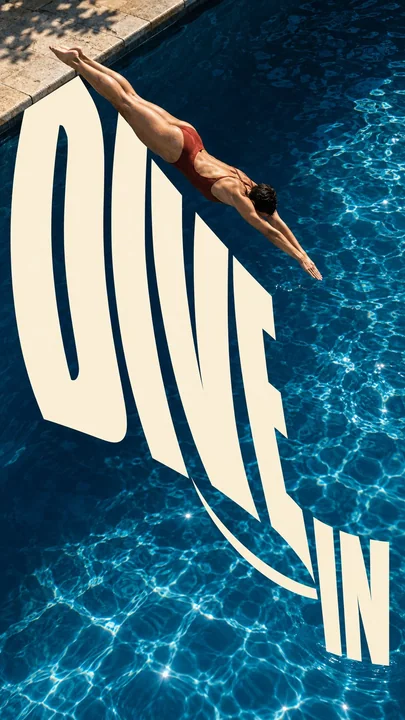
Create a finished premium editorial campaign poster, 9:16, full bleed. Real hard-sunlight editorial photography interwoven with monumental flat warm-cream extra-condensed elastic typography. Direct hard natural sunlight with sharp shadows,
Case 27284
现代城市列车内部高级旅行摄影
Create a serene, premium travel photograph of the interior of a modern city train during daytime. Show a clean bright white carriage with large windows glowing with soft natural daylight, a row of empty blue-and-white molded seats along the
Case 16
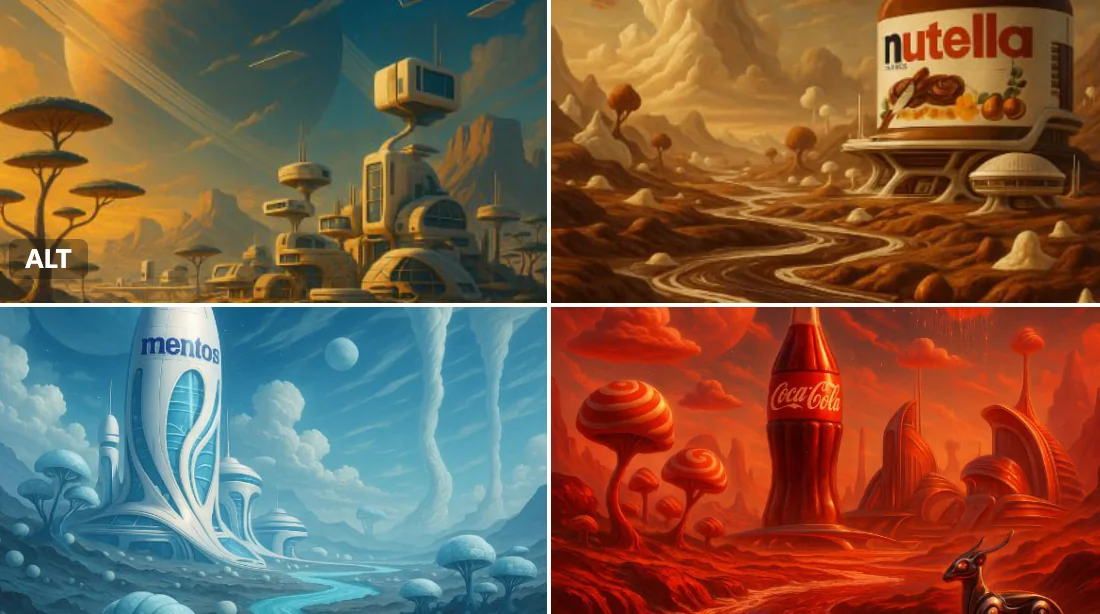
Мир бренда планеты
Планета [Название бренда], Год 3025. Дальняя планета, полностью сформированная сутью бренда. Ландшафты отражают его ядро идентичности — от сюрреалистических ландшафтов до фантастических погодных условий. Местные растения и животные воплощаю