Case 28381
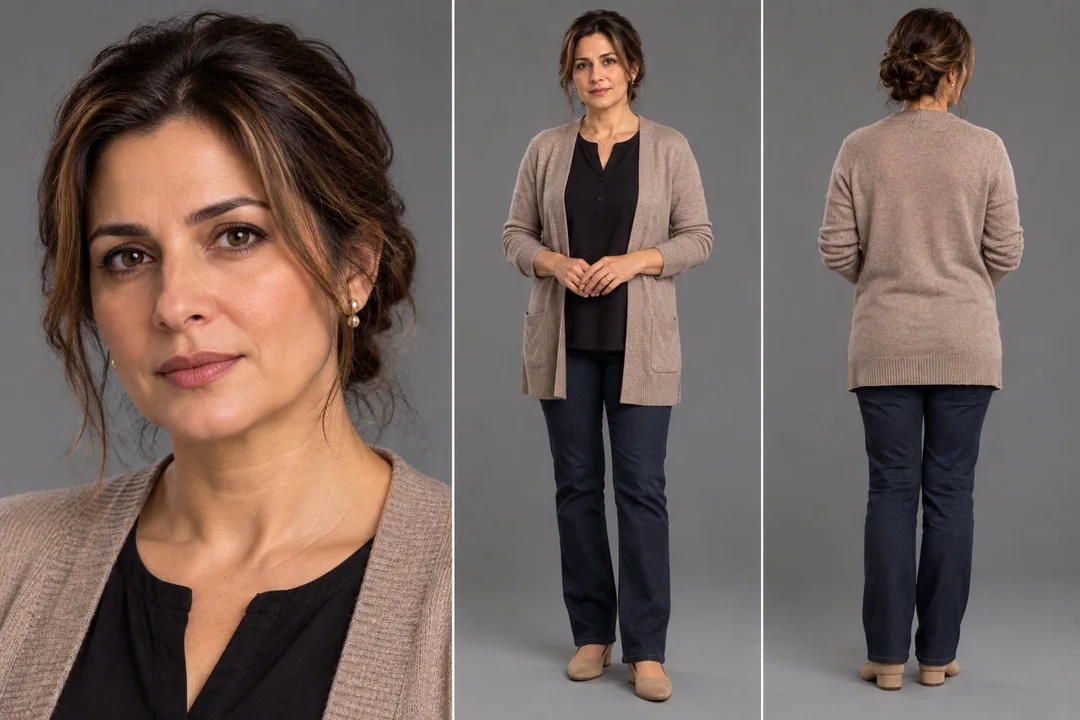
通用写实角色三视图参考表生成
Prompt
UNIVERSAL PROFESSIONAL CHARACTER SHEET — REFERENCE IMAGE LOCK

TASK: Create a professional, photorealistic, three-panel character reference sheet using the uploaded reference image as the primary and authoritative source.

1. REFERENCE IMAGE & IDENTITY LOCK

Use the uploaded reference image as the exact visual reference. Preserve the character's original identity and appearance as accurately as possible.

Preserve exact facial features, face shape, eyes, nose, lips, eyebrows, skin tone, and apparent age.
Preserve hairstyle, hair color, hair texture, and hairline.
Preserve body proportions, height impression, physique, and natural anatomy.
Preserve the exact clothing, colors, fabric, accessories, jewelry, footwear, and other visible details.
Do not redesign, beautify, reinterpret, or unnecessarily modify the character.
If the reference shows a fictional or non-human character, preserve its original anatomy, colors, textures, and distinguishing features.
For details not visible in the reference, make the most conservative, visually consistent interpretation possible.

IDENTITY PRESERVATION LOCK: Maximum possible consistency across all three panels. The same character must appear in every panel.

2. EXACT THREE-PANEL LAYOUT

Create one wide, horizontal, professional character sheet with three clearly separated vertical panels. Use thin, straight, white divider lines between the panels.

PANEL 1 — LARGE CLOSE-UP PORTRAIT
Position: Left panel, occupying approximately 42% of the total canvas width.

Show a large, detailed head-and-shoulders portrait of the character, facing the camera with a natural, neutral expression.

Requirements:
Highly detailed, realistic facial features.
Natural skin texture with visible pores and subtle imperfections.
Realistic eyes, eyelashes, eyebrows, and individual hair strands.
Preserve the exact facial identity from the reference.
Keep the original clothing visible around the shoulders and neckline.
Natural photographic lighting and accurate skin tones.

PANEL 2 — FULL-BODY FRONT VIEW
Position: Middle panel, occupying approximately 29% of the total canvas width.

Show the exact same character standing upright and facing the camera, with the entire body visible from head to footwear.

Requirements:
Natural, relaxed standing pose.
Hands gently positioned in front of the body or resting naturally at the sides, depending on the reference.
Clearly display the complete outfit, silhouette, accessories, and footwear.
Keep the face, hairstyle, body proportions, and clothing consistent with Panel 1.
Ensure the entire head and both feet remain inside the frame.

PANEL 3 — FULL-BODY BACK VIEW
Position: Right panel, occupying approximately 29% of the total canvas width.

Show the same character from directly behind, standing upright with the entire body visible from head to footwear.

Requirements:
Clear rear view of the hairstyle and head.
Accurately reproduce the back of the clothing, garment length, sleeves, seams, folds, and fit.
Maintain the same body proportions, clothing colors, footwear, and accessories.
Use a natural, symmetrical standing posture.
Do not introduce a different outfit or a different character.

3. BACKGROUND & LIGHTING

Use a seamless, neutral studio background in medium gray, similar to a professional photographic character reference sheet.

Soft, evenly distributed studio lighting.
Natural contact shadows beneath the feet.
Consistent background color and lighting across all three panels.
Realistic fabric textures and skin detail.
Clean, distraction-free composition.
No scenery, furniture, props, decorative graphics, or unnecessary objects.

4. CAMERA & COMPOSITION

Panel 1: Tight facial close-up with realistic photographic perspective.
Panel 2: Straight-on, full-length front view.
Panel 3: Straight-on, full-length rear view.
Maintain consistent camera height and realistic proportions across the full-body views.
Keep all three panels aligned, cleanly separated, and visually balanced.
Make the close-up panel larger than either full-body panel, matching the supplied layout.

5. PHOTOREALISM & QUALITY

Premium professional photography, lifelike skin texture, realistic hair strands, detailed fabric weave, natural anatomy, accurate lighting, crisp focus, high dynamic range, and production-ready character reference quality.

Avoid plastic skin, artificial facial smoothing, distorted hands, extra fingers, inconsistent facial features, warped anatomy, blurry textures, and AI-generated visual artifacts.

6. STRICT OUTPUT RULES

Generate exactly ONE finished image containing exactly THREE vertical panels in this order:

LEFT: Large close-up portrait.
CENTER: Full-body front view.
RIGHT: Full-body back view.
No additional panels, no extra characters, no text, no labels, no watermarks, and no decorative borders beyond the thin white panel dividers.
The uploaded reference image is the authoritative source for the character's identity and appearance. Prioritize reference fidelity over creative interpretation.

RESOLUTION LOCK: Generate the final image at the highest resolution supported by the image-generation tool, in a wide 16:9 aspect ratio. Preserve fine facial, hair, clothing, and material details.

通用专业角色表 — 参考图像锁定

任务:创建一个专业的、写实的三面板角色参考表,使用上传的参考图像作为主要且权威的来源。

1. 参考图像与身份锁定

将上传的参考图像用作准确的视觉参考。尽可能准确地保留角色的原始身份和外观。

保留准确的面部特征、脸型、眼睛、鼻子、嘴唇、眉毛、肤色和表观年龄。
保留发型、发色、发丝纹理和发际线。
保留身体比例、身高印象、体型和自然解剖结构。
保留准确的服装、颜色、面料、配饰、珠宝、鞋履和其他可见细节。
不要重新设计、美化、重新解释或进行不必要的修改。
如果参考图显示的是虚构或非人类角色,请保留其原始解剖结构、颜色、纹理和显著特征。
对于参考图中不可见的细节,进行最保守、视觉上最一致的解释。

身份保留锁定:所有三个面板中最大程度的一致性。同一个角色必须出现在每个面板中。

2. 准确的三面板布局

创建一个宽屏、横向、专业的角色表,包含三个清晰分隔的垂直面板。面板之间使用细直的白色分隔线。

面板 1 — 大型特写肖像
位置:左侧面板,约占画布总宽度的 42%。

展示角色的大型、细致的头部和肩部肖像,面向镜头,表情自然、中性。

要求:
高度细致、写实的面部特征。
带有可见毛孔和微妙瑕疵的自然皮肤纹理。
写实的眼睛、睫毛、眉毛和每一根发丝。
保留参考图中准确的面部身份。
保持肩部和领口周围的原始服装可见。
自然的摄影照明和准确的肤色。

面板 2 — 全身正面视图
位置:中间面板,约占画布总宽度的 29%。

展示同一个角色直立站立并面向镜头,从头部到鞋履全身可见。

要求:
自然、放松的站立姿势。
双手轻轻置于身体前方或自然垂在两侧,取决于参考图。
清晰展示完整的装束、轮廓、配饰和鞋履。
保持面部、发型、身体比例和服装与面板 1 一致。
确保整个头部和双脚都留在画面内。

面板 3 — 全身背面视图
位置:右侧面板,约占画布总宽度的 29%。

展示同一个角色的正后方,直立站立,从头部到鞋履全身可见。

要求:
清晰的发型和头部后视图。
准确再现服装的背面、服装长度、袖子、缝线、褶皱和贴合度。
保持相同的身体比例、服装颜色、鞋履和配饰。
使用自然、对称的站立姿势。
不要引入不同的装束或不同的角色。

3. 背景与光照

使用无缝、中性的中灰色影棚背景,类似于专业的摄影角色参考表。

柔和、均匀分布的影棚照明。
脚下自然的接触阴影。
所有三个面板的背景颜色和照明保持一致。
写实的面料纹理和皮肤细节。
整洁、无干扰的构图。
无布景、家具、道具、装饰性图形或不必要的物体。

4. 摄像机与构图

面板 1:带有写实摄影视角的面部紧凑特写。
面板 2:正向、全长正面图。
面板 3:正向、全长背面图。
在全身视图中保持一致的摄像机高度和写实比例。
保持所有三个面板对齐、清晰分隔且视觉平衡。
使特写面板大于任何一个全身面板,与提供的布局相匹配。

5. 写实主义与质量

优质专业摄影,逼真的皮肤纹理,写实的发丝,细致的面料编织,自然的解剖结构,准确的光照,清晰的焦点,高动态范围,以及生产级别的角色参考质量。

避免塑料感的皮肤、人工的面部平滑、扭曲的手部、多余的手指、不一致的面部特征、变形的解剖结构、模糊的纹理以及 AI 生成的视觉伪影。

6. 严格的输出规则

严格生成一张包含按此顺序排列的三个垂直面板的成品图像:

左侧:大型特写肖像。
中间:全身正面图。
右侧:全身背面图。
除了细白面板分隔线外,没有额外的面板,没有多余的角色,没有文字,没有标签,没有水印,也没有装饰边框。
上传的参考图像是角色身份和外观的权威来源。优先考虑参考保真度,而非创意解释。

分辨率锁定:以图像生成工具支持的最高分辨率生成最终图像,采用 16:9 的宽屏纵横比。保留精细的面部、毛发、服装和材质细节。
更多提示词
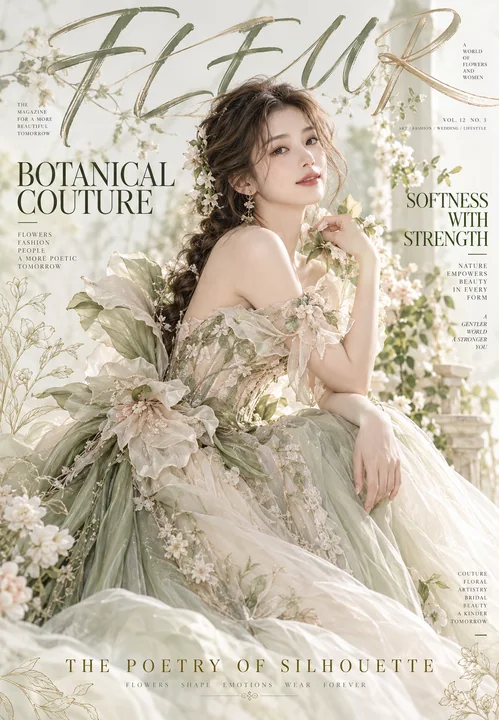
Case 28394
盛放之诗:鼠尾草绿渐变礼服时尚封面
东方美人时尚封面鼠尾草绿唯美画质艺术排版
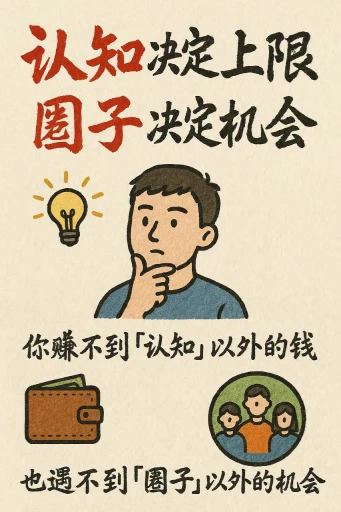
Case 1
手绘风格的信息图表卡片
创作一张手绘风格的信息图卡片,比例为9:16竖版。卡片主题鲜明,背景为带有纸质肌理的米色或米白色,整体设计体现质朴、亲切的手绘美感。 卡片上方以红黑相间、对比鲜明的大号毛笔草书字体突出标题,吸引视觉焦点。文字内容均采用中文草书,整体布局分为2至4个清晰的小节,每节以简短、精炼的中文短语表达核心要点。字体保持草书流畅的韵律感,既清晰可读又富有艺术气息。 卡片中点缀简单、有趣的手绘插画或图标,例如人物或象征符号,以增强视觉吸引力,引发读者思考与共鸣。 整体布局注意视觉平衡,预留足
illustrationtypographyportraitpaper-craft