Case 11333
AI Posture and Proportion Optimization Report
信息图穿搭体态比例矫正
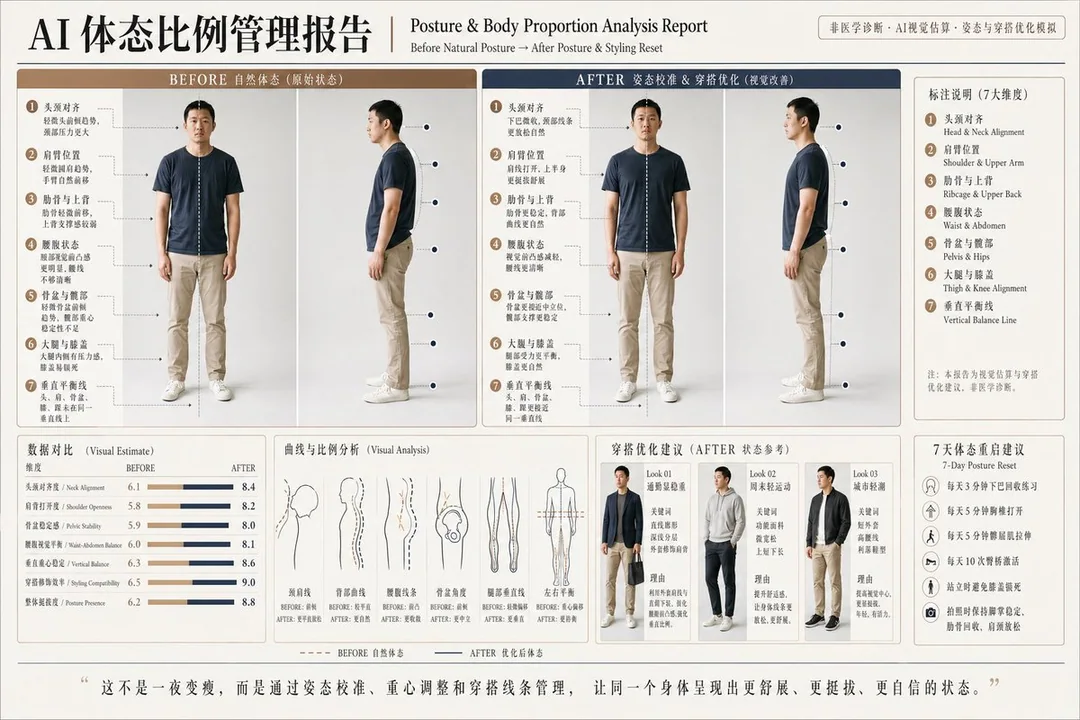
Prompt
Please generate a horizontal 4:3 high-completion "AI Posture & Body Proportion Analysis Report" based on the full-body front and full-body side real-person photos I uploaded.

This report is not a medical diagnosis, not a before-and-after weight loss comparison, nor an exaggerated weight loss effect image, but a "Visual Posture Analysis + Proportion Management + Outfit Optimization + Posture Calibration Simulation" report based on real-person photos. Please strictly retain the user's own facial recognition, facial features structure, sense of age, real skin texture, hairstyle and temperament, body foundation and original identity. Do not swap faces, do not turn the person into someone else, do not create exaggerated weight loss or unrealistic body changes.

[Core Settings]
Before: Show the user's current natural standing posture state, including front and side two perspectives, retaining the real body shape, real clothing, and natural posture.
After: Show the simulated state of the same person after "Posture Calibration + Outfit Optimization + Visual Proportion Adjustment". The focus is on being more upright, more relaxed, more energetic, and showing more coordinated proportions, rather than becoming thinner, bonier, or drastically changing the body shape.
Please understand After as "a better visual state presented on the same day through correct standing posture, core tightening, shoulder and neck relaxation, pelvic repositioning, and outfit line optimization".

[Highest Priority Principles]
1. Do not make medical diagnoses, only perform visual posture and outfit proportion analysis.
2. Do not use humiliating words, do not judge whether the appearance is good or bad, do not create body image anxiety.
3. Do not exaggerate body changes, do not forcibly slim down, do not change fat distribution, do not change bone structure.
4. All data should be presented in the form of "AI Visual Estimate / Visual Estimate", not as real medical measurements.
5. The language should be gentle, professional, data-driven, and encouraging, focusing on expressing "optimization potential", "more coordinated proportions", "more relaxed posture", and "more suitable outfit".

[Overall Layout]
Horizontal 4:3, high-end health management consultant report + fashion magazine infographic style. The background uses clean beige, light gray, or low saturation warm white, combined with thin line frames, numbered labels, local magnification frames, posture baseline, vertical center of gravity line, curve annotations, and simple charts. The overall information is rich but not crowded, professional, with a sense of design, suitable for sharing on Xiaohongshu or X.

[Title Area]
Main Title: AI Posture Proportion Management Report
English Subtitle: Posture & Body Proportion Analysis Report
Sub-Title: Before Natural Posture → After Posture & Styling Reset
Corner Note: Not a medical diagnosis · AI Visual Estimate · Posture and Outfit Optimization Simulation

[Main Visual Area]
Use a four-image comparison structure:
Left side is BEFORE:
- Before Front View: Retain the user's natural standing posture, natural outfit, and real body shape
- Before Side View: Display the natural side posture

Right side is AFTER:
- After Front View: Same person, same identity, similar angle, posture more upright, shoulder and neck more relaxed, waist and abdominal lines more optimized by the outfit, overall proportions more coordinated
- After Side View: Same person, side view showing head and neck position more corrected, shoulder and back more open, pelvis position more neutral, abdominal forward protrusion reduced, knees not overly locked, overall center of gravity more stable

The four person images must be clear, similar in size, and with a clear contrast relationship. Do not make After into a completely different person, nor excessively beautify or excessively slim down.

[Posture Analysis Annotation Area]
Please use thin line arrows, numbering, and local magnification frames to annotate the following areas on the Before and After images:

1. Head and Neck Position / Head & Neck Alignment
Before can be annotated: Head forward, more obvious neck pressure
After can be annotated: Chin slightly retracted, neck lines more relaxed

2. Shoulder and Upper Arm / Shoulder & Upper Arm Position
Before can be annotated: Rounded shoulder trend, scapula protraction, upper arm position forward
After can be annotated: Shoulder lines open, upper body more upright

3. Thorax and Back / Ribcage & Upper Back
Before can be annotated: Thorax forward protrusion, insufficient back support
After can be annotated: Thorax more stable, back curves more natural

4. Waist and Abdomen / Waist & Abdomen
Before can be annotated: Abdomen visually forward protrusion, waistline not clear
After can be annotated: Weaken the forward protrusion through posture and outfit, waistline clearer

5. Pelvis and Hip / Pelvis & Hip Position
Before can be annotated: Pelvis forward tilt trend, hip center of gravity not stable enough
After can be annotated: Pelvis closer to neutral position, hip support more stable

6. Thigh and Knee / Thigh & Knee Alignment
Before can be annotated: Inner thigh pressure, knee locking or hyperextension trend
After can be annotated: More balanced leg force distribution, more natural knee condition

7. Vertical Center of Gravity Line / Vertical Balance Line
Before can be annotated: Head, shoulder, pelvis, knee, ankle not completely on the same visual center of gravity line
After can be annotated: Center of gravity line more stable, overall more upright

[Data Comparison Column]
Please use clear charts to display the AI visual estimation indicators from Before → After. All indicators should be labeled as "Visual Estimate", not as real medical tests. Suggested data:

- Neck Alignment / Neck Alignment: 6.1 → 8.4
- Shoulder Openness / Shoulder Openness: 5.8 → 8.2
- Pelvic Stability / Pelvic Stability: 5.9 → 8.0
- Waist-Abdomen Visual Balance / Waist-Abdomen Balance: 6.0 → 8.1
- Vertical Balance / Vertical Balance: 6.3 → 8.6
- Styling Compatibility / Styling Compatibility: 6.5 → 9.0
- Posture Presence / Posture Presence: 6.2 → 8.8

Please use progress bars, radar charts, or comparison number cards to present, visually clear but not exaggerated.

[Curve and Proportion Analysis Area]
Please draw light line graphs or human body contour curve diagrams to display:
- Neck and Shoulder Lines
- Back Curves
- Waist and Abdomen Lines
- Pelvis Angle Trend
- Leg Vertical Lines
- Front Left-Right Balance

The lines should look like professional posture assessment diagrams, not like medical diagnostic diagrams, and should not create a sense of fear.

[Outfit Optimization Recommendation Area]
Please display 3 sets of daily outfit schemes suitable for the After state. Each set includes a small thumbnail, style keywords, and a reason:

Look 01: Commuting for a stable look
Keywords: Straight silhouette, deep and shallow layering, coat modifies shoulder and back
Reason: Through the coat's shoulder line and straight-bottomed pants, the forward protrusion of the abdomen is weakened, and the vertical proportion is enhanced.

Look 02: Weekend light exercise
Keywords: Functional fabric, slightly loose, short top and long bottom
Reason: Increase comfort, while making the body lines more relaxed and extended.

Look 03: City light trend
Keywords: Short coat, high waistline, neat shoe shape
Reason: Enhance visual center of gravity, making the whole more upright, younger, and more spirited.

[Action Recommendation Area]
Please add a small module called "7-Day Posture Reset Recommendation / 7-Day Posture Reset", with gentle and executable content:
- 3 minutes of chin retraction exercise every day
- 5 minutes of thoracic spine opening every day
- 5 minutes of hip flexor stretching every day
- 10 glute bridges every day
- Avoid knee locking when standing
- Keep the soles of the feet stable, ribcage retracted, and shoulders and neck relaxed when taking photos

Please note that these recommendations can only be used as daily posture management suggestions, not as treatment plans.

[Bottom Summary]
Please summarize with a gentle but powerful sentence:
"This is not losing weight overnight, but through posture calibration, center of gravity adjustment, and outfit line management, making the same body present a more relaxed, more upright, and more confident state."

[Strictly Avoid]
Do not show nudity or underwear; do not expose; do not shame the body; do not use negative words such as "obesity defects", "fat problems", or "bad body shape"; do not exaggerate weight loss; do not pretend to be a medical diagnosis; do not fabricate real body fat percentage, real waist circumference, or real weight; do not turn the user into another person; do not excessively beautify; do not make After into an unrealistic influencer body shape.
More prompts
Case 23614
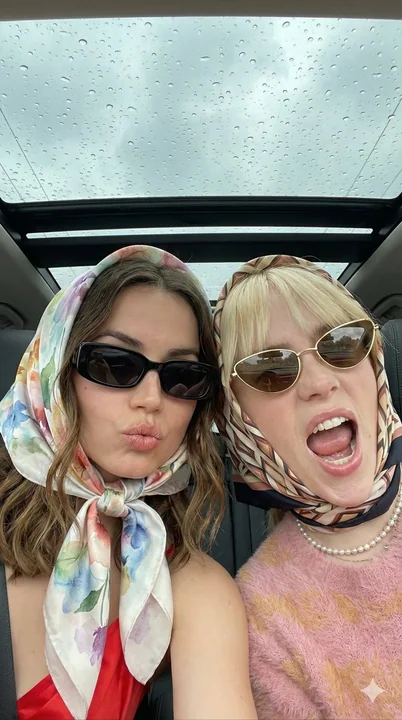
雨天车内复古时尚双姝搞怪仰拍
{ "image_generation_prompt": { "version": "1.0", "aspect_ratio": "9:16", "subject_analysis": { "characters": [ { "description": "A young brunette woman on the left with long wavy hair.", "expression": "Playful 'kiss face' or pouty
自拍时尚闺蜜复古风雨天
Case 26546
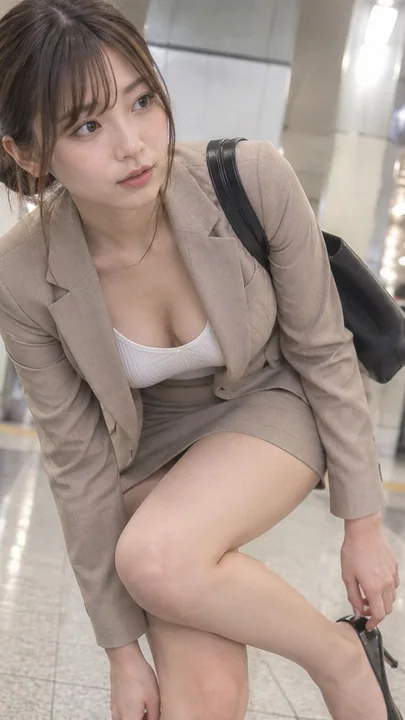
车站长椅整理高跟鞋的通勤日本女性
Subject: A fictional adult Japanese woman, alone by a station bench, adjusting her high heels. Wearing a beige jacket and skirt, a white inner layer, and a black shoulder bag, leaning forward, capturing a daily commuting scene. Location, T