Case 26688
文化质感与自然秩序的信息视觉艺术
Prompt
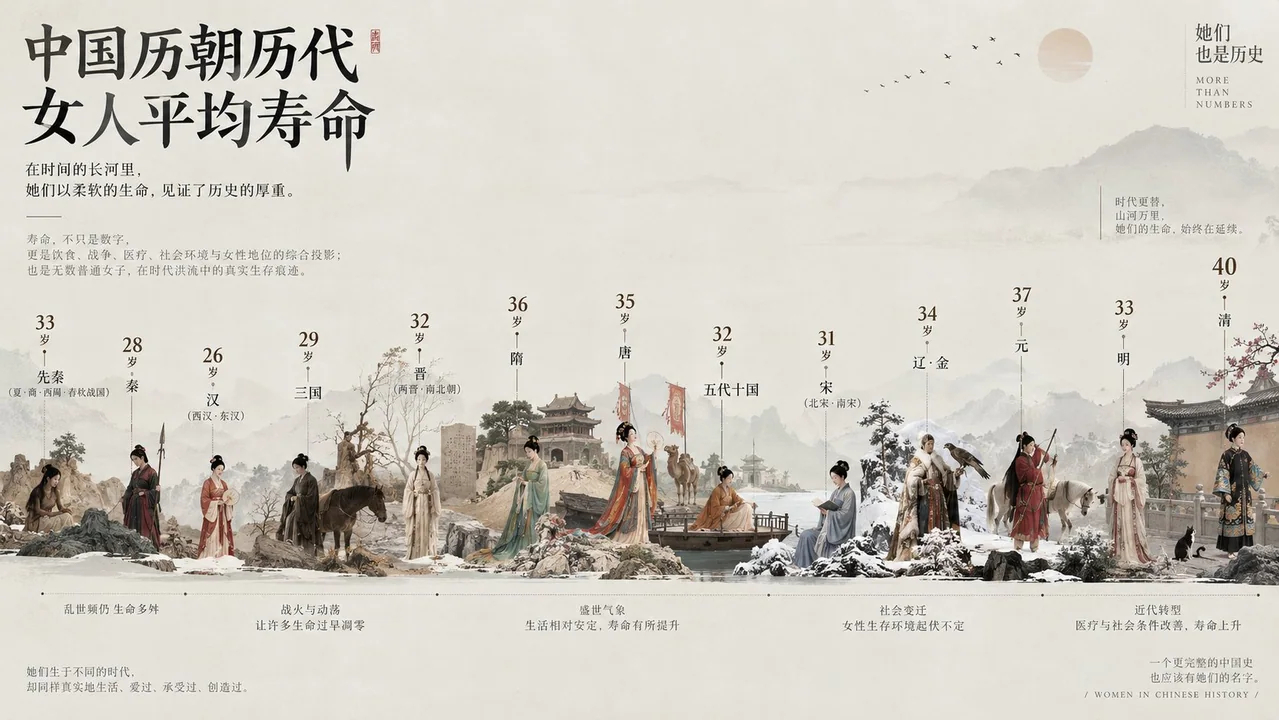
Create an informational visual work with a high degree of editing consciousness, cultural texture, and visual insight. Do not rush to explain; do not directly translate information into icons, flowcharts, cards, or standard charts. Instead, first understand the time, scale, hierarchy, relationship, density, difference, evolution, contrast, gathering and scattering, and rhythm that truly exist within the content, and let visual forms naturally generate from these relationships.

The entire image should possess a quiet and open order. There are clear connections between elements, yet they retain their independent states of life; some are close, some distant, some towering, some low-lying, some heavy, some light. Do not aim for tidiness for the sake of tidiness, nor deliberately create change for the sake of change. Let scale, position, material, posture, spacing, direction, light and dark, whitespace, and visual weight interact with each other, making the order seem naturally formed rather than forcibly arranged by a template.

Information can be transformed into characters, artifacts, structures, natural forms, architecture, spaces, materials, symbols, text, scenes, abstract shapes, or visual existences that are difficult to categorize simply. What specific form is adopted should be determined by the content itself, without presetting a fixed visual dictionary. Avoid the mechanical logic of "one type of information corresponds to one fixed icon," and avoid repeatedly copying the same shape. Allow different expressions to appear within the same system, as long as they hold true to each other in visual relationships and spiritual temperament.

Let data and information be perceived rather than crudely labeled. Quantity can be manifested through scale, time through extension, importance through visual weight, and relationships through distance, direction, overlap, resonance, or spatial structure. Necessary text, numbers, markers, and guide lines should exist quietly as part of the editorial system, rather than dominating the image.

Maintain a large amount of effective whitespace, letting the blank space become part of the structure. The image should have pauses, transitions, breathing, and space that is not fully explained. Parts can be precise, parts can be relaxed; some information can be seen immediately, while some relationships are allowed to emerge gradually after viewing. Do not say everything at once.

The visual language lies between high-end publications, museum displays, cultural research maps, contemporary information design, still life photography, art direction, and data storytelling, but do not obviously mimic any existing style. Materials, light, fonts, composition, and space should jointly serve the content itself, remaining restrained, accurate, and mature, while possessing a subtle sense of strangeness and discovery.

Do not use rigid grids to dominate everything, do not apply common commercial infographic templates, and do not pursue superficial "sense of technology," "sense of high-end," or decorative complexity. Avoid averageness, symmetry, homogenization, over-regularity, and meaningless visual filling. Allow for contingency, but contingency must be built within the overall judgment; allow for freedom, but freedom always exists within an internal order.

The final work should first attract the viewer with the overall relationship and atmosphere, and then gradually enter the information; from a distance, it forms a complete and distinct visual structure, and upon closer inspection, layers of detail and content logic can be discovered. It is not about decorating information more beautifully, but about letting the content find a form that originally belongs to it.

创作一幅具有高度编辑意识、文化质感与视觉洞察力的信息视觉作品。不要急于解释,不要把信息直接翻译成图标、流程框、卡片或标准图表,而是先理解内容内部真正存在的时间、尺度、层级、关系、密度、差异、演变、对照、聚散与节奏,让视觉形式从这些关系之中自然生成。

整个画面应拥有一种安静而开放的秩序。元素之间既存在明确联系,又保留各自独立的生命状态;有些靠近,有些疏离,有些高耸,有些低伏,有些厚重,有些轻盈。不要为了整齐而整齐,也不要为了变化而刻意制造变化。让尺度、位置、材质、姿态、间距、方向、明暗、空白以及视觉重量彼此作用,使秩序像自然形成,而不是被模板强行排列。

信息可以转化为人物、器物、结构、自然形态、建筑、空间、材料、符号、文字、场景、抽象形体或难以被简单归类的视觉存在。具体采用什么形式,应由内容自身决定,不预设固定视觉词典。避免“一类信息对应一种固定图标”的机械逻辑,也避免重复复制同一种造型。允许同一体系中出现不同表达方式,只要它们在视觉关系和精神气质上彼此成立。

让数据和信息被感知,而不是被粗暴标注。数量可以通过尺度体现,时间可以通过延展体现,重要性可以通过视觉重量体现,关系可以通过距离、方向、重叠、呼应或空间结构体现。必要的文字、数字、标记与引导线应像编辑系统的一部分安静存在,而不是凌驾于画面之上。

保持大量有效留白,让空白成为结构的一部分。画面要有停顿、转折、呼吸和未被完全解释的空间。局部可以精密,局部可以松弛;某些信息可以立即被看见,某些关系允许观看之后才逐渐浮现。不要把所有意义一次说尽。

视觉语言介于高级出版物、博物馆陈列、文化研究图谱、当代信息设计、静物摄影、艺术指导与数据叙事之间,但不要明显模仿任何一种现成风格。材质、光线、字体、构图和空间应共同服务于内容本身,保持克制、准确、成熟,同时具有细微的陌生感与发现感。

不使用僵硬网格支配一切,不套用常见商业信息图模板,不追求表面上的“科技感”“高级感”或装饰性复杂度。避免平均、对称、同质化、过度规整以及毫无意义的视觉填充。允许偶然性,但偶然必须建立在整体判断之中;允许自由,但自由始终存在内在秩序。

最终作品应让观看者先被整体关系和气息吸引,再逐步进入信息;远看形成完整而鲜明的视觉结构,近看能够发现层层细节与内容逻辑。它不是把信息装饰得更漂亮,而是让内容找到一种原本就属于它自己的形态。
Autres prompts
Case 26686
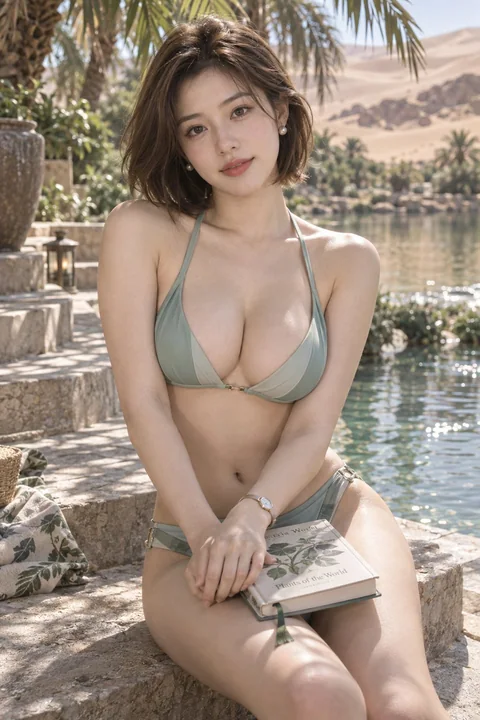
绝美东亚知性美女沙漠绿洲比基尼写真
Exquisite 23-year-old East Asian beauty, shapely and full figure, breasts with a natural full D to E cup visual, with a real sense of weight and soft rounded contours, slim waist forming a clear and natural breast-to-waist ratio; temperamen
Case 4
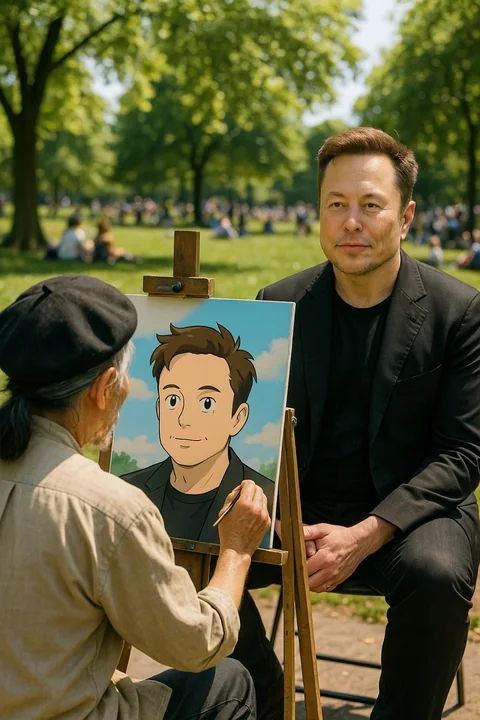
Musk dessine dans le parc
Créez un scénario en extérieur réaliste dans lequel un peintre japonais est en train de dessiner Musk. Dans la scène, le peintre est assis devant son chevalet, tandis que Musk est assis en face de lui, étant représenté (sans aucun style car
landscapecartoonnatureportrait