Case 27133
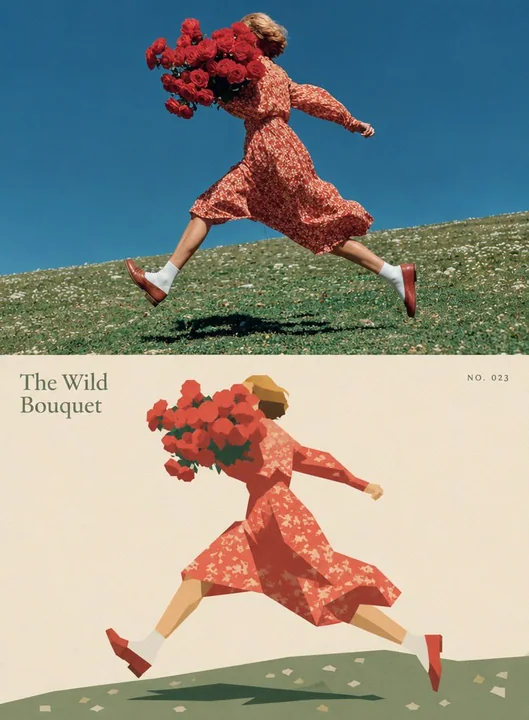
写实摄影与几何扁平插画对比海报
Prompt
Using the uploaded photo, create a vertical 3:4 “before-and-after” comparison poster. If multiple photos are uploaded, create one separate poster for each photo; do not mix different photos on the same page. The upper and lower sections should each occupy exactly half of the total height, with a seamless transition between them. Do not add borders, arrows, or “Before” / “After” labels.

【TOP SECTION: ORIGINAL PHOTO】
The top section should use the uploaded original photo, filling the full width of the canvas. Preserve the original subject, pose/action, scene, natural lighting, and dominant color palette. Only allow subtle overall color adjustments; do not change the atmosphere or add any filter effects. Maintain the photo’s original aspect ratio and do not stretch the subject. To fit the top section, you may crop unimportant edges; if cropping would remove the main subject, prioritize adding a small amount of background instead, but never invent or alter the subject or key elements of the scene.

【BOTTOM SECTION: GEOMETRIC ABSTRACT】
Using the same photo from the top section as the only reference, recreate the core subject and a few key environmental elements as a hard-edged, geometric, flat-style illustration. Do not add any people, animals, objects, or actions that were not present in the original photo. Preserve the core subject’s left/right position, pose, direction, interactions, and major occlusion relationships from the photo so that the top and bottom sections appear visually aligned at first glance; however, there is no need to reproduce the image pixel-for-pixel.

Remove secondary background elements and insignificant details. The subject may be scaled down slightly to create generous negative space around it. Construct objects using a limited number of polygons of varying sizes, simplified curves, and solid color blocks. Preserve enough of the subject’s silhouette, movement, and defining characteristics so that it remains recognizable as the specific subject from the original photo; do not reduce it to a generic icon.

Use adjacent color blocks of different shapes and brightness levels to define structure. Do not use gradients, outlines, 3D shadows, or realistic textures. Extract approximately 5–6 representative colors from the original photo and organize them into a cohesive palette with slightly reduced saturation. Use a warm off-white/beige tone as the background color for the lower section. Reserve the darkest tones for a few visual focal points, and retain one accent color that echoes the original photograph. Do not arbitrarily change the most recognizable colors of the core subject.

Keep all geometric edges crisp and sharp. Add only an extremely subtle printed grain texture within the color blocks, with slight registration misalignment allowed on a few edges. Do not render the entire image with a rough paper texture or glitch-art effect.

【TEXT】
Add a small amount of archival-style typography to the lower section: automatically generate a short English title based on the content of the photo, accompanied by the small number “NO. 023”. Place the title in an area of negative space where it does not obstruct the subject, and position the number diagonally opposite the title to create visual balance.

Do not fabricate real locations, dates, identities, or events, and do not add overly dense explanatory text. The overall composition should resemble a page from a contemporary art book: a rich, realistic photograph on top paired with a bold, highly simplified, orderly geometric interpretation beneath it.

Keep the overall work restrained, gentle, and distinctive. Avoid cartoon-like faces, 3D effects, plastic-like materials, clashing neon colors, or random doodles.

使用上传的照片,创建一个垂直 3:4 的“前后”对比海报。如果上传了多张照片,为每张照片分别创建一个海报;不要在同一页中混合不同的照片。上下部分应各占总高度的恰好一半,两者之间无缝衔接。不要添加边框、箭头或“Before” / “After”标签。

【顶部区域:原始照片】
顶部区域应使用上传的原始照片,填满画布的整个宽度。保留原始主体、姿势/动作、场景、自然光影和主导色调。仅允许细微的整体色彩调整;不要改变氛围或添加任何滤镜效果。保持照片的原始宽高比,不要拉伸主体。为了适应顶部区域,您可以裁剪不重要的边缘;如果裁剪会移除主要主体,请优先添加少量背景,但切勿虚构或更改场景的主体或关键元素。

【底部区域:几何抽象】
仅以顶部区域的同一张照片为参考,将核心主体和几个关键环境元素重新创作为硬边、几何、扁平风格的插画。不要添加原始照片中不存在的人物、动物、物体或动作。保留照片中核心主体的左右位置、姿势、方向、交互和主要的遮挡关系,使上下两部分在视觉上乍看之下是对齐的;但是,不需要像素级地还原图像。

移除次要的背景元素和无关紧要的细节。主体可以略微缩小,以在其周围创造充足的负空间。使用有限数量的各种大小的多边形、简化的曲线和纯色块来构建物体。保留足够的主体轮廓、动作和定义特征,使其依然可以被识别为原始照片中的特定主体;不要将其还原为通用的图标。

使用不同形状和亮度的相邻色块来定义结构。不要使用渐变、轮廓、3D 阴影或写实纹理。从原始照片中提取大约 5–6 种代表性颜色,并将它们组织成一个饱和度略微降低的协调色盘。使用温暖的米白色/米色作为下半部分的背景色。将最深的色调保留给少数视觉焦点,并保留一种与原始照片呼应的强调色。不要随意更改核心主体最具辨识度的颜色。

保持所有几何边缘清晰锐利。仅在色块内添加极细微的印刷颗粒纹理,允许在少数边缘出现轻微的对齐偏移。不要用粗糙的纸张纹理或故障艺术效果渲染整个图像。

【文本】
在底部区域添加少量的档案风格排版:根据照片内容自动生成一个简短的英文标题,并配以小数字“NO. 023”。将标题放置在不阻碍主体的负空间区域,并将数字放置在标题的对角线位置以创造视觉平衡。

不要虚构真实的地点、日期、身份或事件,也不要添加过于密集的说明性文字。整体构图应类似于当代艺术书籍的一页:顶部是丰富、写实的照片,下方是与其配对的大胆、高度简化、有序的几何诠释。

保持整体作品克制、柔和且独特。避免卡通式的面孔、3D 效果、塑料感的材质、冲突的霓虹色或随意的涂鸦。
Другие промпты

Case 24278
云桥巡天:大唐风华天后仪仗盛景
电影质感东方神话唯美古风天宫仙境盛世华裳
Case 5
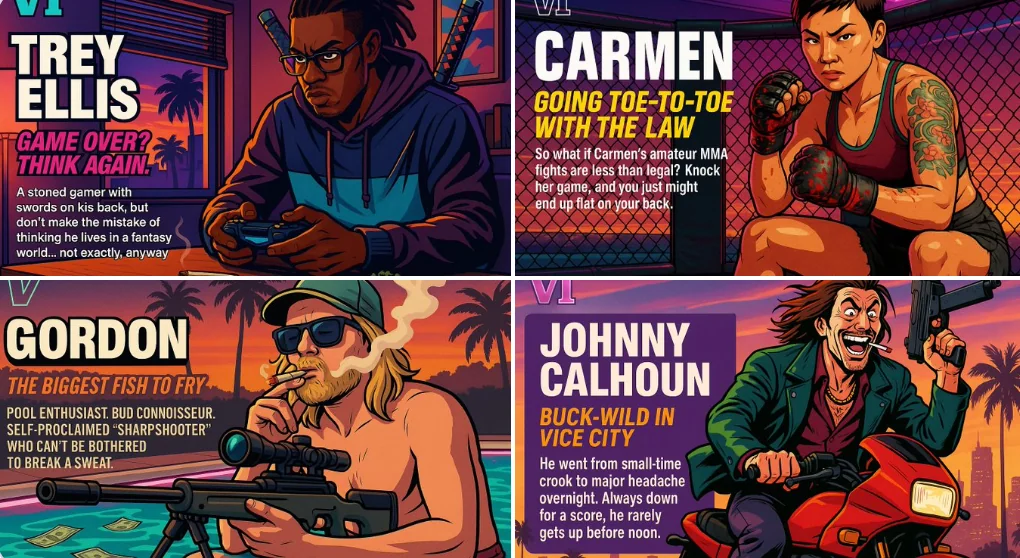
Создайте своего собственного персонажа GTA
[Visual: Horizontal character sheet. On the left side is a vibrant Vice City scene under a sunset sky with neon lights glowing in the background. The character stands on a rooftop overlooking the city, wearing a stylish outfit and holding a
characterlandscapeneongaming